Hopcopter Adds an Articulated Foot Pad for Rough Terrain
Engineers from Toronto and Hong Kong cut landing variation by 84 percent across sand, ice and rocks.
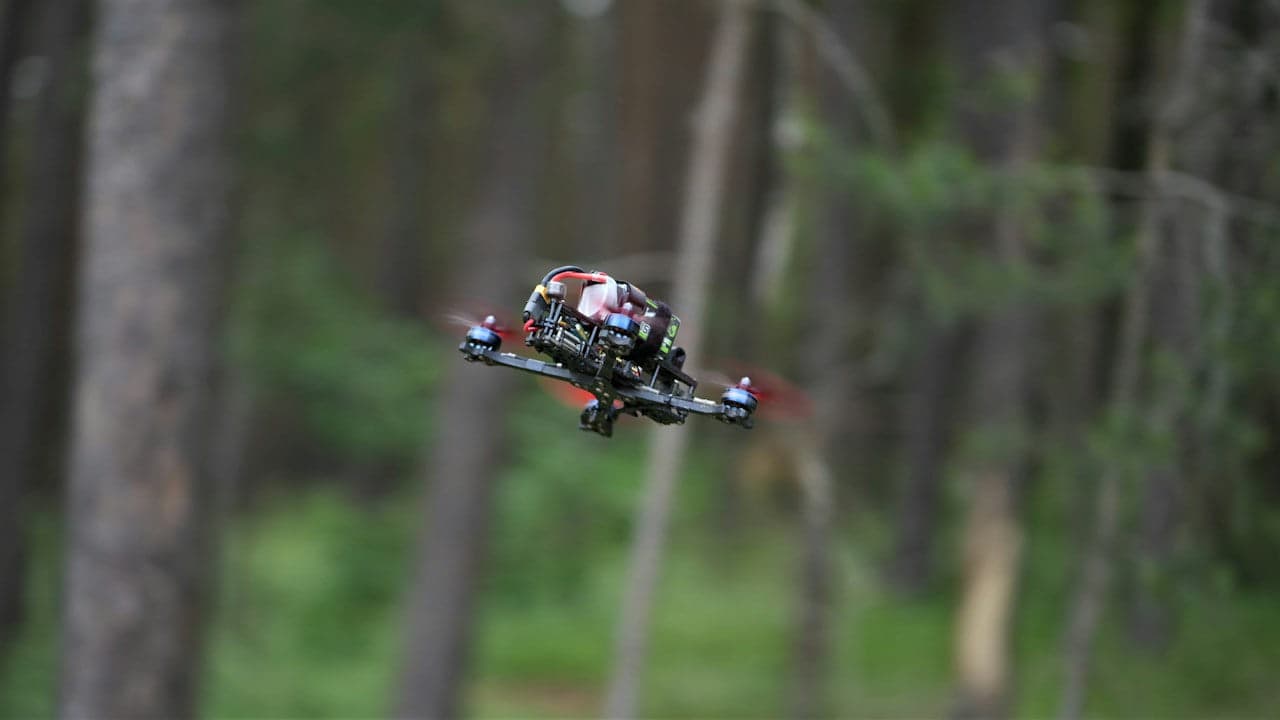
Engineers at the University of Toronto and two Hong Kong universities have upgraded the Hopcopter, a hybrid monopedal drone that hops and flies. By adding an articulated foot pad, the team stabilized landings on unpredictable ground, bringing the dual-mode robotics platform closer to commercial use.
Combining flight with single-leg hops
Developed by researchers at the City University of Hong Kong and The Hong Kong University of Science and Technology, the Hopcopter merges a standard quadcopter chassis with a single spring-loaded leg. The mechanism draws inspiration from birds that hop to conserve energy rather than remaining airborne continuously, according to reporting by New Atlas. During each leap, the machine enters passive free fall before its four rotors fire briefly to regain lift. This alternating movement allows the machine to cover long ground distances while consuming one-tenth the energy required by an equivalent hovering multirotor drone.
Stabilising landings across unpredictable surfaces
While the original prototype succeeded on rigid, flat surfaces such as concrete, it struggled on uneven ground. Earlier iterations sank into loose sand, slipped across ice, or tipped over on sloped inclines. To remedy this instability, researchers at the University of Toronto, including Professor Pakpong Chirarattananon and doctoral student Jeeraphat Kledkruemas, collaborated with City University of Hong Kong doctoral student Song Li to engineer a passive foot assembly, as detailed in the journal Advanced Intelligent Systems.
Spikes and rubber tensioning elements
The newly added pad incorporates a broad surface area that spreads weight evenly to stop the leg from burying itself in loose soil. Mechanical stability relies on three rubber bands that supply self-centering tension, snapping the pad back into its resting alignment immediately after impact. Short spikes lined across the base generate traction on frozen or wet terrain. Laboratory and field tests documented by New Atlas confirmed that the mechanical update reduced landing performance variation by 84 percent when transitioning across sand, gravel, and ice.
Commercial development and planned guidance systems
Hardware spin-off company HopTo Tech is now preparing a commercial production model under the designation Hop-1, as reported by New Atlas. The design team intends to integrate artificial intelligence software modules into future iterations to automate real-time obstacle avoidance. The developers project that combining hopping endurance with flight will support search-and-rescue teams, industrial inspections in underground mines, and future planetary exploration rovers.
Read also on The Patent: Experimental Alloys Resist Fracturing at -253 Degrees Celsius · BBERT uses artificial intelligence to identify hidden bacteria in soil