Chemistry & Metallurgy

Chemistry & Metallurgy

Diamond Foundry Grows World's First 200 mm Single-Crystal Diamond Disk

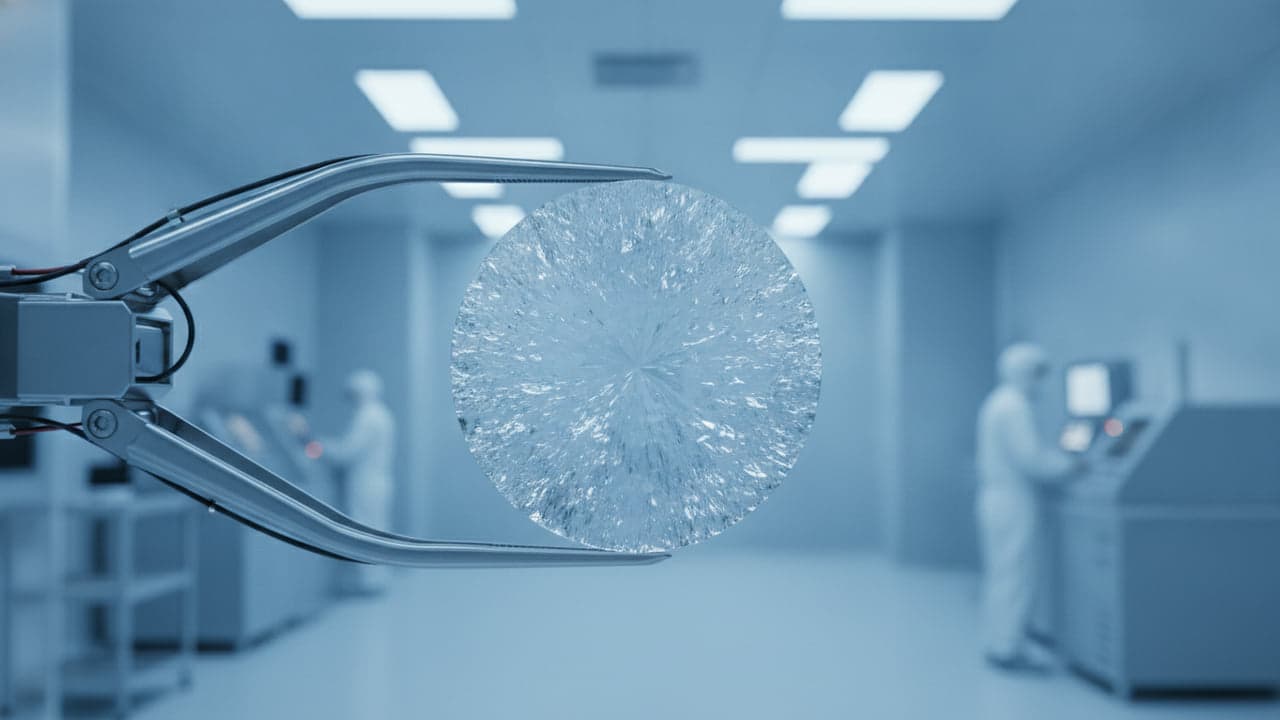
Diamond Foundry produced a 200-millimeter single-crystal diamond disk in an unpolished state, presenting the material on November 6 as the result of a 25-year research effort. The San Francisco company developed the continuous crystal to help pull heat away from high-performance microchips, particularly processors handling intensive artificial intelligence computations. Measuring 7.9 inches across, the monolithic sample represents a major technical invention in synthetic diamond synthesis.

Giovanni SapereWith AI support · reviewed by Giovanni Sapere

Chemistry

Experimental Alloys Resist Fracturing at -253 Degrees Celsius

Two experimental niobium-titanium alloys stay flexible and resist cracking at -253°C, according to research published on October 14 in Nature. An international research team led by the University of California, Berkeley, Lawrence Berkeley National Laboratory, and the University of Oxford discovered that the metals reorganise internally under mechanical stress. This metallurgical innovation alters how materials might be designed for extreme cold in energy systems and space exploration.

Letizia GiuglianoWith AI support · reviewed by Letizia Giugliano

Chemistry & Metallurgy

Pulsed 3D Printing Produces Meter-Long Single Crystals for Extreme Heat

Materials researchers in China have invented a pulsed additive manufacturing process capable of growing titanium-alloy rods more than a meter tall out of a single continuous crystal. Reported in Nature, the technique eliminates microscopic grain boundaries that typically weaken metallic parts subjected to severe mechanical stress and elevated temperatures. The metallurgical invention offers an alternative route to producing components for reactors, aerospace structures, and optical systems without conventional mold-based limitations.

Giovanni SapereWith AI support · reviewed by Giovanni Sapere

Mechanical Engineering

Engineered Crystal Defects Strengthen Metal Alloys Without Chemical Tweaks

Materials scientists have developed a two-step method that turns internal crystal imperfections into reinforcing networks across metal alloys. The innovation, documented by researchers at The Ohio State University, boosts mechanical strength and thermal creep resistance without altering chemical composition. Published on October 15, 2026, the technique provides new structural principles for extreme-environment machinery.

Letizia GiuglianoWith AI support · reviewed by Letizia Giugliano

Chemistry & Metallurgy

DASS patents a method to exploit resources on Mars

The project registred by the Aerospace District of Sardinia allows to use the components present in the soil and air of Mars to build and generate edible biomass After China, Europe, Japan, Russia and the USA, India has also approved the granting of the patent on the process to ensure the survival…

Mario Vincenzo La Rocca