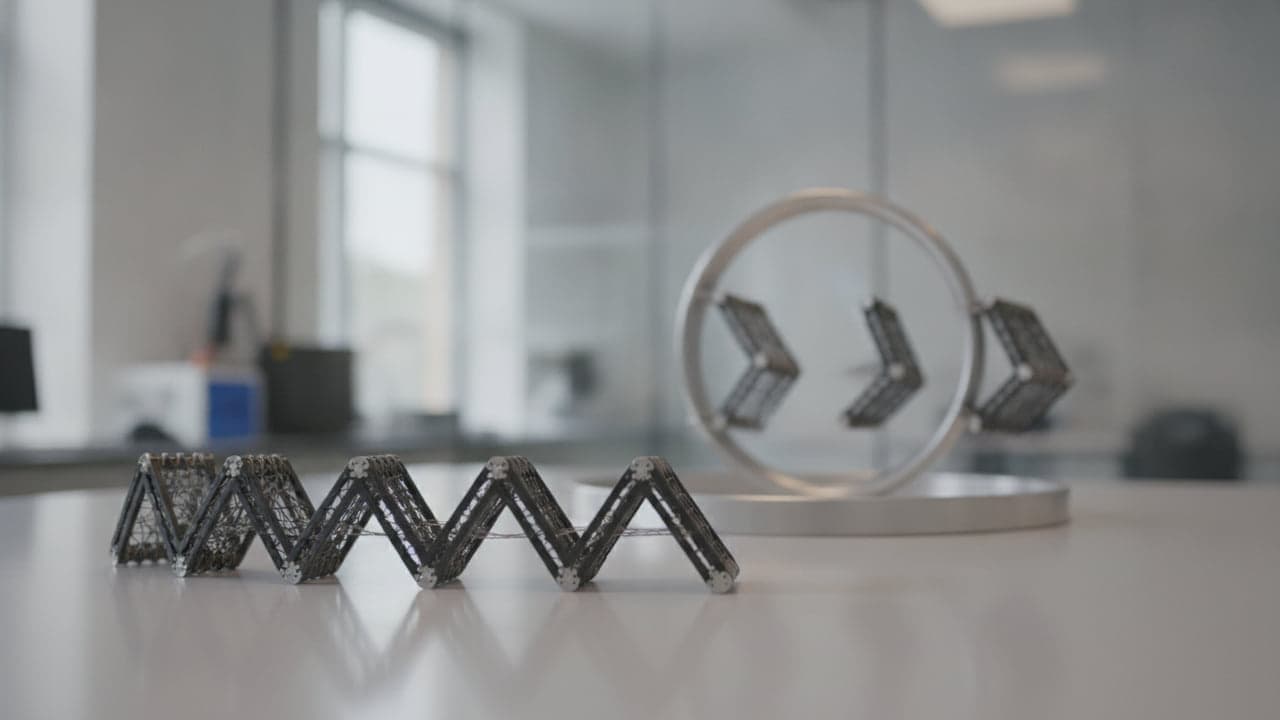
Etor Arza's morphing quadcopter squeezes through 15 cm gaps
The prototype uses two flexible arms with elastic rolling cam joints to shrink from 31.3 cm to 14.1 cm, then springs back to its normal shape.
By Letizia Giugliano
2 min read
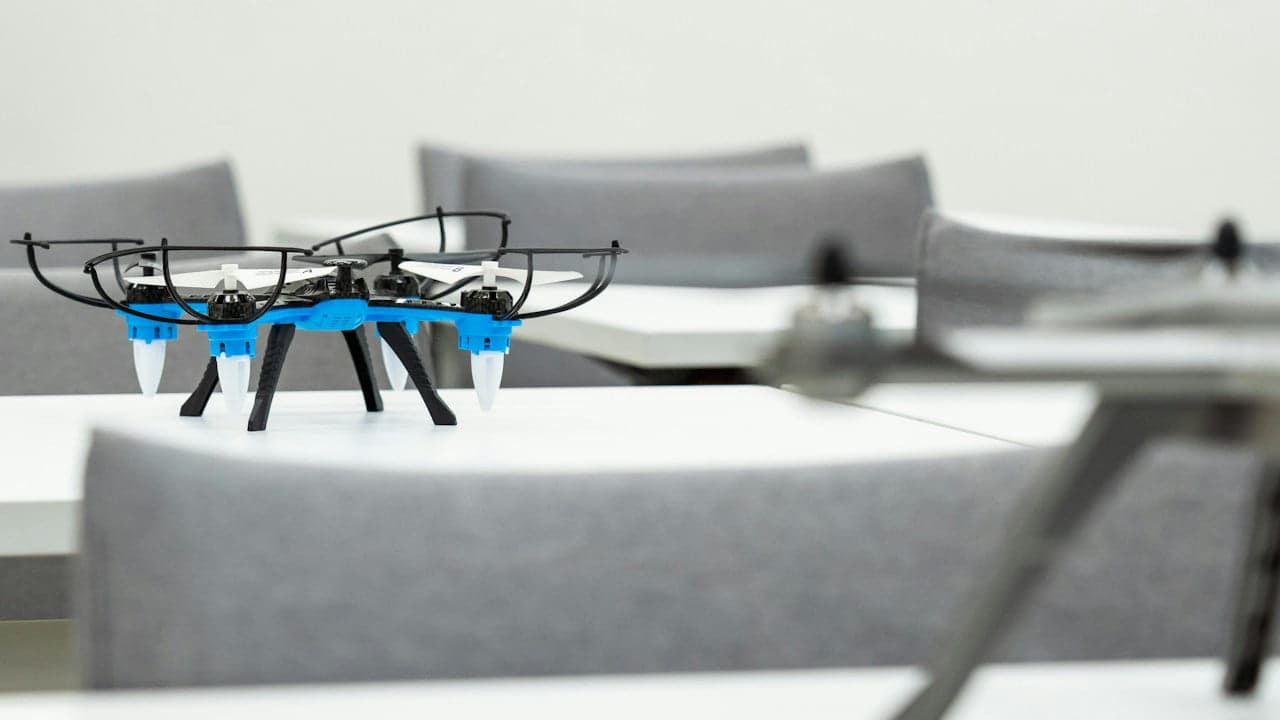
Etor Arza and colleagues have built a quadcopter that changes shape when it meets an obstacle instead of fighting it. The team's passive design lets the aircraft squeeze through openings that would stop a standard drone. A Hackaday report describes the prototype and points to the team's arXiv paper.
Two arms bend when the frame meets resistance
A standard quadcopter that hits an immovable object usually loses. Active systems can detect a narrow opening and reshape the aircraft before it tries to pass, but they add sensors, actuators and control software. Arza's team chose a passive approach. When either of two of the four arms meets resistance, the arm moves instead of pushing the frame into the obstacle. The prototype's width falls from 31.3 cm to 14.1 cm. In tests it passed through gaps as small as 15 by 20 cm and through tubes 40 cm long.
Elastic rolling cam joints store the force that resets the arm
To make the arm bend and recover reliably, the team used elastic rolling cam (ERC) joints on two of the four arms. The joint stores energy as the arm deflects. Once the quadcopter clears the opening, that stored tension pushes the arm back to its nominal position. The report calls reliable transformation and restoration the central challenge of passive morphing designs. The researchers also ran simulations to find the best angles for approaching a narrow gap.
The report describes a prototype, not a patent
The material described is a research prototype and an arXiv paper, not a granted patent. The report names no patent application, no applicant and no filing date. That leaves open whether the joint geometry is claimed, who would own it and whether a commercial version exists. None of those details appear in the source.
No flight time, payload or production date in the source
The report, published on 24 November 2026, gives no flight time, payload, speed or production date. It also does not say whether the design has been submitted for patent protection. The source stops at the prototype and the simulations. It names no manufacturer, no peer-reviewed journal and no next step, and draws no comparison with platforms such as the FlexiQuad, the Diden Robotics Spider, the Hopcopter or Piaggio Gita.
Read also on The Patent: Korea's POSTECH calibrates outdoor 3D tracking cameras using a drone's flight · MIT microrobot flies and lands on a flower using only onboard sensors · Manchester robot keeps deep sea microbes alive under pressure in the lab · Magnetic microbots tumble through blood vessels to dissolve clots faster
Human-Edited, AI-Assisted