A Chinese firefighting robot survives 1,832°F for 30 minutes
The same week's robotics listings include a 65-pound robot that insulates a live power line in 15 minutes and an inspection vehicle rated to 328 feet.
By Giovanni Sapere
4 min read
A firefighting robot built in China came through a furnace test at 1,832°F lasting half an hour, one of a run of robotics items dated between 19 and 24 November 2026. The machine carries an 80 litre-per-second water-foam cannon with a reach of 85 metres, and it watches the scene with gas sensors and thermal cameras. None of the items in the same feed names a patent, an application or an inventor, which leaves the intellectual-property position of each machine unstated.
Half an hour at 1,832°F, with foam and sensors
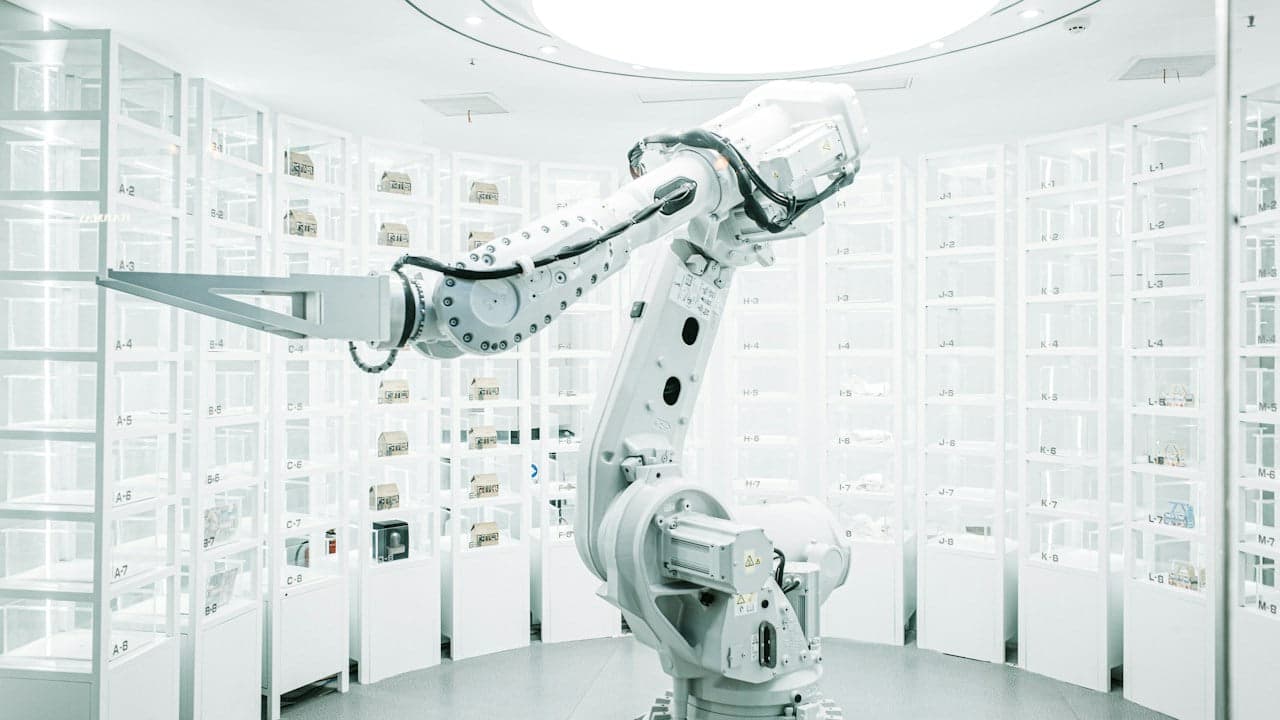
The firefighting robot was placed in an extreme furnace test for 30 minutes at 1,832°F, the temperature at which steel structures in a burning building begin to lose strength. Its 80 litre-per-second water-foam cannon throws a jet up to 85 metres, and gas sensors and thermal cameras track hazards while it works.
The listing, published in the AI and Robotics feed of Interesting Engineering, gives the performance figures but no manufacturer, model number or designer. What it does show is a machine built to stay functional where crews cannot stand, and to keep reporting what its sensors detect after the fire front has moved.
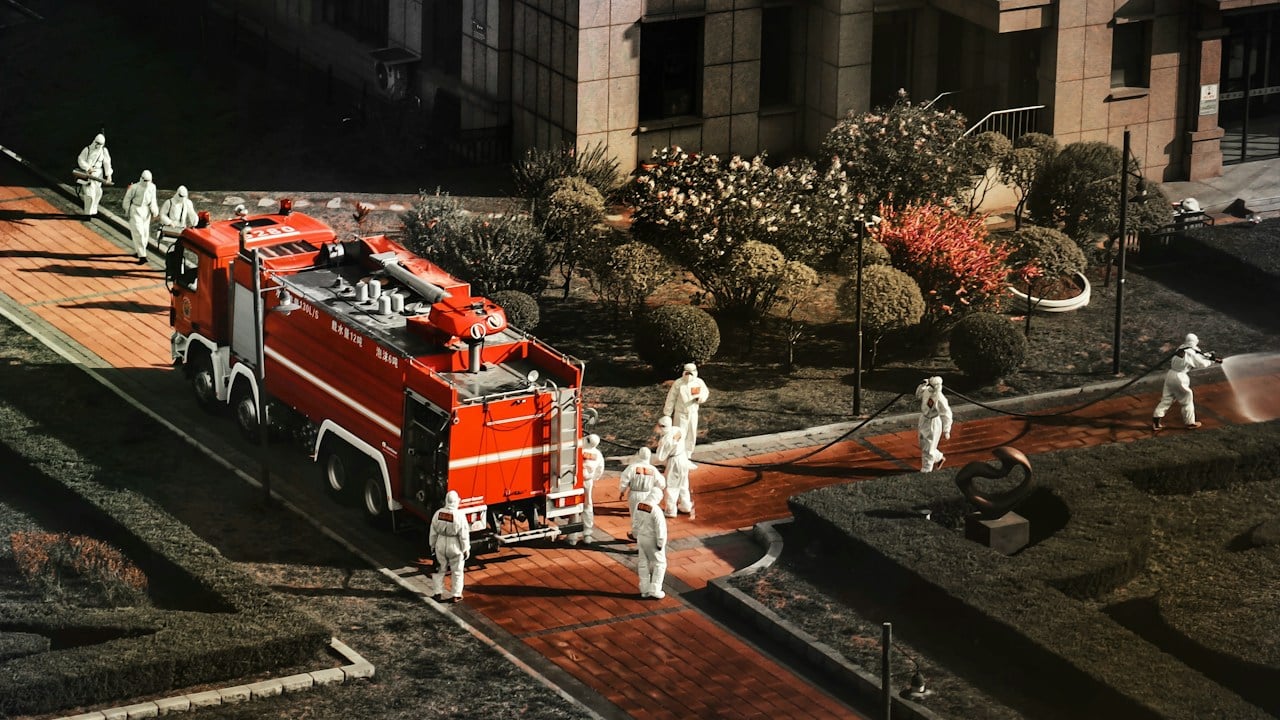 Photo: JunBo Sun / Unsplash
A 65-pound robot on a live line, an ROV at 328 feet
China deployed a 65-pound robot to insulate a live power line almost 100 feet up, work that took 15 minutes. The machine performs most of the physical task itself. It does not run unattended: human operators remain part of the operation.
Read also on The Patent: MIT revives a 1985 three-sided zipper patent as a 3D-printed Y-zipper
The same feed describes an underwater remotely operated vehicle, or ROV, rated to 328 feet (100 metres). It moves with six degrees of freedom, meaning it can shift and rotate on three axes, and it carries HD cameras and LED lights. Its job is to find hull damage before a ship or a structure fails. Both machines follow the same pattern: a person stays in the loop, and the robot takes the height or the depth.
Spring-loaded joints, and humanoids that trade blows
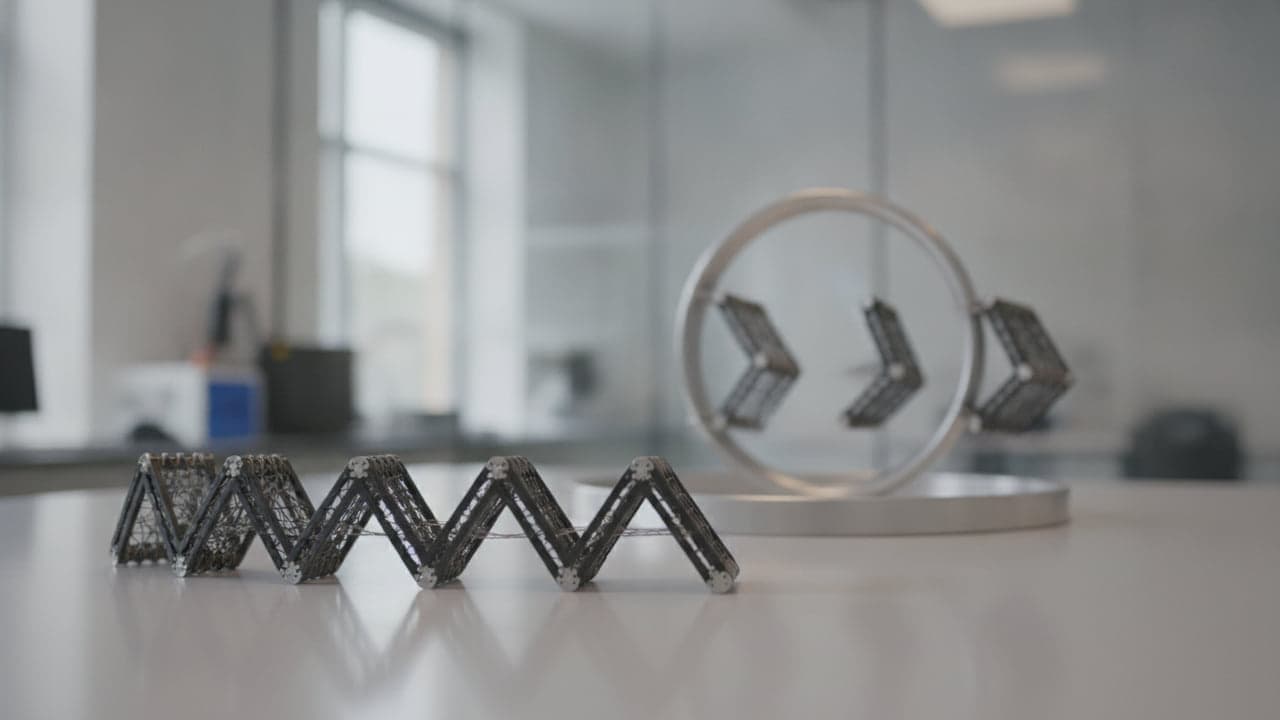
A drone with spring-loaded cam joints folds itself through openings narrower than its body at 4.5 mph, then snaps back into shape in mid-air. The arms morph passively, so the frame changes shape without a motor driving each joint.
Other entries push the same idea. One shape-shifting robot bends, grabs and combines with others to take on a new role. In San Francisco, two humanoids, T-Rek and Radar-72, traded punches, kicks and blade strikes at an event; T-Rek wore a silver, skull-like face with red eyes, Radar-72 a helmet and a camouflage-patterned body. Foundation showed a battlefield humanoid, the Phantom MKII, with a bigger payload and a tougher build, shaped by field trials in Ukraine and aimed at combat logistics.
On the software side, a chemistry benchmark and an agent
Hardware was not the whole week. MedChemBench, a new OpenAI benchmark, tests how well models reason through drug discovery: 99 chemistry problems that expose gaps in predicting the properties of molecules.
Apple is developing an autonomous agent that can control apps, browse the web and finish tasks for a user, putting it against Meta and Anthropic. Anthropic's item in the feed is financial: an IPO that raised more than $100 billion at a $1.5 trillion valuation, with chief executive Dario Amodei saying the company will not let business or political pressure set its development timeline.
No patent number appears in any of these listings
Not one of the items names a patent, a patent application, an inventor or a filing date. Product coverage rarely does, but it means the protection status of every machine above is unknown from the record.
A granted patent gives its holder the right to stop others making, using or selling the claimed invention for a limited term, in exchange for publishing how it works. A furnace test, a fight between humanoids or a product launch, whether of a FlexiQuad, a Diden Robotics Spider or a Hopcopter, shows what a machine can do. It does not disclose what is claimed, or whether a filing exists. For a reader using the feed as a technology-transfer signal, a demonstrated robot and a protected one are two different things.
The newest entries, timestamped 24 November 2026, are software again: Anthropic says its Claude model produced a 70-page paper and a Lean 4 proof addressing a 47-year-old conjecture by Valiant, and OpenAI and Cisco released Shirudo, an open-source tool meant to block attacks on running Linux systems without a restart.
Human-Edited, AI-Assisted