Aarhus University finds a sedative drug marker that lasts 48 hours in blood
The marker, called GHB Beta Ribose, was measurable in urine for 36 hours and in blood for 48, against a previous maximum of 12 hours in urine.
By Letizia Giugliano
3 min read
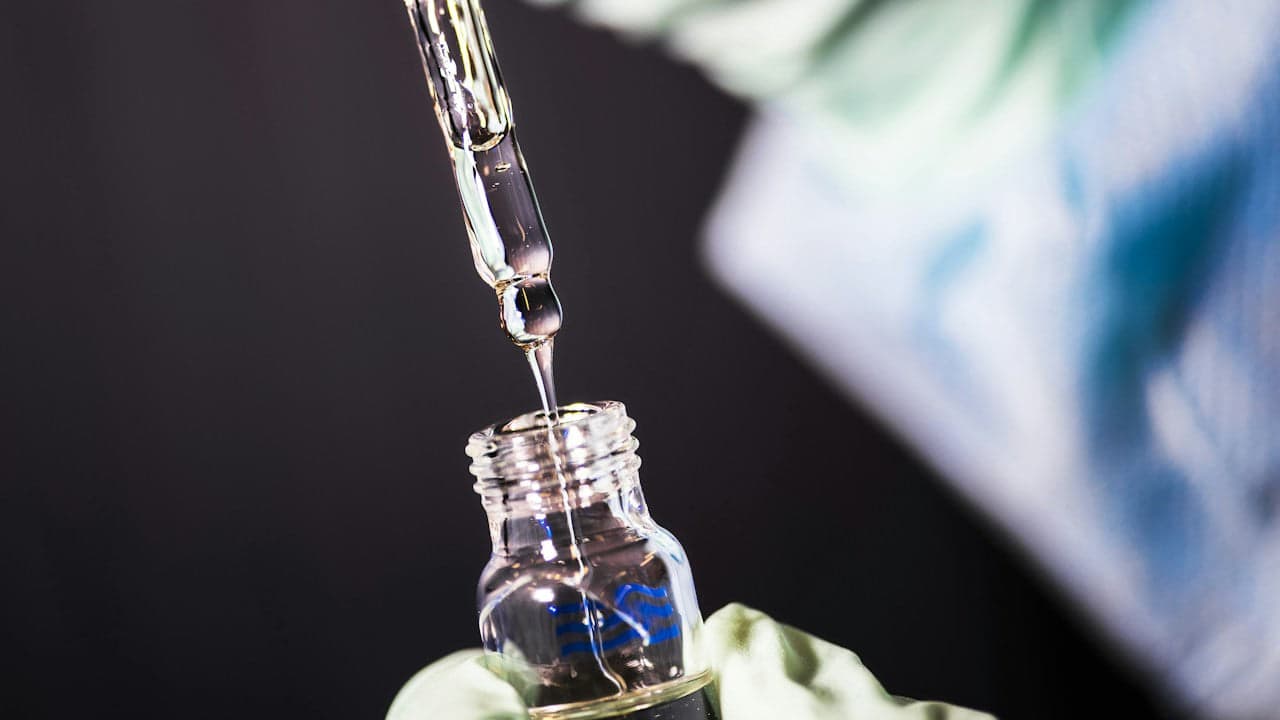
Researchers at the Department of Forensic Medicine of Aarhus University have identified a molecule that remains in the body after gamma-hydroxybutyrate (GHB) is taken, a drug that until now cleared too fast to be proven in court. In a clinical trial with 30 participants, the marker was detectable in urine for up to 36 hours and in blood for up to 48 hours, against a few hours in blood and a maximum of 12 hours in urine for GHB itself. The work was published in Science Advances.
A detection window that now reaches two days
GHB, known as "G" or "fantasy", is a clear, tasteless liquid that makes a person drowsy and causes memory loss. It is eliminated from the body so quickly that a blood sample taken the next morning can show nothing, which has made drugging and drug-facilitated rape hard to prove. Blood detection lasted only a few hours and urine detection no more than 12 hours.
The Aarhus team reports a molecule it named GHB Beta Ribose, whose concentration was higher in people who had taken the drug and which stayed in the body far longer than GHB itself. The paper, with Kathrine Bohn Faldborg as lead author among nine researchers, is published in Science Advances.
 Photo: Julia Koblitz / Unsplash
Read also on The Patent: Allergies may begin with energy-starved barrier cells, not immune misfires · A Berkeley compound burns fat in mice while sparing muscle · Nanoporous platinum electrodes restore 90% of muscle strength in animals
Charlotte Uggerhøj Andersen, consultant physician and clinical associate professor at the department, said the team set out to solve a forensic problem known for 30 years and still relevant today.
“The substance has been like a ghost that we have been unable to catch.”
: Jørgen Bo Hasselstrøm, senior researcher, Department of Forensic Medicine, Aarhus University
“You could say that we went fishing for differences between the two groups of participants.”
: Kirstine Lykke Nielsen, associate professor, Aarhus University
Thirty volunteers, half of them on a placebo
The study started in 2023 and involved physicians, forensic chemists and researchers in synthetic chemistry and metabolomics from the Department of Forensic Medicine, with colleagues from the Department of Chemistry. In the clinical trial, 30 participants received either GHB or a placebo, and the researchers then compared what appeared in their blood and urine.
"You could say that we went fishing for differences between the two groups of participants," said associate professor Kirstine Lykke Nielsen. The comparison turned up a molecule that had not been identified before, present at higher levels in the GHB group.
Chemists built the molecule to prove what it was
Identifying a signal is not the same as knowing what it is. The team proposed a chemical structure for the unknown substance, working on the assumption that GHB formed part of it, which would tie the molecule directly to the drug.
The confirmation came when chemists at the Department of Chemistry synthesised the molecule and showed it was identical to the substance seen in the trial. The marker also appeared in authentic samples that police had collected from drivers under the influence of GHB, a sign that it can be found outside a controlled study.
Jørgen Bo Hasselstrøm, senior researcher and one of the initiators of the work, described the drug as elusive. "The substance has been like a ghost that we have been unable to catch," he said.
What a laboratory still has to check before court
The method is not yet ready for criminal cases. The researchers say further validation is needed, and they are now testing whether certain diseases, bcg vaccination or alcohol consumption change the level of the biomarker in biological samples, a question that matters because alcohol is often present in the same cases.
The team also plans to distribute a reference standard, the calibrated sample that lets other laboratories calibrate their instruments and look for the same molecule. Hasselstrøm said that once the structure is known and the standard is shared, colleagues elsewhere may be able to set up the method and offer testing to victims even when a day or more has passed, which he said could give victims answers and help police investigations.
The sources describe no patent application on the marker or the method; the route to use set out by the researchers is scientific validation and the sharing of the reference standard with forensic laboratories.
Human-Edited, AI-Assisted