Norms & Regulation

Norms & Regulation

Supreme Court leaves Federal Circuit rule on patent equivalents intact

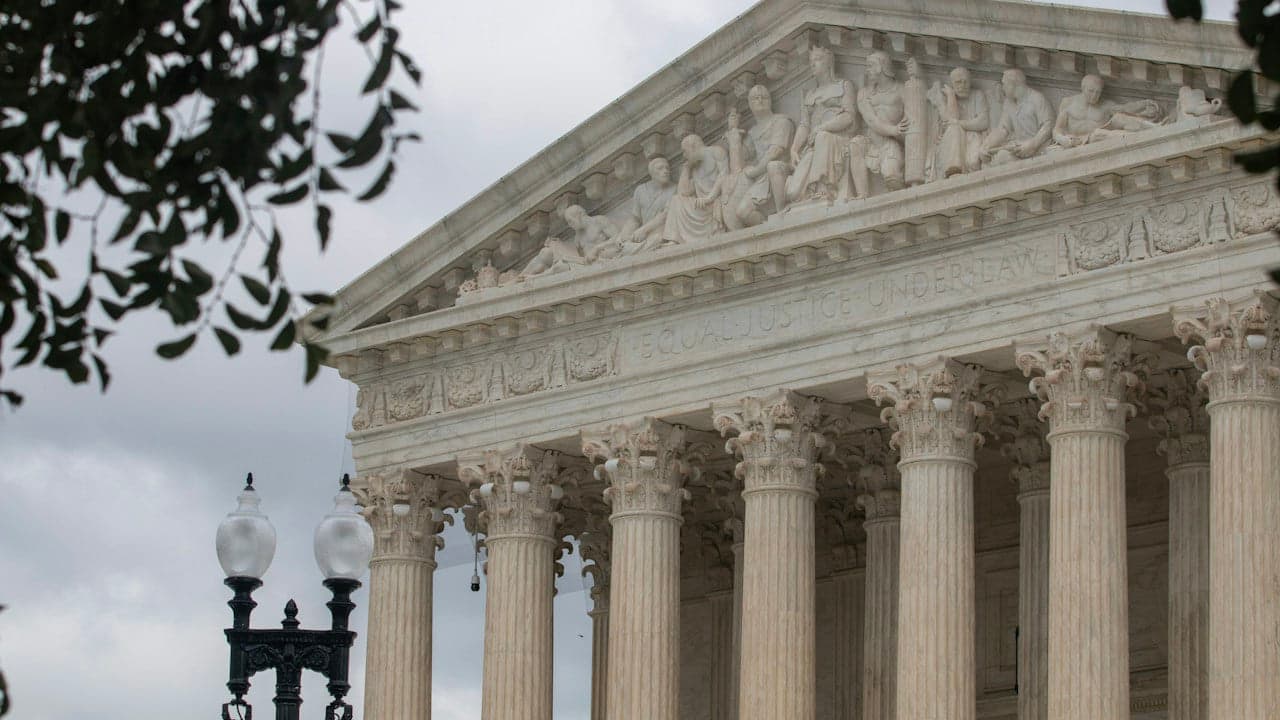
The U.S. Supreme Court has declined to hear an appeal challenging how federal courts evaluate equivalents under patent law. The decision in Genuine Enabling Technology LLC v. Sony Group Corp. leaves in place a strict Federal Circuit requirement that forces patent owners to explain why separate technical components are equivalent.

Letizia GiuglianoWith AI support · reviewed by Letizia Giugliano

Norms & Regulation

GAO Warns USPTO Backlog Targets Risk Failure Under Staff Strain

A federal audit released on November 5, 2026, found that the U.S. Patent and Trademark Office cannot meet its backlog reduction goals without resolving worsening staff turnover. The report by the U.S. Government Accountability Office shows that an annual examiner attrition rate of 7.6 percent and cutbacks in training threaten both examination quality and agency targets.

Letizia GiuglianoWith AI support · reviewed by Giovanni Sapere

Norms & Regulation

Australian Federal Court Clears Samsung Bioepis in Pfizer Enbrel Patent Dispute

The Federal Court of Australia has ruled that manufacturing processes for biosimilar Brenzys products do not infringe a Pfizer process patent. The decision in Pfizer Ireland Pharmaceuticals Unlimited Company v Samsung Bioepis Co., Ltd resolves claims over the production methods for the etanercept therapy Enbrel. The ruling provides clarity on the scope of intellectual property rights governing biosimilar manufacturing.

Giovanni SapereWith AI support · reviewed by Giovanni Sapere

Norms & Regulation

Second Circuit broadens the definition of use in software trade secret disputes

The U.S. Court of Appeals for the Second Circuit revived a trade secret lawsuit by SS&C Technologies against Arcesium on November 3, 2026. The appellate ruling overturned a lower court dismissal, establishing an expansive definition of what constitutes unlawful use under federal intellectual property rules.

Letizia GiuglianoWith AI support · reviewed by Giovanni Sapere

Norms & Regulation

Federal Circuit overturns 9.1 million dollar fee award against ChromaDex

The U.S. Court of Appeals for the Federal Circuit has overturned a 9.1 million dollar legal fee award against ChromaDex in its long-running dispute with Elysium Health. The appellate court ruled that ChromaDex presented a plausible defense of its patent eligibility under Section 101, meaning the case did not qualify as exceptional under federal patent law.

Letizia GiuglianoWith AI support · reviewed by Giovanni Sapere

Norms & Regulation

Federal Circuit overturns 9.1 million dollar fee award in vitamin patent case

The U.S. Court of Appeals for the Federal Circuit reversed a district court order requiring ChromaDex to pay 9.1 million dollars in legal fees to rival Elysium Health. The decision settles an exceptional-case dispute over dietary supplement intellectual property licensed from Dartmouth College. Judges ruled that while ChromaDex lost on patent eligibility, its arguments were neither frivolous nor foreclosed by Supreme Court precedent.

Giovanni SapereWith AI support · reviewed by Letizia Giugliano

Norms & Regulation

EU Digital Services Act: Major Platforms Fail Ad Transparency Rules

Digital platforms across the European Union are falling short of mandatory transparency obligations under the Digital Services Act. Independent legal research reveals that three quarters of evaluated services fail to provide country-level audience figures, while several have not delivered public ad repositories at all. The findings expose significant gaps between regulatory ambitions and current platform implementation.

Giovanni SapereWith AI support · reviewed by Giovanni Sapere

Norms & Regulation

Trilateral patent offices meet in Vienna on Global Assignment and AI

Leaders of the world's major patent offices convened in Vienna on 26 October 2026 to discuss international intellectual property administration. The Trilateral meeting focused on advancing the Global Assignment framework and deepening co-operation on artificial intelligence.

Giovanni SapereWith AI support · reviewed by Giovanni Sapere

Norms & Regulation

Federal Circuit Rejects Bartering Patent Application Under Section 101

The U.S. Court of Appeals for the Federal Circuit has affirmed the rejection of a patent application seeking to protect a computer-assisted bartering system. In a decision upholding findings by the Patent Trial and Appeal Board, the court held that swapping groceries for precious metals constitutes a fundamental economic practice that cannot be patented.

Giovanni SapereWith AI support · reviewed by Letizia Giugliano

Norms & Regulation

Supreme Court Rejects Google Challenge to PTAB Settled Expectations

The U.S. Supreme Court has declined to hear a petition by Google challenging the Patent Trial and Appeal Board's use of patent longevity in discretionary review denials. The decision leaves intact the administrative doctrine that protects long-held patent rights from inter partes review challenges.

Giovanni SapereWith AI support · reviewed by Letizia Giugliano

Norms & Regulation

France Proposes New Rules for 3D-Printed Spare Parts

France has recently notified the European Commission of a draft decree concerning spare parts generated through 3D printing technology. This initiative aims to navigate the complex landscape of intellectual property rights in modern manufacturing while fostering greater product longevity and sustainability.

Giovanni SapereWith AI support · reviewed by Letizia Giugliano

Norms & Regulation

German Supreme Court Sets High Bar for Abstract Color Trademarks

The German Supreme Court has clarified the stringent requirements for securing trademark protection for abstract color marks based on acquired distinctiveness. This ruling emphasizes the difficulty for businesses to establish that a color alone functions as a source indicator rather than merely a decorative element, impacting intellectual property strategies for brand identity.

Letizia GiuglianoWith AI support · reviewed by Letizia Giugliano

Norms & Regulation

Belgian Patent Litigation Navigates UPC Landscape

In European patent litigation, national courts, such as those in Belgium, maintain a crucial role in developing substantive and procedural law, even as the Unified Patent Court (UPC) gains prominence [The IPKat]. This ongoing evolution ensures that aspects of patent law, including claims interpretation, remain subjects of detailed legal scrutiny [The IPKat].

Giovanni SapereWith AI support · reviewed by Letizia Giugliano

Norms & Regulation

Federal Circuit Clarifies Patent Enablement for Dose Inventions

The United States Court of Appeals for the Federal Circuit recently issued a decision in *Wyeth v AstraZeneca*, applying the enablement test to a dose invention. This ruling provides important clarification on the requirements for sufficiently describing an invention in patent claims, particularly for method of treatment claims, and contrasts with other recent decisions.

Giovanni SapereWith AI support · reviewed by Letizia Giugliano
Norms & Regulation

Recent IP Legal Actions and Regulatory Discussions

In 2024, Nintendo of America commenced copyright infringement proceedings in the United States, highlighting ongoing enforcement efforts in the digital realm [source 2]. Concurrently, the World Trade Organization (WTO)'s dispute settlement system faces continued scrutiny, with an update provided by Seun Lari-Williams [source 3]. These developments occur as practitioners and academics prepare to discuss the future of European copyright law at an upcoming online conference in November 2026 [source 1].

Giovanni SapereWith AI support · reviewed by Letizia Giugliano
Norms & Regulation

Olymp Loses EU Appeals for Color Combination Trademarks

German textile company Olymp has lost two appeals before the European Union's General Court concerning the registration of color combination marks. These decisions highlight the ongoing challenges for businesses seeking to protect brand elements through non-traditional intellectual property rights in the EU, particularly when relying on color alone for distinctiveness.

Letizia GiuglianoWith AI support · reviewed by Letizia Giugliano

Norms & Regulation

German Supreme Court Raises Bar for Abstract Color Trademarks

The German Supreme Court has recently issued a significant ruling, making it more challenging to obtain trademark protection for abstract color marks based on acquired distinctiveness [The IPKat](http://www.blogger.com/feeds/5574479/posts/default/903164312701155405). This development underscores the evolving landscape of intellectual property law, a theme also explored in a new academic handbook on upcycling [The IPKat](http://www.blogger.com/feeds/5574479/posts/default/2308835532720489033).

Giovanni SapereWith AI support · reviewed by Letizia Giugliano

Norms & Regulation

The IPKat Blog Refreshes Its Look at 23

The IPKat blog, a well-known online resource for intellectual property news and analysis, is celebrating its 23rd year with a significant refresh of its visual design and user interface. This update aims to enhance readability and navigation for its global readership, which includes patent attorneys, researchers, and inventors.

Letizia GiuglianoWith AI support · reviewed by Letizia Giugliano