Patents

Physics

Cornell chip cools trapped ions to quantum ground state in 150 microseconds

Engineers at Cornell University have built a chip-based laser-cooling device that cools a trapped ion close to its quantum ground state in 150 microseconds. The hardware invention cuts the cooling time to roughly one third of what standard laser setups require, addressing a central operating bottleneck in quantum computing.


Physics

Ames Laboratory controls magnetic wave handedness for quantum computing

Physicists at the Ames National Laboratory have found a way to switch the handedness of magnons, magnetic waves that travel through solid materials without moving an electrical charge. The discovery, reported on November 10, 2026, provides a new mechanism to encode and process data for future quantum computing hardware. By applying an external magnetic field to specific kagome metals, the research team caused opposing wave states to mix.

Physics

Room-temperature supersolid created from light and matter

Physicists from Poland, Switzerland and France have observed a quantum supersolid at room temperature, using hybrid particles of light and matter inside an optical microcavity. The scientific innovation, detailed in Science Advances by researchers from the University of Warsaw, removes the requirement for near absolute zero refrigeration in exploring this hybrid state of matter.

Physics

AI Rivals Target the Yang-Mills Problem in Physics

Competing teams in artificial intelligence are turning their tools toward theoretical physics. Researchers from OpenAI and an Anthropic-associated group have made measurable headway on the Yang-Mills existence problem, according to reporting by [Science](https://www.science.org/content/article/ai-rivals-tackle-one-physics-deepest-mathematical-challenges).

Physics

Oxford physicists simulate Aharonov-Bohm effect using trapped ions

Physicists at the University of Oxford have demonstrated the Aharonov-Bohm effect inside a quantum simulation of a lattice gauge theory using trapped ions. The study, reported by [Phys.org](https://phys.org/news/2026-11-paths-flux-ions-simulate-aharonovbohm.html), models how matter interacts with force-carrying gauge fields in a closed loop. This experimental innovation provides an alternative method for exploring high-energy physics and exotic materials using quantum hardware.

Physics

Ultracold Lithium Atoms Reveal Competing Quantum Forces

Physicists have constructed a three-component quantum simulator using ultracold lithium-6 atoms suspended in laser light, revealing competing magnetic behaviors in a single experimental setup. The research, published in the journal Science, offers a way to study physical phenomena that have resisted numerical calculation for decades. This laboratory innovation lets scientists independently tune interactions among three distinct particle states to test models of superconductivity and nuclear matter.

Chemistry & Metallurgy

Diamond Foundry Grows World's First 200 mm Single-Crystal Diamond Disk

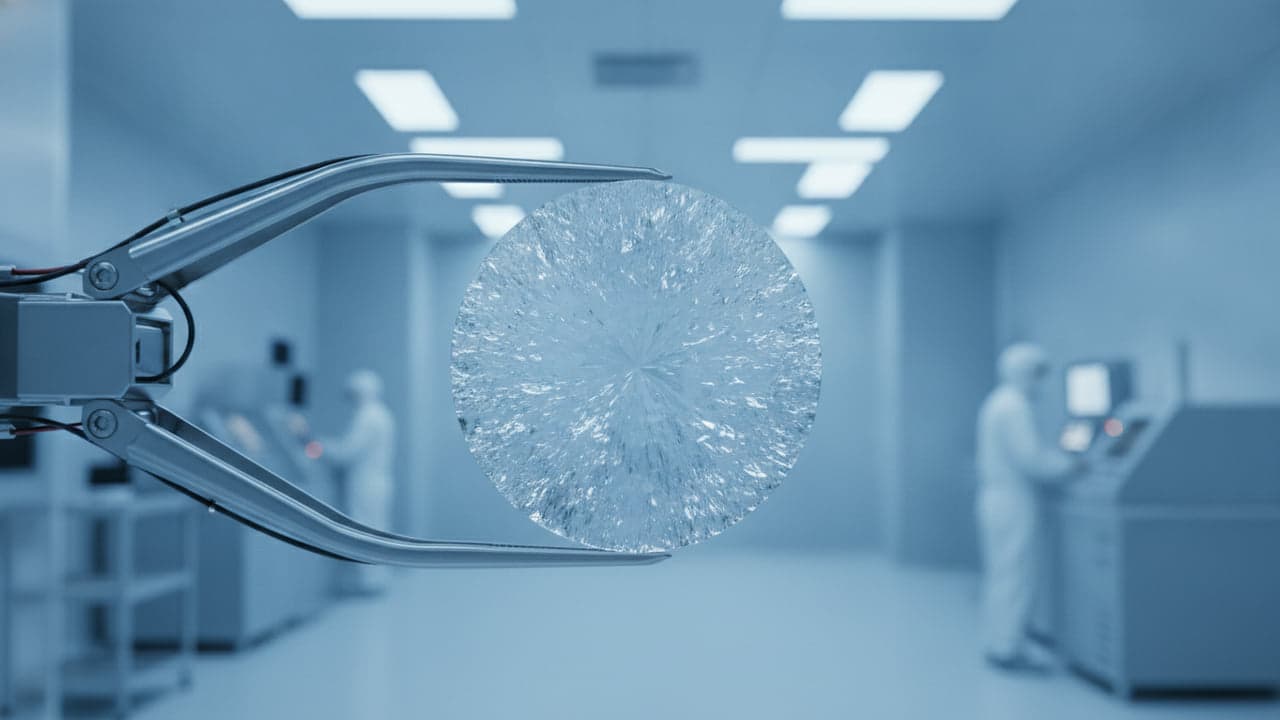
Diamond Foundry produced a 200-millimeter single-crystal diamond disk in an unpolished state, presenting the material on November 6 as the result of a 25-year research effort. The San Francisco company developed the continuous crystal to help pull heat away from high-performance microchips, particularly processors handling intensive artificial intelligence computations. Measuring 7.9 inches across, the monolithic sample represents a major technical invention in synthetic diamond synthesis.

Norms & Regulation

GAO Warns USPTO Backlog Targets Risk Failure Under Staff Strain

A federal audit released on November 5, 2026, found that the U.S. Patent and Trademark Office cannot meet its backlog reduction goals without resolving worsening staff turnover. The report by the U.S. Government Accountability Office shows that an annual examiner attrition rate of 7.6 percent and cutbacks in training threaten both examination quality and agency targets.

Physics

Compact laser accelerator generates bright water window X-rays in computer models

Physicists have demonstrated that a tabletop laser-plasma accelerator can produce bright, coherent soft X-ray pulses suited for observing living cells. The technological innovation, detailed in Nature Communications by researchers from Germany, Scotland and Czechia, creates pulses in the water window wavelength range using an apparatus measuring only a few meters.

Norms & Regulation

Australian Federal Court Clears Samsung Bioepis in Pfizer Enbrel Patent Dispute

The Federal Court of Australia has ruled that manufacturing processes for biosimilar Brenzys products do not infringe a Pfizer process patent. The decision in Pfizer Ireland Pharmaceuticals Unlimited Company v Samsung Bioepis Co., Ltd resolves claims over the production methods for the etanercept therapy Enbrel. The ruling provides clarity on the scope of intellectual property rights governing biosimilar manufacturing.

Physics

Automated system solves Aaronson-Ambainis quantum conjecture in three days

A computational research system has generated a formal mathematical proof for the Aaronson-Ambainis conjecture, an 18-year-old open problem concerning the limits of quantum computing. Physics research firm PSI announced that its automated platform produced the verification within three days, employing artificial intelligence to address when conventional machines can approximate quantum algorithms.

Motors

MTPeak One-All Brings 370 Horsepower per Ton to a Three-Wheeled Chassis

At the EICMA 2026 trade show in Milan, Chinese conglomerate GuangYu Industrial unveiled the MTPeak One-All, a mid-engine reverse trike engineered for bespoke low-volume production. The high-performance vehicle delivers 370 horsepower per metric ton, matching the power-to-weight ratio of classic supercars through a turbocharged four-cylinder powertrain and carbon-fiber bodywork.

Robotics

A 3D-printed robot moth grows UV sensors using its own artificial blood

Engineers have built a moth-shaped prototype that uses an internal fluid circulation to grow light detectors directly on its wings. The development in soft robotics, carried out by teams at the University of Tartu in Estonia and the Italian Institute of Technology, enables a machine to form new hardware components after manufacturing rather than relying solely on pre-installed parts.

Electricity

Silicon Superinductors Built on Standard Foundry Lines

Engineers have built a nonlinear superinductor directly inside a silicon integrated circuit using a standard manufacturing setup. The hardware innovation combines commercial silicon processing with superconducting materials to create high-impedance circuits for quantum hardware.