Spear Wound in Shanidar Cave Points to Oldest Wooden Weapon Attack
A 15-millimetre hole in a 75,000-year-old Neanderthal shoulder blade shows evidence of a fatal strike through the chest.
By Giovanni Sapere
3 min readHuman-Edited, AI-Assisted
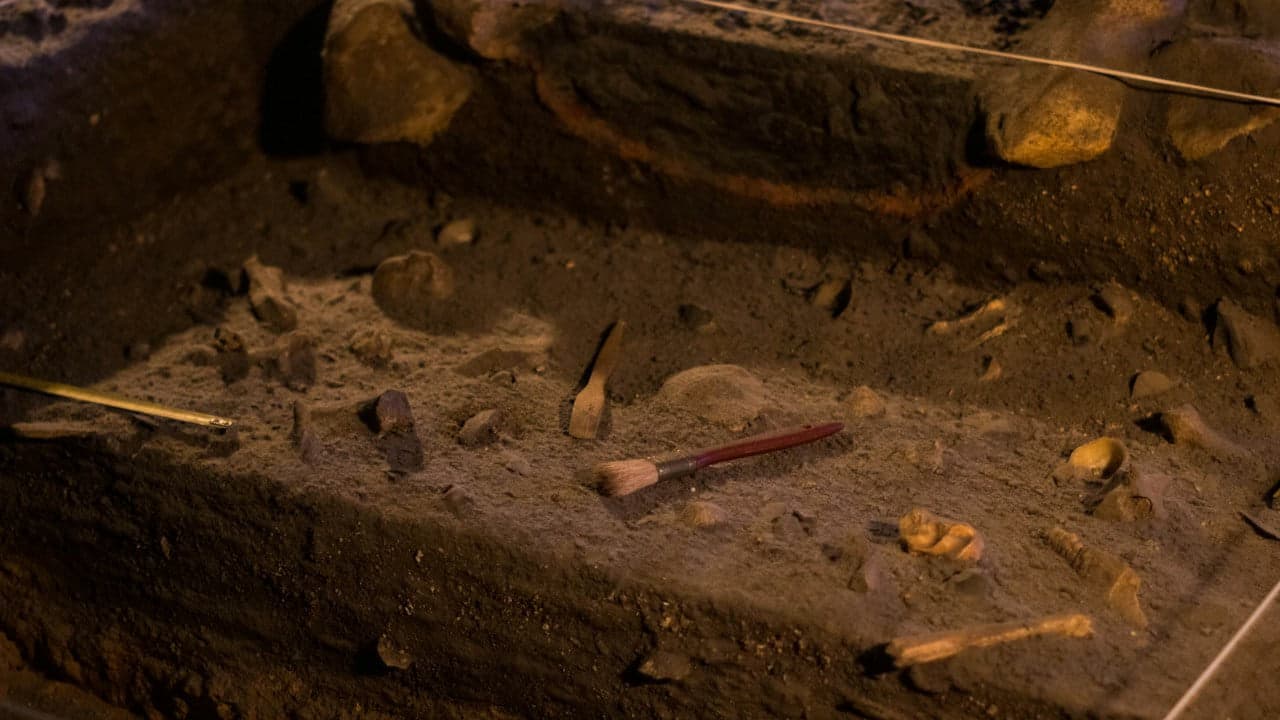
A 75,000-year-old Neanderthal skeleton discovered in Iraqi Kurdistan carries what may be the oldest fossil evidence of fatal violence inflicted by a wooden spear. Excavated beneath almost eight metres of rock and sediment, the left shoulder blade of the individual known as Shanidar A preserves a clean circular puncture directed through the chest. The finding, reported in Scientific Reports, suggests that early hominins used pointed wooden projectiles not only for hunting large game but also in deadly interpersonal conflict.
A 15-millimetre hole in delicate bone
Archaeologists from the University of Cambridge recovered the intact left scapula from a cave in Iraqi Kurdistan. Shoulder blades are remarkably fragile, with thin sections that allow light to pass through them, yet this bone survived roughly 75,000 years under heavy debris. Near its center sits a round opening measuring 15 millimetres across, described by researchers in a study reported by ScienceDaily.
The circular shape provided researchers with an immediate diagnostic clue. Weapons tipped with flint or flaked stone create angular, jagged fractures. By contrast, a smoothed, conical tip made of wood leaves a round perforation. The wound exhibits beveled edges typical of an exit puncture, while displaced bone fragments show that the weapon struck from the front, angled downward through the chest cavity and exited through the back of the shoulder.
“It's extraordinary to have a perfectly preserved scapula from 75,000 years ago. These bones are so thin that you often don't get complete scapulae from modern burials.”
— Dr. Emma Pomeroy, Department of Archaeology, University of Cambridge
Prehistoric woodworking and ballistics
The mechanics of the injury align with the prehistoric invention of aerodynamic wooden spears. Organic materials decay rapidly in soil, leaving few traces of Paleolithic carpentry, but rare waterlogged sites confirm that hominins possessed sophisticated woodworking techniques long before Shanidar A died, highlighting the resourcefulness of the ancient inventor. Excavations during the 1990s at Schöningen, Germany, yielded wooden spears roughly 200,000 years old, shaped like modern athletic javelins as an early aerodynamic prototype and measuring more than two metres long. An even earlier rounded wooden spear tip found in 1911 at Clacton-on-Sea in the United Kingdom dates back more than 400,000 years.
According to study lead author Dr. Emma Pomeroy from the Cambridge Department of Archaeology, recreating impacts with replicas of these weapons reproduces the exact damage found on Shanidar A. The wound suggests that this weapon-making innovation extended beyond Europe into the prehistoric Middle East, equipping Neanderthal groups with effective hunting tools that could double as weapons, millennia before any formal patent could document such technical advances.
Interpersonal violence or hunting accident
The trajectory of the strike indicates the weapon pierced a lung and major blood vessels before exiting the back, an impact that would have caused rapid death from blood loss. Researchers suspect the strike was a targeted heart shot. Close-quarters hunting of large Pleistocene herbivores like mammoths carried severe physical risks, and accidental thrusts could happen during chaotic encounters. However, the downward angle and forceful drive through the torso suggest an intentional thrust directed at the individual.
Shanidar A was no stranger to physical trauma. Previous analyses revealed that the same individual had survived a severe facial injury years earlier, a condition that left him impaired and dependent on his social group for care. While earlier discoveries at the cave highlighted Neanderthal compassion and survival support, this fatal puncture exposes the violent risks that hominins faced within their wider communities.
Read also on The Patent: Rockefeller University Engineers TrUDI Platform for Deep Brain Imaging · Microfluidic chip screens leukemia drug therapies in children