Europe's Ancient Forests Were Open Woodlands, 23-Million-Year Study Finds
Paleoecological data reveals large herbivores maintained sunny clearings and meadows, challenging modern tree-planting policies.
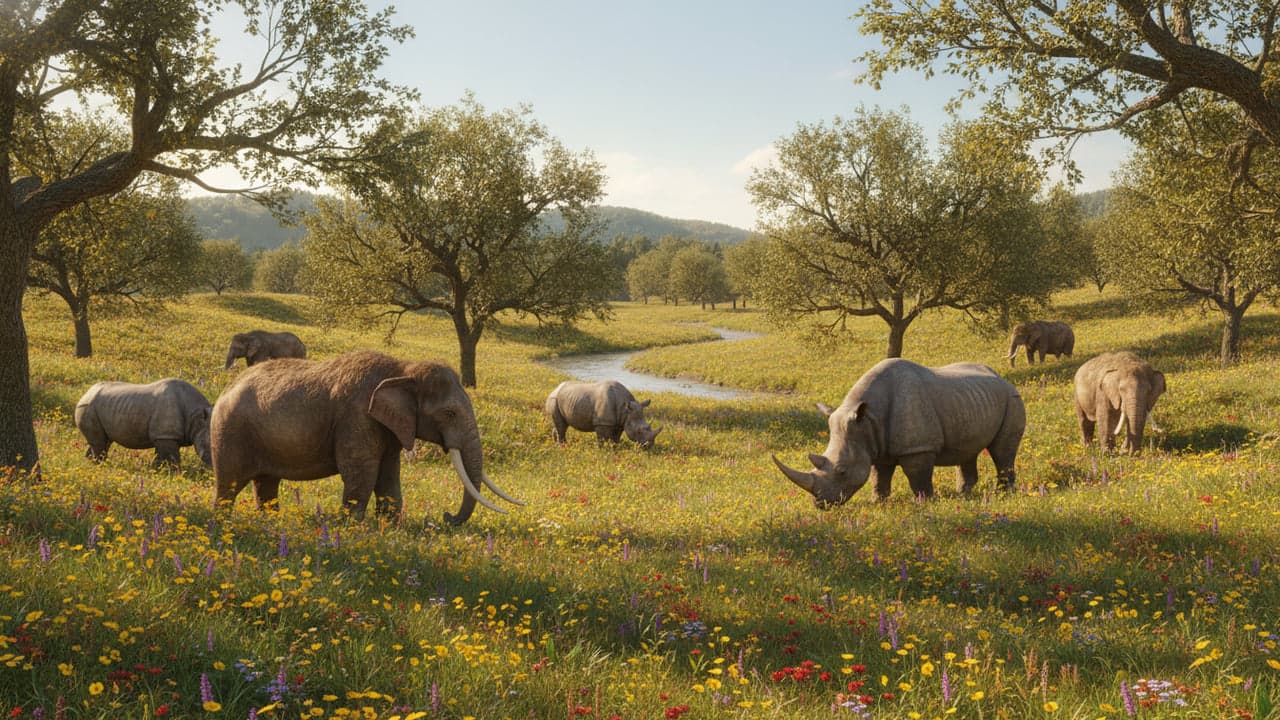
Researchers at Aarhus University have established that Europe was dominated by open woodlands and meadows for more than 20 million years. The research innovation, published in the journal Biological Conservation, disputes the assumption that unbroken canopy forests represent the continent's baseline wilderness.
Twenty-three million years of fossil and genetic data
To reconstruct past ecosystems, lead author Szymon Czyzewski and senior author Professor Jens-Christian Svenning at the Center for Ecological Dynamics in a Novel Biosphere (ECONOVO) analyzed multi-proxy records spanning from the Miocene epoch, starting roughly 23 million years ago, through the pre-industrial period. As reported by ScienceDaily, the team combined several independent paleoecological methods rather than relying on a single indicator. Their dataset included fossilized pollen, macroscopic plant remains, wildfire charcoal layers, fossil insects, and mammal bones. They also examined wear marks and chemical signatures preserved on fossilized herbivore teeth, alongside ancient environmental DNA recovered directly from geological sediment layers.
“The study shows that current reforestation practices are on the wrong track - both here in Denmark, where subsidies are only granted for planting dense forests, and elsewhere in Europe.”
— Professor Jens-Christian Svenning, ECONOVO at Aarhus University
Large herbivores shaped open ground
The cross-referenced data revealed that Europe rarely consisted of uninterrupted, dark forest canopies. Instead, the continent maintained a dynamic mosaic of open woodlands, sunlit clearings, and flower-filled meadows. Large plant-eating animals drove this ecosystem structure. Ancient proboscideans, rhinoceroses, wild horses, and beavers actively fed on saplings, grazed grasses, and churned soils. This constant disturbance prevented tree canopies from closing completely, creating sunny environments where diverse flowers, butterflies, and birds flourished over millions of years.
Why dense tree planting conflicts with native ecology
The findings counter the longstanding closed-forest paradigm, which assumes human farming alone cleared Europe of dense primordial woods. According to the research team, applying that flawed historical model threatens long-term ecological sustainability. Modern policies frequently offer state subsidies strictly to plant dense tree cover, such as current conservation grants in Denmark. Svenning noted that such practices run counter to the evolutionary conditions of native species and can harm biodiversity. Reframing European ecological history provides researchers and land managers with evidence to foster ecological innovation and guide the invention of mixed, herbivore-driven restoration strategies.
Read also on The Patent: Spear Wound in Shanidar Cave Points to Oldest Wooden Weapon Attack · Egyptian Ape Fossil Shifts the Geographic Roots of Modern Primate Evolution