University of Copenhagen rebuilds Taxol pathway in a tobacco plant
More than 20 genes from the yew tree were moved into Nicotiana benthamiana, which made paclitaxel at levels close to those found in yew bark.
By Letizia Giugliano
4 min read
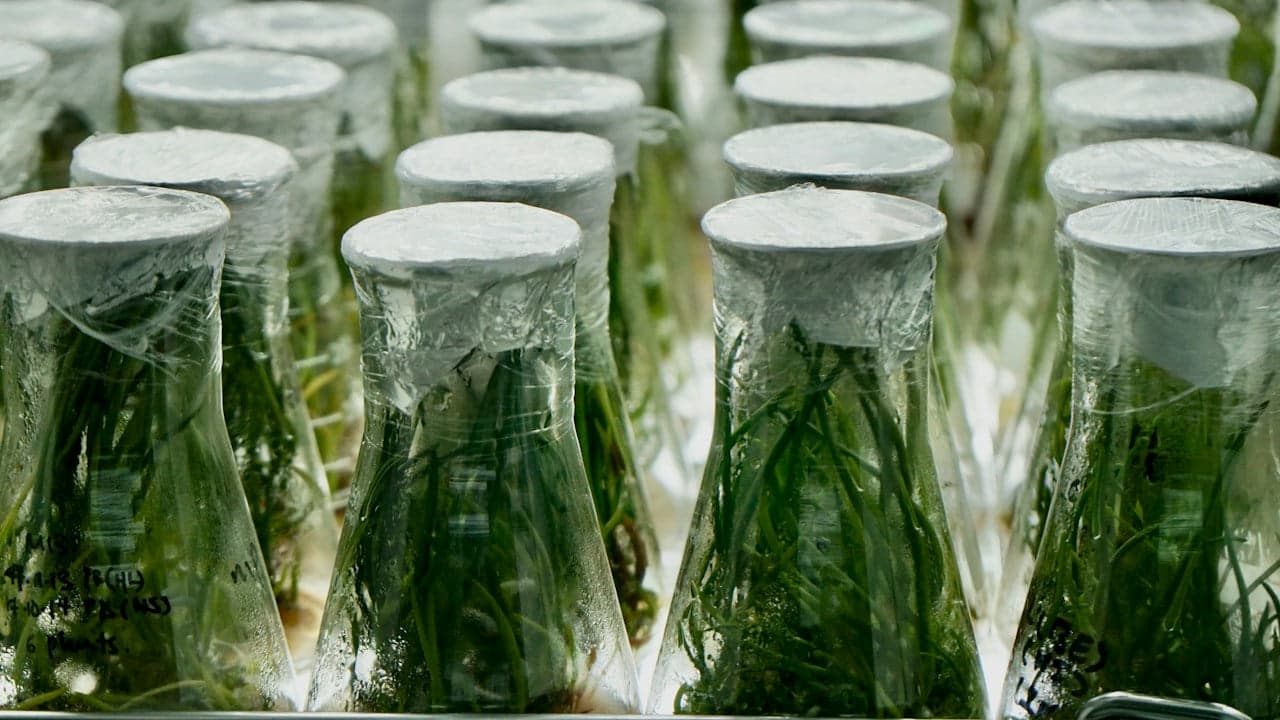
Researchers at the University of Copenhagen have assembled the complete biosynthetic route that yew trees use to make paclitaxel, the cancer drug sold as Taxol, and reproduced it in a tobacco plant. The engineered Nicotiana benthamiana plants produced the compound at levels comparable to those found naturally in yew bark, according to the study published in Nature Chemical Biology on 23 November 2026. The team says the pathway is a recipe other groups can now use, in plants or in yeast, to make the medicine more cheaply.
Twenty yew genes in a fast-growing tobacco leaf
Taxol is used against breast cancer, ovarian cancer and lung cancer. Its active compound is built in the bark of the yew tree, but until now nobody had written down every step the tree takes to build it.
Zhen Fan, a postdoctoral researcher at the Department of Plant and Environmental Sciences and co-first author, said his team introduced more than 20 yew genes into tobacco and followed the process stage by stage. The host plant, Nicotiana benthamiana, grows quickly and is a laboratory standard. The result was paclitaxel at concentrations close to those measured in yew bark.
Read also on The Patent: Algarve fossils push the rise of modern green algae back 30 million years · University of Michigan finds how bacteria survive making cancer drug doxorubicin · Human immune cells can engulf amoebae, Louisville study finds · A mushroom that carries psilocybin and deadly toxins, a first · A $450 3D printer builds living materials more than 100 layers tall
Sotirios Kampranis, professor in the same department and senior author, gave the reason the host works: tobacco offers «the same cellular environment as the yew tree but is a lot faster to grow and easier to engineer». The paper, led by Feiyan Liang, is titled «Complete biosynthesis and production of paclitaxel in a plant host» and carries the DOI 10.1038/s41589-026-02376-x.
“We now have a blueprint, essentially a recipe, that can be used to produce Taxol in plants, yeast or other systems.”
: Sotirios Kampranis, professor, University of Copenhagen
“We introduced more than 20 of the yew tree genes into tobacco plants to demonstrate the entire biological process of Taxol production step by step.”
: Zhen Fan, postdoctoral researcher, University of Copenhagen
Why a common cancer drug is one of the most expensive
Industrial Taxol is not extracted directly. Producers pull related compounds out of plants and convert them into the drug through a long chain of chemical reactions, a route that keeps the medicine among the most costly available.
Kampranis puts the cost in the context of access. Hospitals and patients in Denmark, he says, are not heavily dependent on low-cost Taxol; in many other parts of the world affordable treatment matters far more. «We now have a blueprint, essentially a recipe, that can be used to produce Taxol in plants, yeast or other systems,» he said.
His team also points to fermented yeast cells as a second possible production host, alongside plants. The chemical news outlet C&EN reported that pinning down the pathway took scientists decades.
A recipe published, and no patent named
Neither source describes a patent application or a granted patent on the pathway. The disclosure is a peer-reviewed paper in Nature Chemical Biology, which places the list of genes and reaction steps in front of any academic or industrial group that wants to test it.
That openness shapes what the finding is worth commercially. What the paper publishes is the map; the engineering needed to run it at industrial scale, in a greenhouse or a fermenter, is where protection would more plausibly be sought, and the sources say nothing about filings on that side.
There is also a supply argument behind the work. For drug manufacturing, the appeal resembles what is sometimes called extinction+technology: keeping a compound in production while its original source, a slow-growing tree, is no longer the only place it can be made.
The next step: plants that keep the yew genes
Tobacco that carries the yew genes only after a fresh transfer is enough to prove the pathway works. It is not enough to manufacture the drug.
«That is the next major challenge,» Kampranis said. Large-scale output, for instance in greenhouses, needs stable plants that hold the yew genes permanently, so the genes do not have to be introduced every time.
Until such lines exist, the Copenhagen result stands as a demonstration in a research plant, with yeast fermentation named as the parallel route, and with the colossal cloning cost of rebuilding multi-gene pathways still a barrier to routine deployment. Kampranis frames the aim plainly: cheaper Taxol that reaches patients in low-income countries, where his team says affordable treatment is decisive.
Human-Edited, AI-Assisted