Hollow 'PAC-MAN' capsules sort particles in turbulent water without chemistry
Hollow polymer shells with a single opening either packed themselves full or kept particles out, depending on how well a particle fitted the hole, and the effect held from 1 centimetre down to 5 micrometres.
By Giovanni Sapere
3 min read
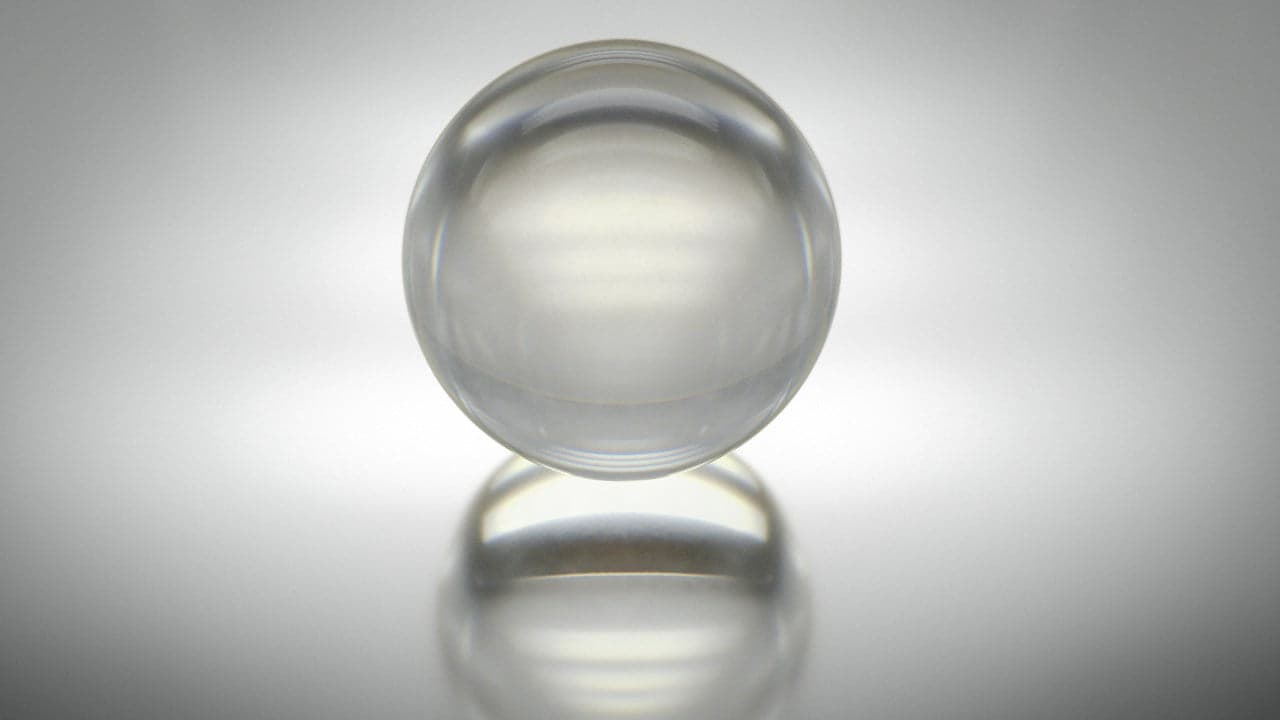
Hollow capsules with one hole can pull selected particles out of churning water without any chemistry: the size of the opening and the disorder of the flow decide what goes in. Stefano Sacanna, professor of chemistry at New York University, and William Irvine, professor of physics at the University of Chicago, co-led the research, published in Science in November 2026. Filtration and drug delivery are the uses the authors raise, and neither has been built yet.
Two labs asked whether chaos could be put to work
Turbulence is the irregular, swirling motion of a liquid or gas, from cream stirred into a cup of coffee to the whirlpools of a river rapid. Engineers usually treat it as loss. "Turbulence is usually thought of as pure chaos: it mixes, scatters and wastes energy. We asked whether that chaos could be put to work," Sacanna said.
The two researchers built hollow polymer capsules, each pierced by a single hole, and dropped them into water that was stirred or shaken until the flow turned turbulent. The paper appeared in Science in November 2026, with microscopy images credited to the Chong/Sacanna Lab at NYU.
 Photo: Claudio Schwarz / Unsplash
“Inside the capsule, it's fairly calm. But outside, the environment is raging. This creates a gradient, so particles flow, and functions emerge.”
: William Irvine, professor of physics, University of Chicago
A quiet pocket that turns the hole into a gate
The shell does the first job: it blocks the swirls and leaves a still interior of the kind the team calls a turbulence shelter. Since only eddies smaller than the opening can pass, the inside stays calm while the outside churns, and that difference turns the hole into a selective door.
Read also on The Patent: China's J-35 engineers 3D-print a 16.4-foot fuselage structure · MIT revives a 1985 three-sided zipper patent as a 3D-printed Y-zipper
The selection is geometric rather than chemical, and the authors insist the shell is not a sieve. "Particles that would slip easily through the hole can be kept out, while ones that barely fit get packed in," Sacanna said. A shell either fills until it is packed or rejects particles almost completely, a behaviour his team named the PAC-MAN effect after the arcade character that eats dots.
The same design at 1 centimetre and at 5 micrometres
To test whether size mattered, the researchers made capsules on three scales: 1 centimetre, 1 millimetre and 5 micrometres, the last smaller than a red blood cell. The centimetre and millimetre versions came off specialised 3D printing equipment at the University of Chicago; the micrometre ones were synthesised in Sacanna's lab.
All three ingested or released particles according to the hole. With the centimetre shells, changing the opening by less than 10% was enough to flip a capsule from collecting particles to rejecting them. At the smallest scale the shells sorted particles by size or density, with images showing spheres of 780 nanometres and 980 nanometres entering a single shelter. "This PAC-MAN effect manifests in all three systems, spanning from microscopic to macroscopic scales," Sacanna said.
Filters, water cleanup and cargo released over years
Because a capsule gathers or releases particles according to its geometry, the paper points to sorting particles and filtering fluids, including removing chosen contaminants from water during environmental cleanup. Drug delivery is the other candidate: the shells can be tuned to let their contents out at rates running from seconds to years.
The prototype results stop at capsules sitting in stirred liquid. No filter cartridge, no water treatment trial and no medical test is described, and the gap between a laboratory shell and a product is not addressed in the published account. What the experiments do establish is that the effect needs no chemical coating and no external control, only a hole of the right size.
AI-assisted article