Livermore and Argonne run first plutonium compression tests at a synchrotron
A nested containment chamber let engineers shock plutonium samples with laser-driven compression at the Advanced Photon Source and measure the changing state with short X-ray pulses.
By Giovanni Sapere
4 min read
Scientists at Lawrence Livermore National Laboratory, Argonne National Laboratory and Washington State University have run the first dynamic compression experiments on plutonium at a national light source facility. The team fired eight shots in four days in July at the Dynamic Compression Sector, a station operated by WSU at Argonne's Advanced Photon Source. The measurements are meant to feed equations of state and models used in stockpile modernization and national security work.
A chamber inside a chamber at the synchrotron
The Dynamic Compression Sector sits at the Advanced Photon Source in Illinois, which the source describes as the brightest synchrotron X-ray light source in the world. Its laser-shock station is one of several end stations along the ring.
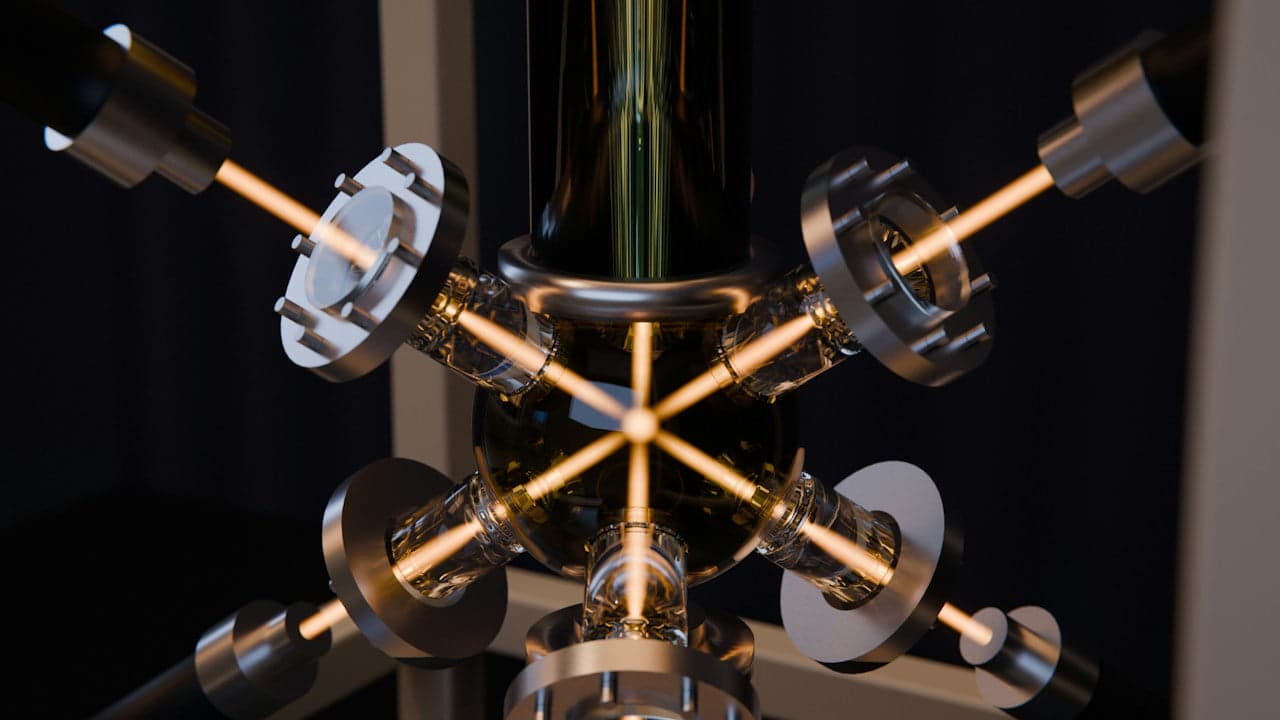
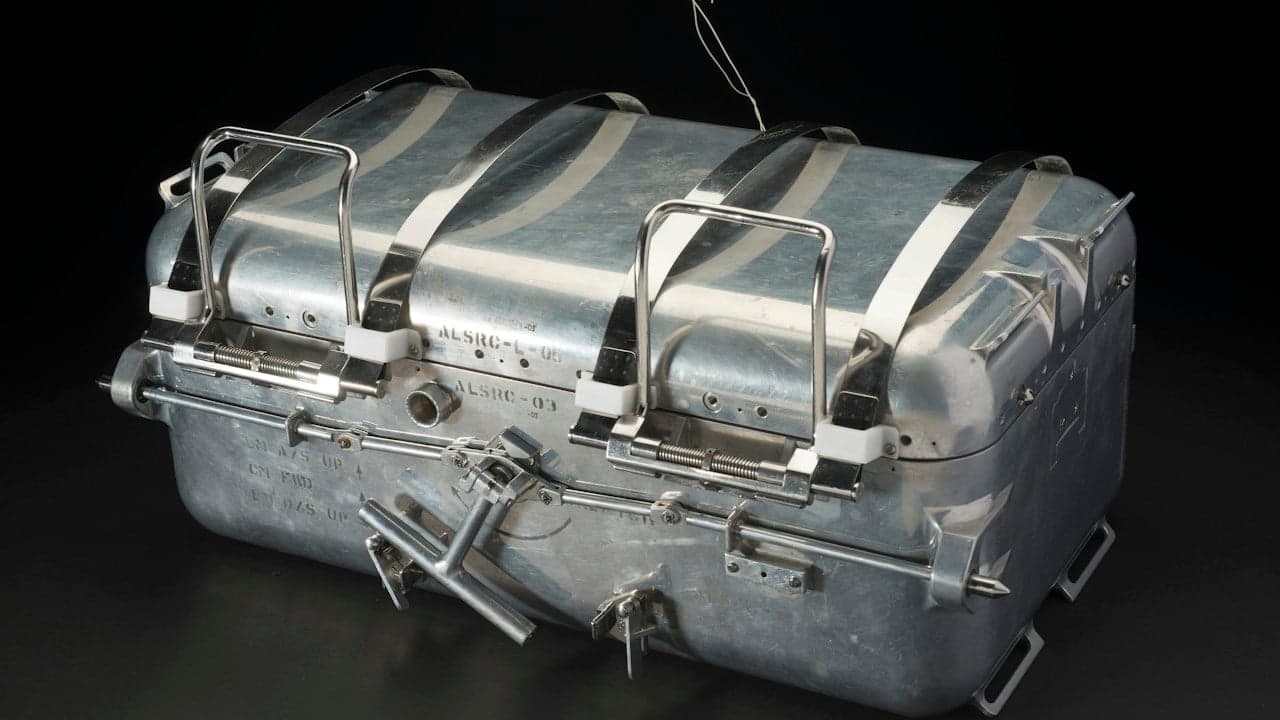
Plutonium could not go into the standard chamber directly. Engineers at LLNL built a Heavy Metal Chamber that fits inside it. "It functions a bit like a Russian nesting doll," said Blake Cardoza, the project's design engineer. The inner vessel provides the containment that makes the experiment safe; the outer one provides the beamline.
 Photo: Pawel Czerwinski / Unsplash
Read also on The Patent: Cornell chip cools trapped ions to quantum ground state in 150 microseconds · Ames Laboratory controls magnetic wave handedness for quantum computing
Inside, a high-power laser drives a compression wave through the sample, squeezing it to high pressure. Diagnostics read the pressure while X-rays probe the material. Jim McNaney, a senior adviser to the project and its former principal investigator, described the physics plainly: "A shock squeezes matter so fast that it doesn't have time to get out of the way."
The sector's laser driver is less energetic than the one at LLNL's National Ignition Facility, which is what allowed the group to field several targets in a single campaign rather than one at a time.
“The unprecedented data quality allows us to address longstanding questions that we could not answer previously.”
— Andy Krygier, LLNL scientist and principal investigator
“It functions a bit like a Russian nesting doll.”
— Blake Cardoza, project design engineer, LLNL
“A shock squeezes matter so fast that it doesn't have time to get out of the way.”
— Jim McNaney, senior adviser to the project, LLNL
Why shorter pulses give a sharper picture
The National Ignition Facility can also compress plutonium and record X-ray diffraction. The difference is the light. The Advanced Photon Source produces X-rays with higher energy, shorter duration and a narrower energy spectrum.
That matters because the sample is moving through states while it is being measured. "The material state is changing as we're shocking it," said Andy Krygier, an LLNL scientist and the principal investigator. "The shorter the duration of our X-rays, the less that material state changes while we're measuring it."
The payoff, he said, is data quality the team had not had before: "The unprecedented data quality allows us to address longstanding questions that we could not answer previously." The output is not a product but a measurement, feeding the equations of state that underpin models of how plutonium behaves under pressure.
Getting to those four days took years of planning across three institutions, including safety and security reviews with Argonne and WSU staff.
Three months of machining for eight samples
LLNL fabricated and delivered the eight plutonium targets. Anna Murphy, who led target fabrication, said the work took three months and required a new machining process that let several samples be produced in a single run. Her team then spent several weeks assembling the physics packages and mounting all eight on the experiment fixture. She put the effort at the equivalent of producing eight NIF targets.
The innovation the project added on the engineering side is containment: a vessel designed to LLNL's physics requirements and dropped into a facility built for nonhazardous materials. "DCS has a standard chamber that enables many exciting experiments on nonhazardous materials," Cardoza said. "Our chamber sits inside of that and provides the containment."
Logistics carried as much weight as hardware. John Heck, who led the LLNL IT team, credited Argonne and WSU information technology, security, operations and beamline staff for support across a deployment he called complex and long.
One experiment a year, and questions still open
The group plans to raise the difficulty rather than the volume: different plutonium targets, different physics questions, at a pace of one experiment per year, which Krygier said could be sustained for the foreseeable future.
"There's a lot of different physics that we want to explore. These experiments were really just scratching the surface," he said.
Nothing in the material describing the work mentions a patent application or a granted patent. The record here is a capability and a dataset: eight shots, four days, a containment vessel built for the purpose and X-ray pulses short enough to freeze a state that lasts a moment.
AI-assisted article