China's J-35 engineers 3D-print a 16.4-foot fuselage structure
The AVIC Shenyang laboratory also printed an annular heat exchanger that transfers heat, extracts air, carries load and eases maintenance inside an aircraft air intake.
By Letizia Giugliano
3 min read

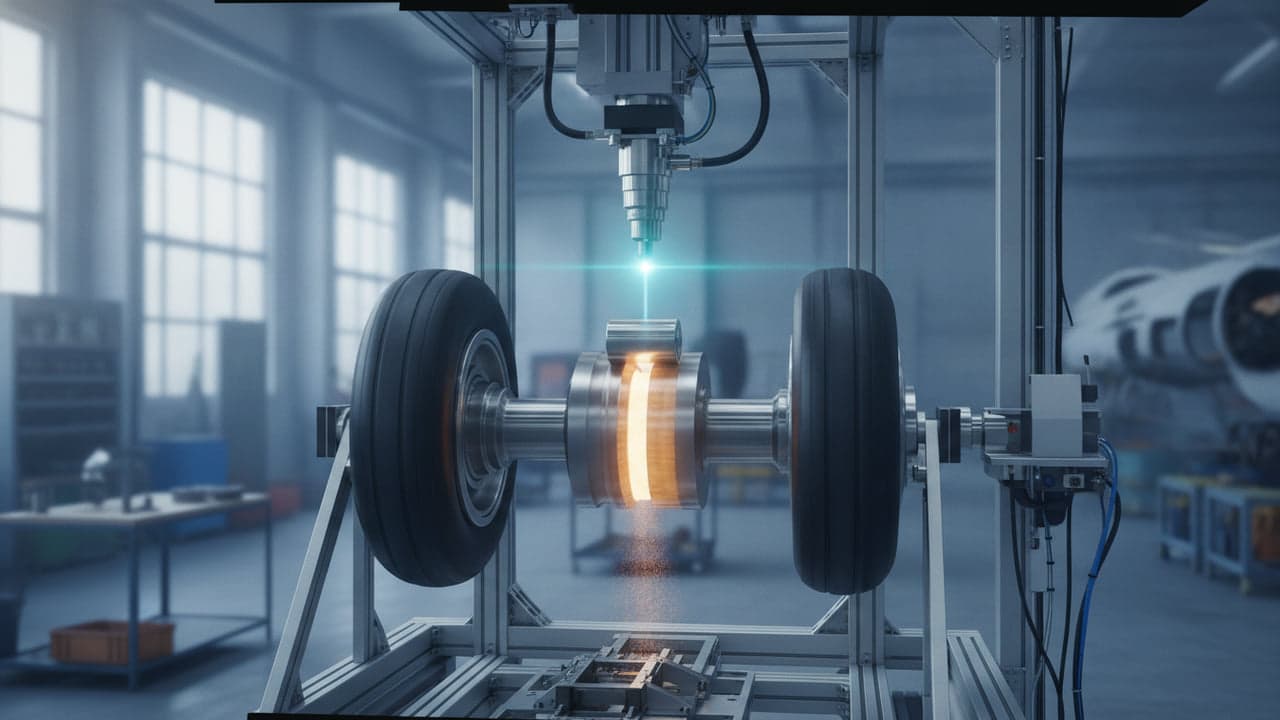
Engineers at the Shenyang Aircraft Design and Research Institute, part of the Aviation Industry Corporation of China (AVIC), have produced a metal 3D-printed structural component more than 16.4 feet long for an aircraft's central fuselage, the manufacturer says. The same laboratory has printed an annular heat exchanger that sits inside an air intake and does four jobs at once. Both parts come from the institute behind the J-35 fighter series, and the invention they describe is as much about manufacturing process as about geometry: fewer pieces, less weight, shorter assembly.
One printed part where assembly lines used to join many
The component is designed to carry and transfer loads through the central fuselage, according to AVIC, and it is made as a single integrated structure rather than as an assembly of smaller pieces (Interesting Engineering). Traditional aircraft production separates structural design from production and relies on molds, machining and the joining of multiple parts, which adds development time, weight and complexity. Metal additive manufacturing, which builds a part layer by layer from a digital file, cuts the need for dedicated tooling and allows shapes that would be hard or costly to machine. Printing a big structure in one go also reduces the number of parts and joining operations, and gives designers more room to place material where the loads actually run.
A heat exchanger that also carries load
The second part is an annular heat exchanger built to sit inside an aircraft air intake. Instead of only moving heat, it combines heat exchange, air extraction, structural support and maintenance functions in one assembly. Internal flow channels increase the surface available for heat transfer while keeping the component light. AVIC says its engineers wrote manufacturing requirements into the design from the start, so the internal geometry could be shaped for printing from the beginning. The research is carried out at the Key Laboratory of Aviation Science and Technology for Novel Aircraft Structures, which belongs to the Shenyang institute (Interesting Engineering).
Read also on The Patent: Print and Place turns ordinary 3D printers into automated circuit assemblers
 Photo: Daniel Eledut / Unsplash
Heat, deformation and cracks: why big metal prints fail
Printing the part was the easier half. Turning a laboratory prototype into a structure fit for an aircraft meant dealing with manufacturing defects and validating the finished component, Chinese media noted. Large metal prints build up thermal stress as they cool, which can bend or crack a part. The team's answer was a process that combines segmented printing with additive fusion joining, so separately printed sections are fused into one larger structure. That is a production route rather than a single machine run, and it is the kind of step that decides whether a printed airframe part reaches a real aircraft.
Two decades, six printing methods, 13 metals
The Shenyang laboratory has spent more than two decades building additive manufacturing capability. AVIC claims it has applied six 3D-printing processes, 13 types of metal materials and 19 categories of printed structural components in aircraft development programmes. The institute is one of China's main military aircraft developers and, according to Chinese reports, has taken part in more than 40 major aviation equipment models across five series, including the J-8, J-11, J-15 and J-35, plus unmanned aircraft. No patent application, granted patent or licensing arrangement is named in the report, so the intellectual property position around these specific components is not public.
What to watch: from demonstrator to production part
The reported work sits inside a wider push to move additive manufacturing from experimental designs into engineering applications in aircraft structures (Interesting Engineering). The next indicators are qualification of printed load-bearing parts for service aircraft and whether segmented printing with fusion joining becomes a standard route for large airframe sections. AVIC has not published a timetable for either.
AI-assisted article