Hubble Telescope Upends Theory on How the Early Universe Cleared Its Cosmic Fog
Observations led by astronomers at the University of Michigan show supernova winds trap radiation instead of clearing paths for it.
By Giovanni Sapere
2 min readHuman-Edited, AI-Assisted
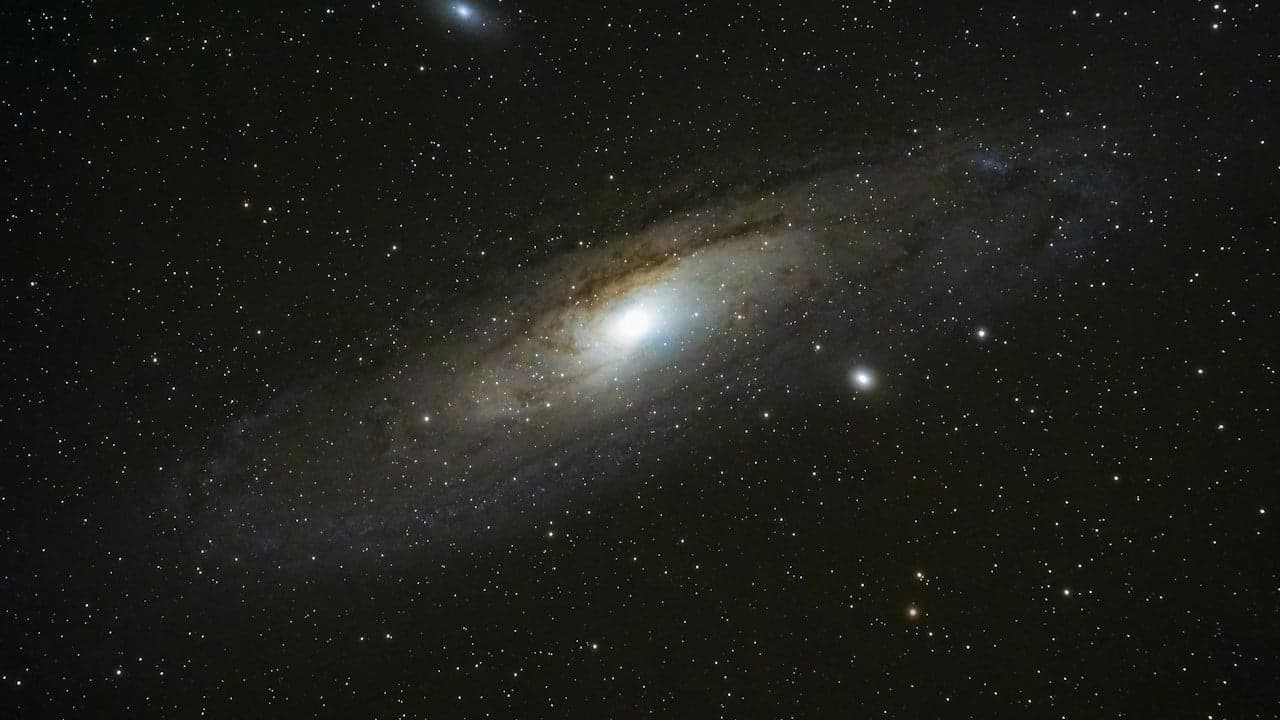
Astronomers using NASA's Hubble Space Telescope have uncovered evidence that overturns an established model of cosmic history. Observations published in Nature Astronomy reveal that powerful stellar explosions did not help ultraviolet radiation escape ancient galaxies, but instead trapped it inside dense clouds of gas.
Galactic winds trap ultraviolet light instead of freeing it
Roughly 13 billion years ago, the universe underwent reionization, shifting from an opaque fog of neutral hydrogen gas into the transparent medium seen today. For years, astrophysicists theorized that massive dying stars clearing paths with energetic winds enabled ultraviolet photons to escape and ionize surrounding hydrogen. A research team led by Cody Carr, a postdoctoral astronomer at the University of Michigan who conducted the core analysis while at Zhejiang University, found that the opposite occurs, as reported by ScienceDaily. Instead of clearing channels for ionizing light, stronger stellar winds correlate with reduced radiation escape.
“Our observations show that these photons are escaping before galactic winds form.”
— Cody Carr, postdoctoral researcher in astronomy at the University of Michigan
Spectroscopy of nearby starburst galaxies reveals radiation timing
To analyze how radiation behaves, the researchers turned Hubble toward nearby starburst galaxies experiencing intense periods of star formation. These systems act as modern analogues to the galaxies that drove early cosmic evolution. Hubble gathered spectral data that recorded how intervening gas absorbed specific wavelengths, allowing the team to measure the exact velocity of outward gas flows. The spectroscopic data indicated that ionizing photons depart early in a star cluster's life cycle, long before dying stars explode as supernovae and produce sweeping galactic winds. This scientific discovery relies on the high-resolution instrumentation and technological innovation of the Hubble observatory, a joint project between NASA and the European Space Agency that remains an essential tool for observational space research.
Reframing the timeline of cosmic reionization
The finding forces cosmologists to rethink which sources cleared the intergalactic hydrogen fog during the first billion years after the Big Bang. Because supernova-driven outflows accumulate dense envelopes of gas that block energetic photons, the escape of ionizing radiation must occur during a brief window when young, massive stars shine brightly before detonating. The team's observational method provides a new framework to assess how early star clusters interacted with their surroundings, offering fresh avenues for astrophysical modeling without relying on supernova wind channels.
Read also on The Patent: AI Agents Accelerate Radiation Shielding for Space Microchips · Sunrise-III Balloon Telescope Uncovers Solar Magnetic Web