None of 99 top US transit systems scores high on all access measures
A University of Michigan dashboard rates 99 transit systems in 85 cities on adjacency, availability, affordability and acceptability, and finds no system strong on every count.
By Giovanni Sapere
1 min read
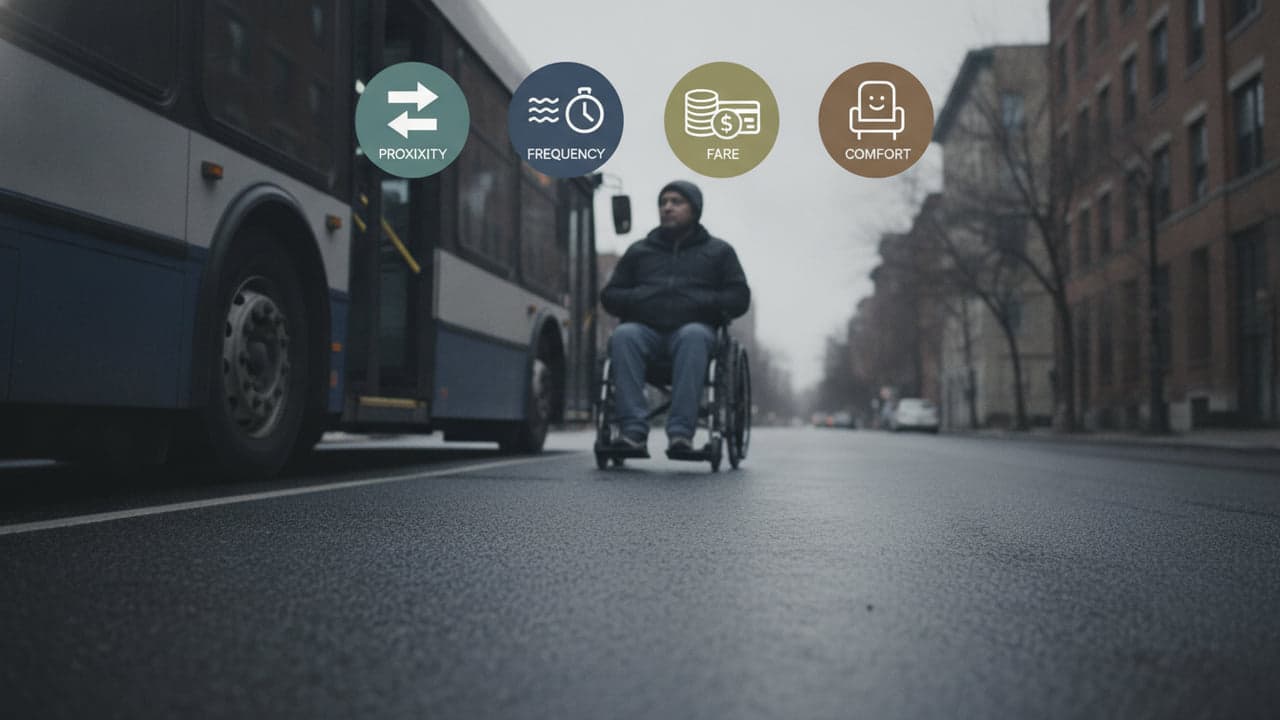
A new national database from the University of Michigan finds that none of the 99 largest public transit systems in the United States is easy for people with disabilities to use across four key areas of accessibility. The tool, the U-M Public Transit Accessibility Dashboard, covers 85 cities and was published in the journal Disabilities. Its authors say the gap affects who can plan a trip and who cannot.
What transit agencies and advocates can do with the numbers
The project is aimed at the people who set routes, fares and service hours. Advocates, researchers and transit agencies can use the data to press for improvements and support innovation in accessible service, Twardzik said, and communities can use it to identify barriers and build on strengths. The study was published on 13 November 2026 and was provided by the University of Michigan to Phys.org.
Read also on The Patent: EpiPad Uses Radar to Turn Your Forearm into a Smartwatch Trackpad · Quantum Hardware Advances Target Error Rates, Diamond Nanopillars and Photon Detection
A note on the limits: the dashboard scores 99 systems in 85 cities, so it does not describe every US transit provider, and the ranking reflects the measures chosen rather than a full audit of vehicles, stations or staff training.
“For a rider with a disability, one barrier can make the entire trip impossible.”
— Erica Twardzik, assistant professor, U-M School of Kinesiology
“None of the transit systems we evaluated rated high on all measures of accessibility. This affects ridership and access for the disability community.”
— Erica Twardzik, University of Michigan
AI-assisted article