EpiPad Uses Radar to Turn Your Forearm into a Smartwatch Trackpad
A tiny millimeter-wave sensor detects skin deformations to recognize multi-finger gestures and touch pressure.
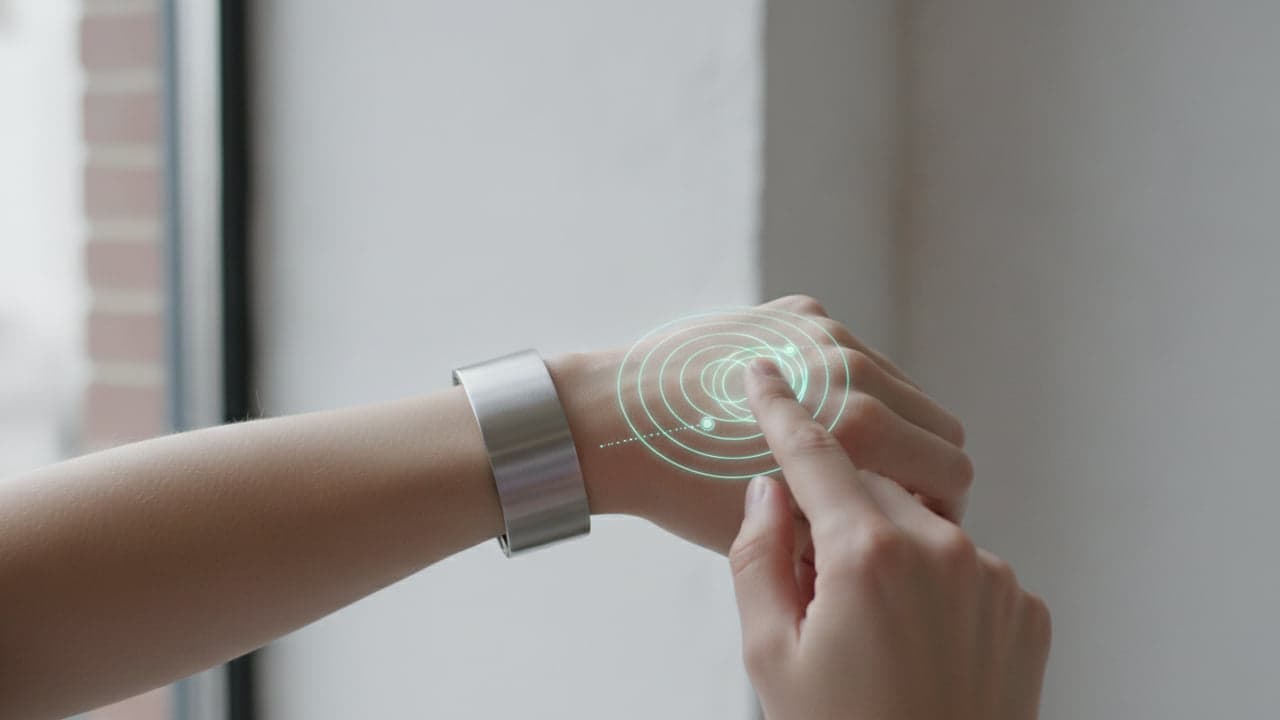
An innovation developed by researchers at North Carolina State University turns the human forearm into an interactive trackpad for wearable devices. The system, called EpiPad, uses a millimeter-wave radar sensor to track finger motions and skin pressing firmness directly on the wearer's arm. Presented at the UbiComp/ISWC 2026 conference in Shanghai, the setup allows users to tap, pinch and zoom without obscuring compact displays.
Millimeter waves read skin deformations
Small touchscreens on smartwatches often make precise typing and navigation difficult because a single finger can block the entire display. To solve this interface bottleneck, an engineering team at North Carolina State University built EpiPad, a wristband accessory that redirects input to the skin of the forearm, as reported by Interesting Engineering.
The device relies on a compact millimeter-wave sensor array measuring 5 by 4 millimeters. Instead of demanding direct contact with a glass surface, the radar tracks physical finger movements and measures subtle skin deflections as the user presses down. A custom signal-processing pipeline analyzes millimeter-wave phase dynamics to estimate physical force, while lightweight machine learning models identify gestures such as clicks, multi-finger taps and zooms. Before operating the device, users undergo an individual calibration routine that lasts 3 minutes and 54 seconds.
Testing accuracy across twenty participants
The research team evaluated the hardware in experimental trials involving 20 participants, according to study details published in the Proceedings of the ACM on Interactive, Mobile, Wearable and Ubiquitous Technologies and covered by Interesting Engineering. When tested on volunteers whose movements were not part of the initial model training dataset, the gadget recorded a 92.8 percent gesture-recognition accuracy and a 90.2 percent force-detection accuracy, maintaining a ranging precision of 10.2 millimeters.
In live input comparisons, study subjects completed smartwatch navigation tasks using three distinct control techniques: a standard touchscreen, a tilt-based cursor and EpiPad. The radar wristband produced fewer user input errors and demonstrated higher operating efficiency than both the display screen and tilt controls. While current laboratory trials show stable interaction, the hardware remains an early-stage academic prototype consisting of a wristband with an exposed circuit board.
Low component costs and screenless wearables
Beyond wrist-worn watches, researchers suggest that the underlying sensing concept could control screenless electronic hardware, such as smart glasses, by turning bare skin into an input pad, as noted by Interesting Engineering.
The study authors estimate that the functional radar components and sensor array could cost less than $10, though commercial integration will require embedding the exposed electronics into commercial wristbands and consumer hardware housings.
Read also on The Patent: DeepMind AI Exposes Legacy RSA Weaknesses 1,600 Times Faster · AI Smartwatch Detects Signs of Hypertension Without Cuff Calibration