DIVINER turns the Cardputer into a synth, a scanner and a presence sensor
A developer posting as voidrane Splicer wrote the firmware as a system layer first, then filled it with small apps called rites, Hackaday reports.
By Giovanni Sapere
2 min read
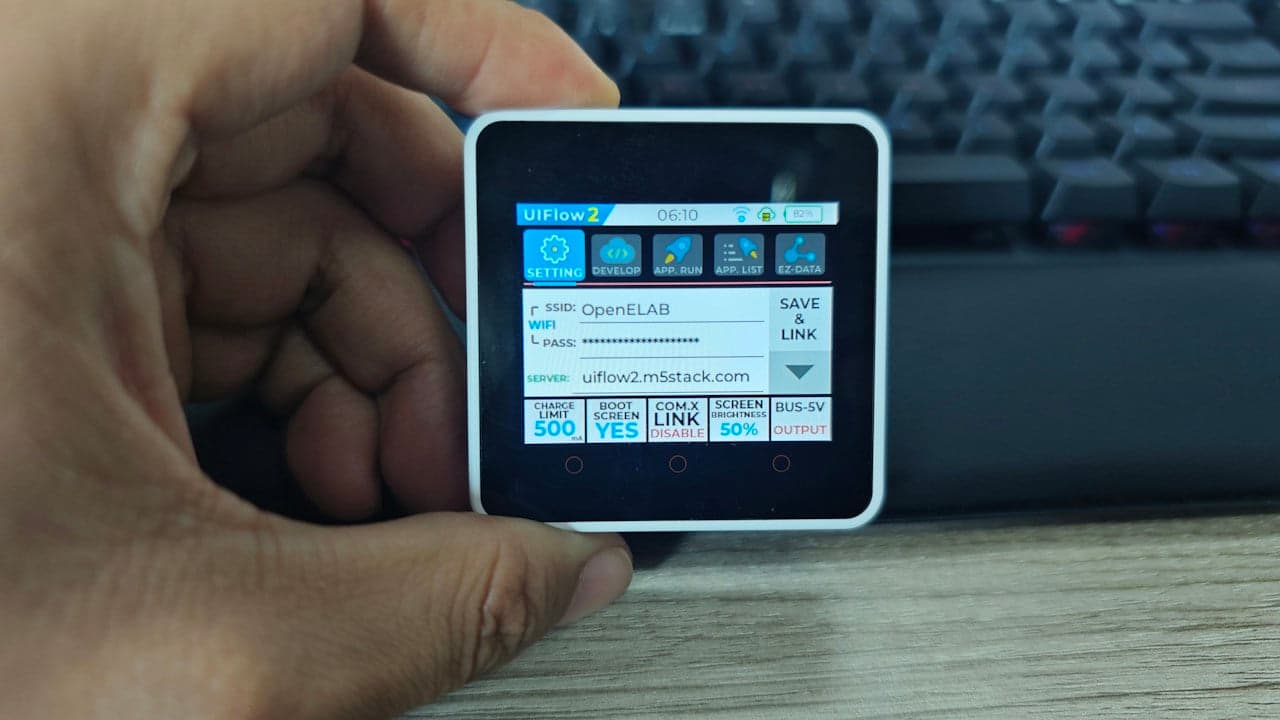
DIVINER is a firmware for the M5 Cardputer, a pocket-sized development board, and it does a lot at once: standalone synthesizer and sequencer, visualization engine, WiFi and Bluetooth scanner and monitor, an LLM interface and an infrared blaster. Hackaday wrote about the project on 14 November 2026. It is a maker's invention in software, and the public record so far is a project page, a demo video and a simulator rather than a patent filing.
One firmware, a stack of instruments
The Cardputer is a small ESP32-S3 development kit with an even smaller screen, a keyboard, some GPIO pins, I2C and an audio jack for output. Hackaday calls it "a blank canvas that can do anything if you write the firmware for it". DIVINER fills that canvas. It works as a standalone synthesizer and sequencer using the I2S audio output, as a visualization engine, and as a WiFi and Bluetooth scanner and monitor, with an LLM interface and an IR blaster added to the set Hackaday.
Apps called rites, sitting on a system layer
The write-up notes that the project page spends its space on the underlying system layer before it reaches the applications. That ordering suggests the apps were packed in to exercise the layer, according to Hackaday. The apps have a name: rites. They also share a look, a "blood and ember" style that the article compares to the Diablo games. Hackaday stays cautious about whether the parts hold together as more than a consistent interface, asking whether the apps "hang together more than visually" and whether the sum of the parts is so large that the whole stops mattering. Each piece reads more like a working prototype than a finished product.
Read also on The Patent: Print and Place turns ordinary 3D printers into automated circuit assemblers · University of Bath builds custom electroluminescent displays with an airbrush and laser
 Photo: rc.xyz NFT gallery / Unsplash
Presence detection from WiFi channel-state information
One rite goes past sound and pictures. The developer, who posts as voidrane Splicer, reads Channel-State Information from the WiFi radio to work out whether someone is in the room, an approach Hackaday says it has seen elsewhere recently. Channel-state information is the radio's measurement of how a signal changes between a transmitter and a receiver; a person moving through the room alters that measurement. The same radio hardware also runs the WiFi and Bluetooth scan and monitor functions.
A simulator to try before the hardware arrives
The audio engine is shown in a video on the project page, and the graphics get their own share of the article. For anyone who wants to test the firmware before owning the device, DIVINER includes a simulator: "it's also got a simulator so you can try that out while your Cardputer is shipping", Hackaday writes Hackaday. The report names no patent application, no licence and no commercial plan, so the project page, the simulator and the video are the whole of the documentation. On the intellectual property side, that leaves the firmware as published work with no stated protection strategy, and the open question is whether the rites end up as demos or as tools people keep using.
AI-assisted article