Moment Energy’s Nova: 500 kWh of storage from used EV batteries
The Canadian company says its Nova blocks are the first battery energy storage system built from second-life electric vehicle packs to hold both UL 1973 and UL 9540 certifications, and production has started in Surrey, British Columbia.
By Letizia Giugliano
3 min read
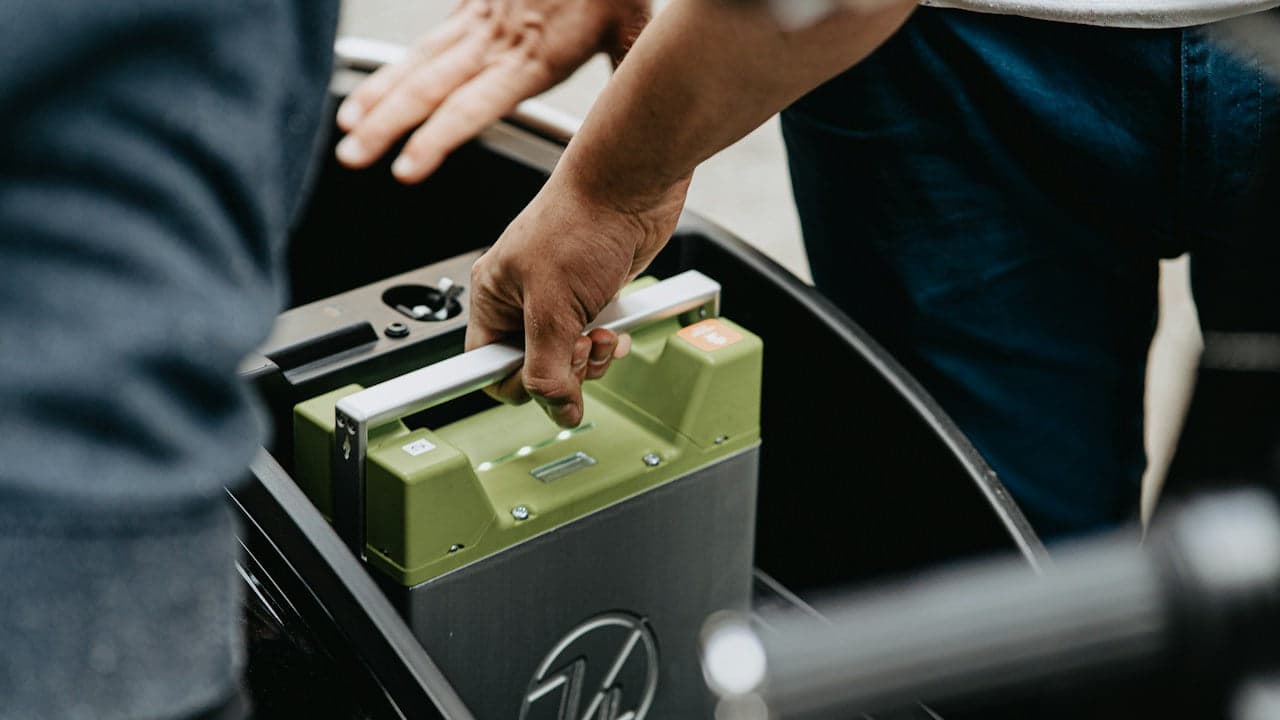
Moment Energy has begun manufacturing Nova, a battery energy storage system assembled from electric vehicle batteries that have finished their life on the road. Each block stores 500 kWh and delivers 200 kW. The Canadian firm says no patent covers the system in the material it released; what it does claim is a first on certification, with both UL 1973 and UL 9540 awarded to a repurposed-pack unit.
A 500 kWh block that fits beside a hospital wall
Nova is built for commercial and industrial sites: hospitals, airports and production plants. A single block measures about 2.94 by 1.80 metres, small enough for facilities with little free floor space. Moment Energy says several blocks can be combined into installations reaching tens of megawatt-hours, and that the system can shave energy costs or supply backup power when the grid goes down. The units are made at Megafactory 1 in Surrey, British Columbia, which the company describes as the world’s largest plant for repurposing electric vehicle batteries.
“With Nova, we’ve solved the engineering challenges that have prevented BESS made with EV batteries from scaling commercially”
: Gurmesh Sidhu, co-founder and chief product officer, Moment Energy
“Repurposing electric vehicle batteries for stationary energy storage creates new technical considerations that must be carefully evaluated”
: Jeff Smidt, senior vice president, UL Solutions
Software handles packs of unequal age
Second-life packs arrive with different amounts of capacity left, which is the engineering problem that has kept this kind of energy storage off the commercial market. Nova uses AI to monitor the condition of each pack and adjust its performance. Battery packs are also replaceable, so a worn module can be swapped out without dismantling the whole unit or breaking its concrete foundation. Gurmesh Sidhu, co-founder and chief product officer, said the design could keep a Nova unit working for more than 20 years.
Read also on The Patent: Renault Trafic E-Tech: an 800-V van run by two supercomputers · EU's EV4EU Project Advances Bidirectional EV Charging
 Photo: Roberto Sorin / Unsplash
Certification covered fire spread, not only cells
UL 1973 covers the battery; UL 9540 covers the complete storage system. Nova also went through UL 9540A testing, which looks at how a fire started by an overheating battery could spread through an installation. “Repurposing electric vehicle batteries for stationary energy storage creates new technical considerations that must be carefully evaluated,” said Jeff Smidt, senior vice president at UL Solutions. The unit carries liquid cooling, smoke and heat detectors, flammable gas detection and an integrated explosion prevention system, and runs from -25 to 50 degrees Celsius at altitudes up to 2,000 metres.
What the filings do not show
The available material names no inventor, no patent application and no granted patent for the repurposing process, the battery monitoring software or the swappable pack design. What it documents is a product that has passed third-party safety certification and entered production, which is a different kind of proof: it says the engineering works, not who owns it. Whether Moment Energy protects the system through patents, trade secrets or neither is not stated.
Orders open, deliveries from early 2027
Nova is on sale now. The company argues that reusing packs cuts reliance on imported batteries and keeps valuable materials in service for years longer. Commercial deliveries are scheduled to start in the first quarter of 2027, as first reported by Interesting Engineering.
AI-assisted article