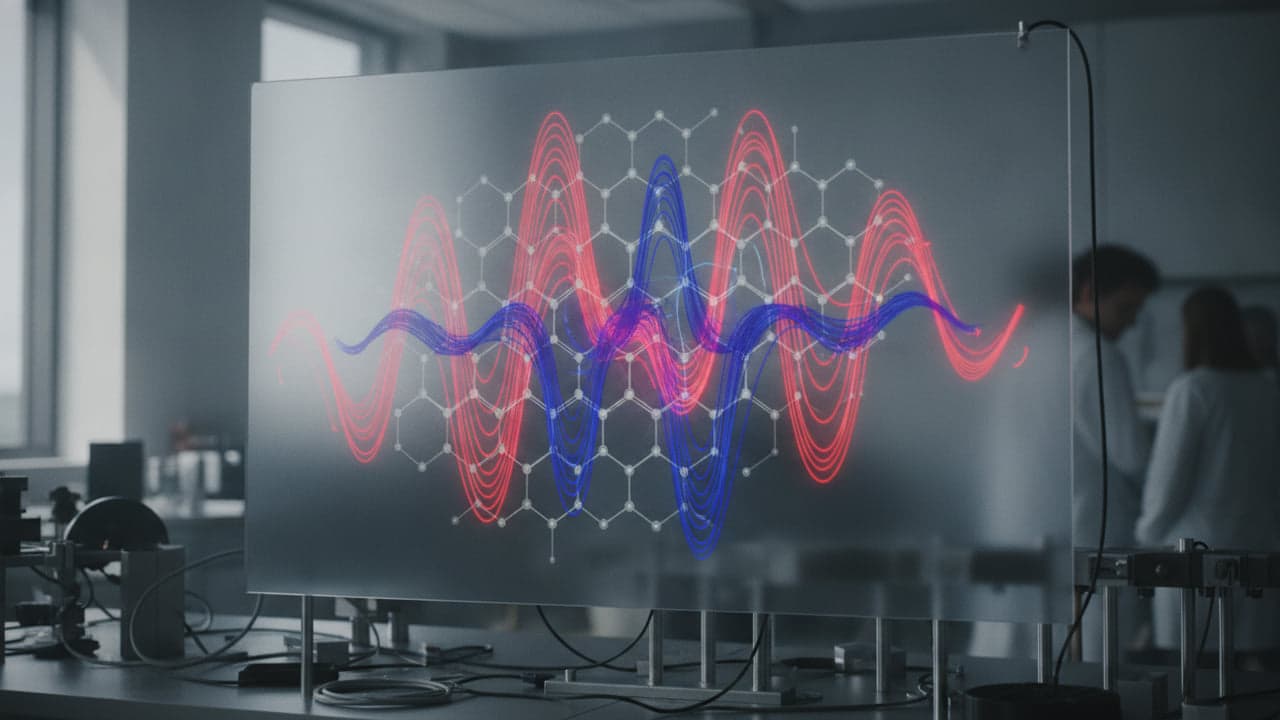
Electrons in graphene cross forbidden energy gaps at 100% probability
A laser and electron-microscope technique let physicists in Germany watch Landau-Zener-Majorana transitions in real time.
By Giovanni Sapere
2 min read
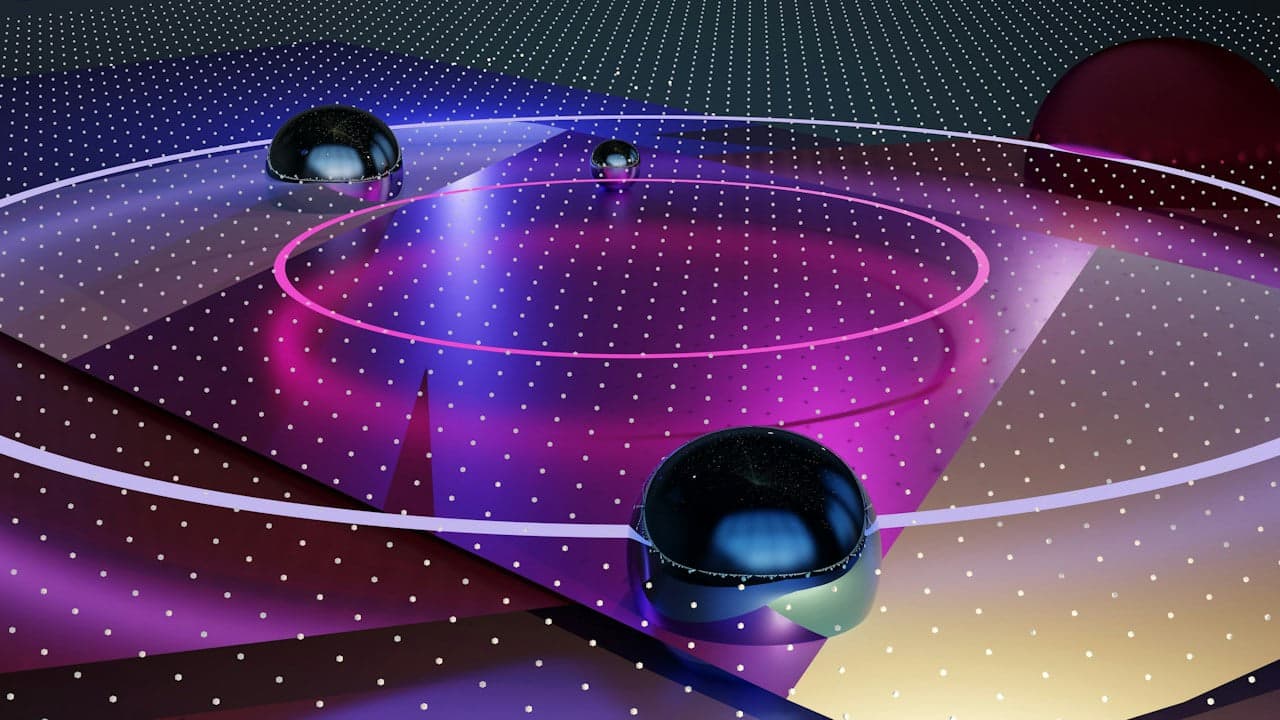
Physicists at the University of Regensburg, Philipps-Universität Marburg and Forschungszentrum Jülich reported on November 13, 2026 that they had watched electrons cross forbidden energy gaps in graphene, with some transitions reaching 100 percent probability. The team used a slow-motion electron camera that combines laser pulses and electron microscopy. The paper in Nature describes the discovery and the experiment, and it names no patent or commercial device.
A camera that records electrons, not surface images
The key instrument is a photoemission momentum microscope. Instead of making a magnified picture of a surface, it measures the energies of electrons and how they move, then researchers build maps of how electrons are distributed across energy states (ScienceDaily). The team combined that measurement with intense laser pulses, which oscillate at very high speed, to drive electrons and record their changes at the same time. Vincent Eggers, first author of the study, compared the task to watching a race: researchers must observe many electrons at once to catch the few that make a transition.
“If you want to know who has won a race, you have to watch all participants.”
— Vincent Eggers, first author of the study
Nearly perfect graphene from Jülich
The experiment relied on graphene samples made at Forschungszentrum Jülich. The carbon layers were one atom thick and had to be nearly flawless, because impurities can obscure the delicate quantum dynamics. Stefan Tautz of Forschungszentrum Jülich said the team also used rotated graphene, a Jülich specialty that makes the quantum effects emerge more clearly (ScienceDaily).
Read also on The Patent: Graphene energy harvester powers wireless sensors from magnetic field leaks · SDSU Researchers Develop Graphene Sensors to Track Corn Growth
 Photo: LaserWorld LaserBeam / Unsplash
What a 100 percent transition means
In a solid, electrons occupy energy bands, and the regions between them are forbidden gaps where stable states are not allowed. Under sufficiently strong light fields, the researchers saw electrons cross such a gap through Landau-Zener-Majorana transitions. The transition probability reached 100 percent in their measurements, the source reports (ScienceDaily). The result matters because the effect has been suspected to become more important in high-speed semiconductor electronics, where electrons are driven by fast electric fields.
No patent in the paper, but a route to faster electronics
The paper reports a discovery. It names no patent application or prototype, and it does not present a commercial invention (ScienceDaily). Its stated interest is in ultrafast, light-controlled electronics and in high-speed semiconductor devices. Rupert Huber, a team member, said the technique can now track electrons across the band structure of a solid in real time. The paper was published in Nature, and the next question named in the source is whether these transitions can be used in faster electronic devices.
AI-assisted article