How Crowded Molecules Assemble Synthetic DNA Droplets
Japanese researchers use polymer crowding agents to organize artificial cell structures at higher temperatures.
By Letizia Giugliano
2 min readHuman-Edited, AI-Assisted
Biochemists at the Institute of Science Tokyo have found a way to assemble and organize artificial cell structures by mimicking the crowded interior of living cells. Using synthetic DNA nanostars and polymer crowding agents, the team stabilized liquid droplets at higher temperatures without allowing distinct droplets to fuse. The biological innovation provides a physical blueprint for building programmable microscopic networks.
Raising condensation temperatures with polymers
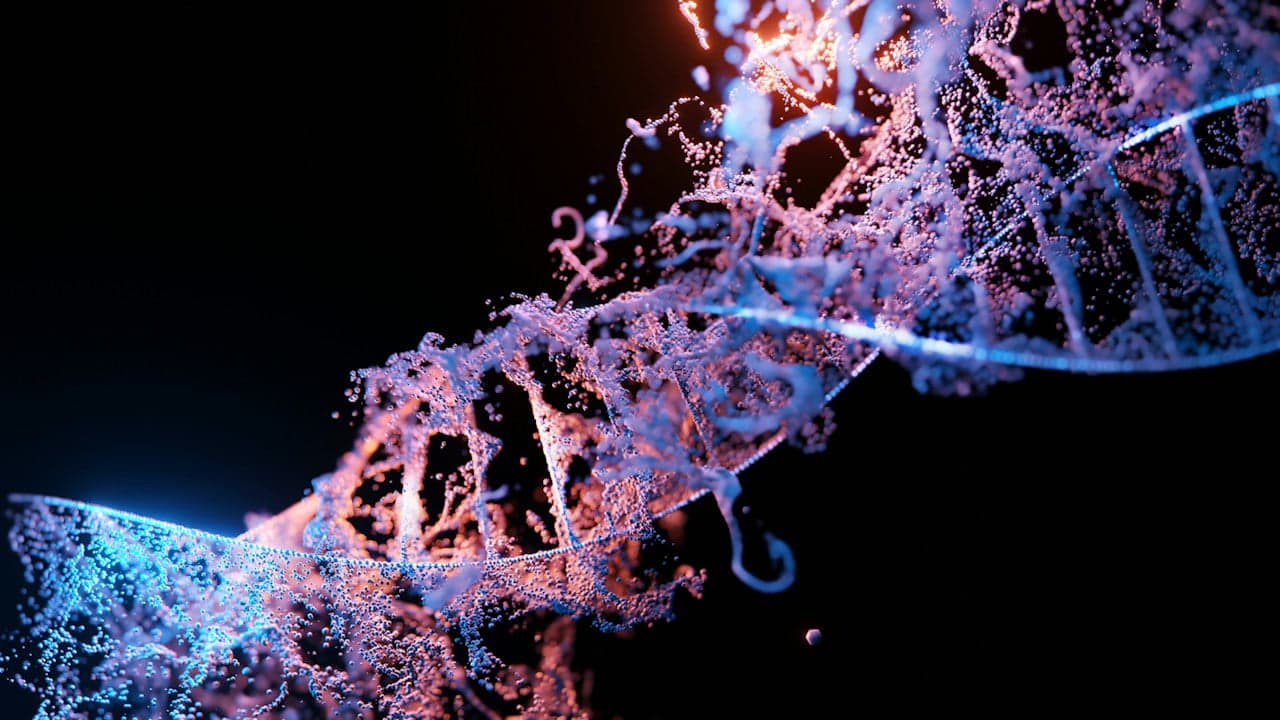
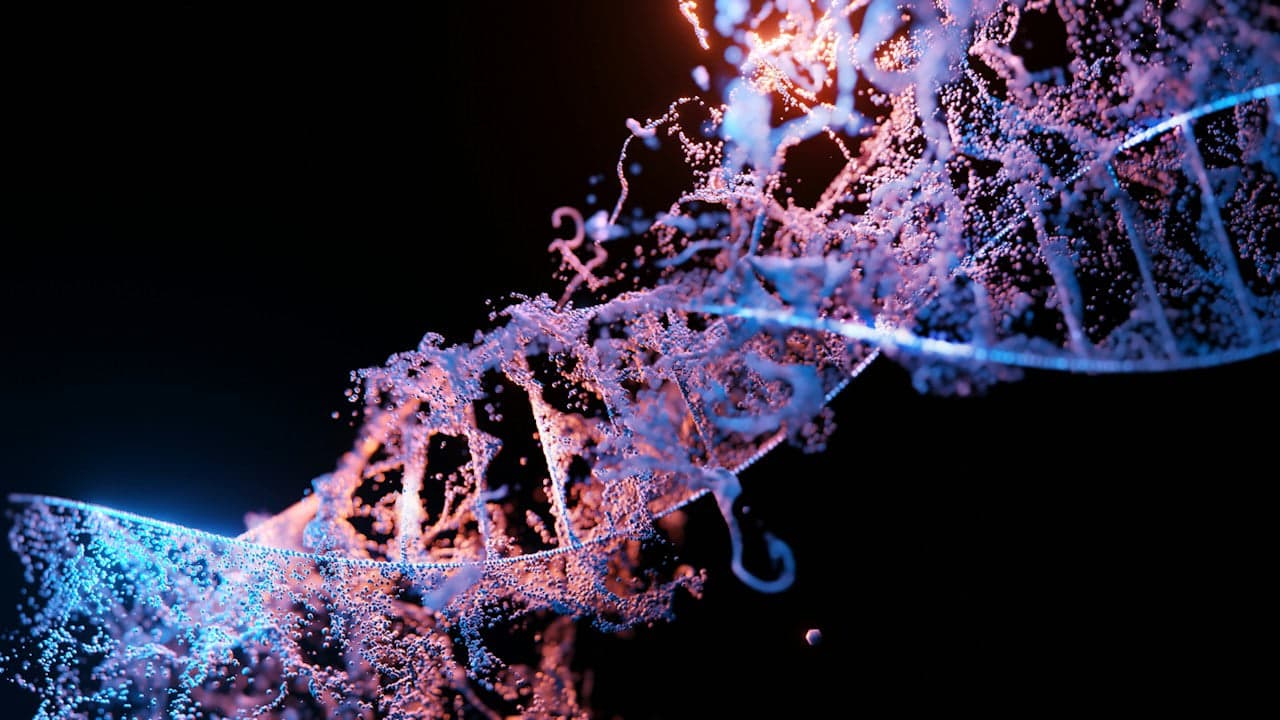
Inside living cells, proteins and nucleic acids gather into dense compartments known as biomolecular condensates. These compartments form through liquid-liquid phase separation, but reproducing them in pure laboratory solutions often requires conditions unlike the crowded cellular interior. Driving this biochemical innovation, a research group led by professor Masahiro Takinoue at the Institute of Science Tokyo designed synthetic Y-shaped branched structures called DNA nanostars, as reported by Phys.org.
The nanostars link together using short complementary sequences called sticky ends. When cooled from 85 °C without additives, the nanostars condensed into droplets only below 63 °C. Adding crowding agents changed that threshold. Introducing a 10% concentration of polyethylene glycol (PEG) allowed droplets to assemble at 76 °C, while dextran and Ficoll raised the assembly temperatures to 65 °C and 67 °C, respectively. High-molecular-weight PEG of 7.5 kDa proved the most effective agent. PEG could not trigger condensation on its own: when tested on nanostars without sticky ends, no droplets formed.
“These findings reveal that macromolecular crowding is not merely a feature of the cellular environment but also serves as a powerful design parameter for engineering artificial DNA condensates.”
— Masahiro Takinoue, Professor at the Institute of Science Tokyo
Clustering droplets without merging them
The researchers also tested whether crowding could control how different droplets arrange themselves. As detailed in the journal JACS Au and reported by Phys.org, the team prepared two distinct sets of nanostars whose sticky ends could not bind to one another. Under normal conditions, these populations formed separate droplets that stayed apart and did not fuse.
Adding PEG altered their spatial behavior. The surrounding osmotic pressure brought the dissimilar droplets into direct contact while preventing them from merging into a single liquid phase. By adjusting the concentration of PEG, the ratio of the nanostars, and the salt concentration in the solution, the team produced alternating networks. In further tests, the researchers arranged up to three distinct types of DNA nanostars into ordered patterns.
From molecular condensates to programmable machines
The study was conducted with graduate student Naoki C. Yoshida of Science Tokyo, Dr. Mayu Shono of The University of Tokyo, and professor Kenichi Yoshikawa of Doshisha University. In their published work, the authors describe crowding not merely as background noise inside a cell, but as a direct control parameter for synthetic biology.
While scientific papers detailing fundamental chemistry do not always result in a commercial patent or immediate intellectual property filings, the principles established by this synthetic invention could guide practical hardware. Takinoue noted that the method provides design rules for developing artificial cell tissues, molecular communication networks, molecular computing systems, and programmable micromachines that operate through guided self-organization.
Read also on The Patent: Dual-Color Bioluminescence Turns Glowing Plants into Living Biosensors · Light-Activated Switch Calms Nerve and Heart Muscle Cells