Melbourne photographer 3D-prints a film camera the size of a coin
The Pocket Obscura measures 2.48 x 2.41 x 2.48 cm, uses photographic paper instead of film rolls, and holds a Guinness World Record.
By Giovanni Sapere
3 min read
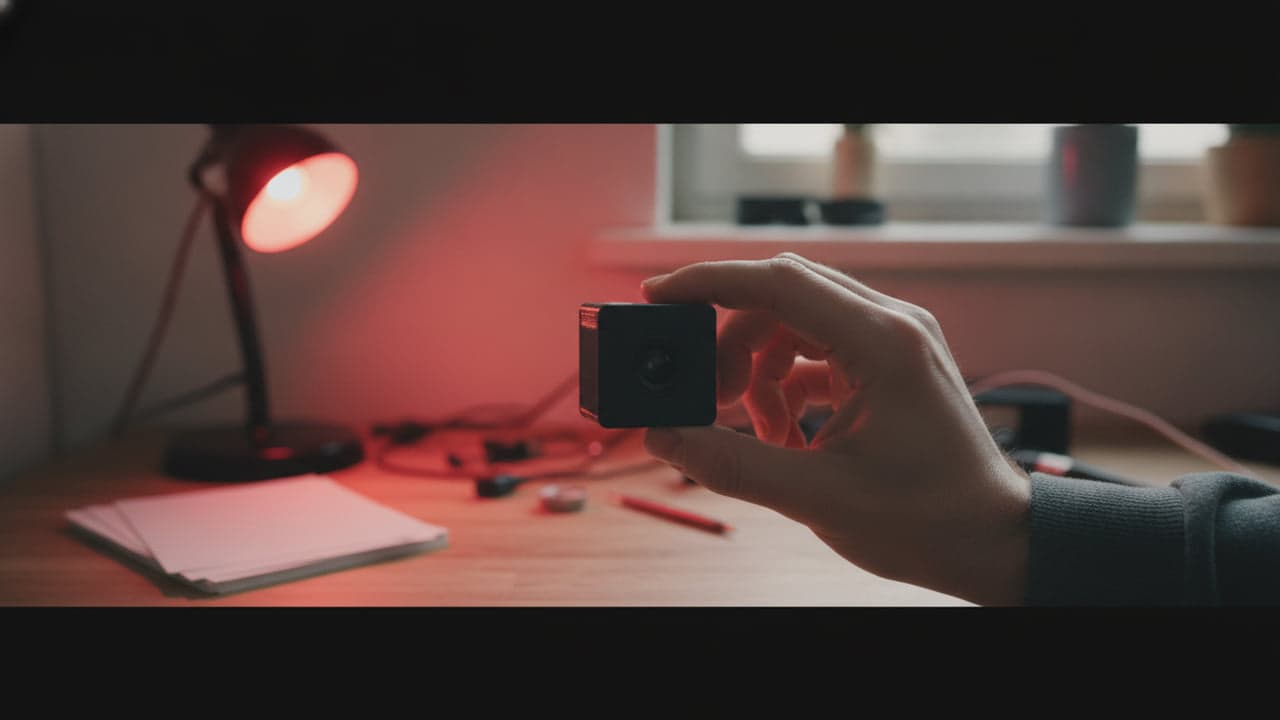
Luke Fazelas, a photographer and visual arts teacher in Melbourne, Australia, has built a working film camera inside a 3D-printed cube roughly the size of a US quarter. The Pocket Obscura takes pictures through a pinhole rather than a glass lens, and the photographer opens the shutter by hand. Guinness World Records certified it as the smallest film camera ever made, and Fazelas now sells the device on his website for US$45.
A cube of 2.48 cm built on a 1900 cardboard camera
Fazelas spent a year working out the design and testing it. The body measures 0.97 x 0.94 x 0.97 inches, or 2.48 x 2.41 x 2.48 cm, and produces stamp-sized negatives. The starting point was the Kodak Brownie, a simple and inexpensive cardboard camera that first came out in 1900, a lineage far removed from a google sabrina chromecast. Fazelas teaches visual arts in Melbourne, and the Pocket Obscura began as one of those prototype inventions a photographer builds in a workshop rather than in a factory.
“With such a tiny pinhole aperture, very little light enters the camera, so exposures need to be relatively long”
: Luke Fazelas, photographer and visual arts teacher, to New Atlas
“That is part of the appeal of pinhole photography: you surrender a little control and embrace the results.”
: Luke Fazelas, photographer and visual arts teacher, to New Atlas
No lens, no viewfinder, no film roll
Light enters through a pinhole aperture. There is no glass lens, no focusing mechanism, no zoom and no viewfinder, so composition is approximate: Fazelas says he uses a few tools and guides to get close to the framing he wants. The manual shutter is pulled up by hand to expose the paper and dropped back down to close it. He does not use conventional film. He cuts photographic paper to fit, loads each piece under red safelight because the paper reacts to any other light, then develops it in a traditional darkroom and scans the result to invert it into a positive image.
Read also on The Patent: Rotterdam's outdoor gym is 3D-printed from 480 kg of recycled plastic · China's J-35 engineers 3D-print a 16.4-foot fuselage structure
The tiny opening lets little light through, so exposures run long. The camera works best outdoors in bright conditions and on stationary subjects: anything that moves during the exposure can blur or vanish from the picture.
Three weeks with a metrologist to prove the record
Fazelas checked the Guinness World Records database, found no entry for a smallest film camera, and asked the organisation for a measurement benchmark to aim at. He then had the camera measured precisely with a qualified metrologist. Documenting the dimensions, not building the camera, was the hardest part: it took three weeks.
US$45, next batch in December
The Pocket Obscura is listed on Fazelas' own website at US$45, with orders for the next batch opening in December. Buyers should expect a hands-on process: each sheet of paper is prepared individually, and the negatives come out tiny. The pictures are soft, with a wide depth of field that comes from the pinhole. Fazelas treats the unpredictability as the point. "That is part of the appeal of pinhole photography: you surrender a little control and embrace the results," he said.
Human-Edited, AI-Assisted