Federal Circuit rejects Netlist defense on two memory module patents
Judges Dyk, Linn and Chen affirmed that all challenged claims of U.S. Patents 11,093,417 and 9,858,215 are obvious over Perego combined with a JEDEC DDR2 specification.
By Giovanni Sapere
4 min read

The U.S. Court of Appeals for the Federal Circuit affirmed on Friday, November 13, that every challenged claim of two Netlist memory module patents is unpatentable as obvious, in a precedential decision written by Circuit Judge Dyk and joined by Circuit Judges Linn and Chen (IPWatchdog). The panel rejected Netlist's argument that combining the prior art would have broken the reference it started from. The dispute reaches past this one patent family: it turns on how a motivation to combine references is judged, a question that decides many obviousness fights.
A buffer chip, two patents and four reviews
The patents at issue, U.S. Patent Nos. 11,093,417 and 9,858,215, both carry the title "Memory Module with Data Buffering" and share substantially identical specifications (IPWatchdog). They describe a computer memory module with buffer circuitry placed between the memory devices and the computer's memory controller. The buffer separates the ranks of memory devices and cuts the load on the system, though it can also add timing delay.
Claim 1 of the '417 patent recites a module that uses chip select signals. Netlist agreed that the claims of the two patents did not materially differ for purposes of the appeal. Samsung Electronics, Micron Technology, Micron Semiconductor Products and Micron Technology Texas challenged every claim in four inter partes reviews: IPR2023-00454, IPR2023-00455, IPR2023-01141 and IPR2023-01142.
Read also on The Patent: Hubble Detects 93-Billion-Mile Cat's Tail From Colliding Worlds
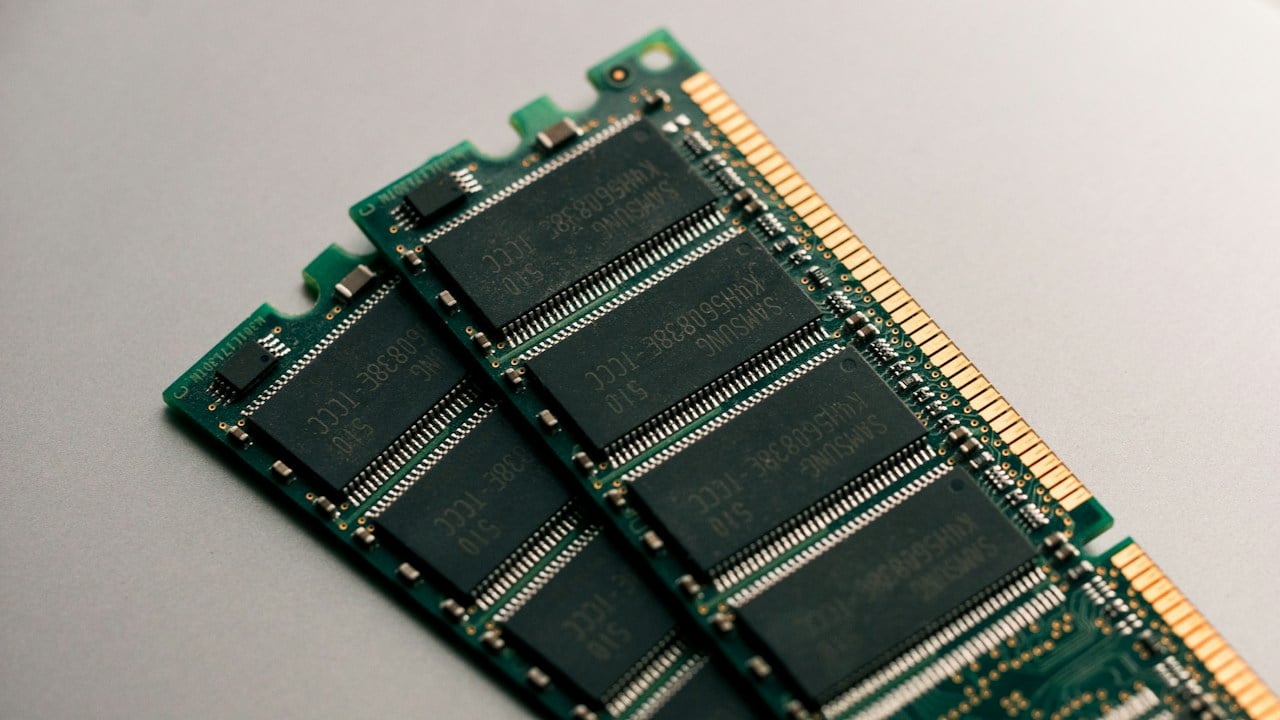 Photo: Harrison Broadbent / Unsplash
“Netlist misconceives the law of obviousness.”
— U.S. Court of Appeals for the Federal Circuit, opinion by Circuit Judge Dyk
Perego, a JEDEC spec and the reason to combine
The obviousness ground combined Perego (U.S. Patent No. 7,363,422), which discloses a buffer device on a memory module, with JESD79-2, a JEDEC specification for DDR2 SDRAM published in September 2003 that supplies the chip select signals Perego did not disclose (IPWatchdog). JEDEC and Rambus specifications select memory chips in different ways: JEDEC relies on chip select signals, Rambus on unique device identifiers.
In a final written decision of July 30, 2024, the Patent Trial and Appeal Board found that the combination disclosed every limitation of claim 1, a finding Netlist did not challenge. The board found a motivation to combine in Perego's suggestion of alternative embodiments compatible with JEDEC standards, including bussed topologies, in Perego's emphasis on flexibility and upgrading across module configurations, and in the dominance of JEDEC-compliant modules in the market at the relevant time.
Why the Gordon line of cases did not save the claims
Netlist argued that Perego was built for the Rambus architecture and that pairing it with JESD79-2 would make it non-functional for Rambus and cost it backward compatibility, relying on In re Gordon. The panel answered that "Netlist misconceives the law of obviousness." It cited KSR International Co. v. Teleflex Inc. for the point that common items can have evident uses beyond their primary purposes, and said that "the intended purpose of [the prior art] does not control" the motivation analysis (IPWatchdog).
Gordon concerned a blood filter assembly with inlet and outlet ports at the bottom and a gasoline filter with ports at the top that relied on gravity to separate lighter gasoline from denser contaminants. There, the prior art's own functionality supplied the motivation to combine, and inverting it would have made it inoperable. Polaris, Medtronic and Chemours each involved a defeated purpose shared with the claimed invention. Rambus compatibility is not a purpose of Netlist's claims, which are directed to working inside a JEDEC-compliant architecture, the court said.
Settlements left a live controversy for the panel
Samsung settled with Netlist and filed a notice of nonparticipation before oral argument. The Micron entities settled and withdrew after argument, and the U.S. Patent and Trademark Office declined to intervene (IPWatchdog). Citing In re Rambus, the Federal Circuit held that a live controversy over the patentability of the claims remained for it to resolve.
Substantial evidence supported the board's findings, the panel added. It pointed to Perego's disclosure of bussed topologies, of 64-bit modules wider than the Rambus maximum of 36 bits, and of row and column address strobe lines used in JEDEC architectures. A footnote rejected Netlist's argument under the Administrative Procedure Act, noting that the board had addressed the backward compatibility passage from Perego.
What the ruling covers, and what it does not
The decision is precedential and covers every challenged claim of both patents, which stand unpatentable as obvious. The board did not reach the other grounds asserted in the four reviews, so those played no part in the appeal (IPWatchdog).
The reasoning gives patent owners and challengers a clear marker in intellectual property disputes over combinations of references: a reference does not have to keep serving its original purpose for a skilled artisan to have had a reason to modify it. For Netlist, the two memory module patents now stand with all challenged claims unpatentable.
AI-assisted article