Electric comb delivers genetic molecules to reverse hair loss in mice
Researchers at Beihang University designed an automated micro-applicator that combines targeted electrical pulses with therapeutic liquids
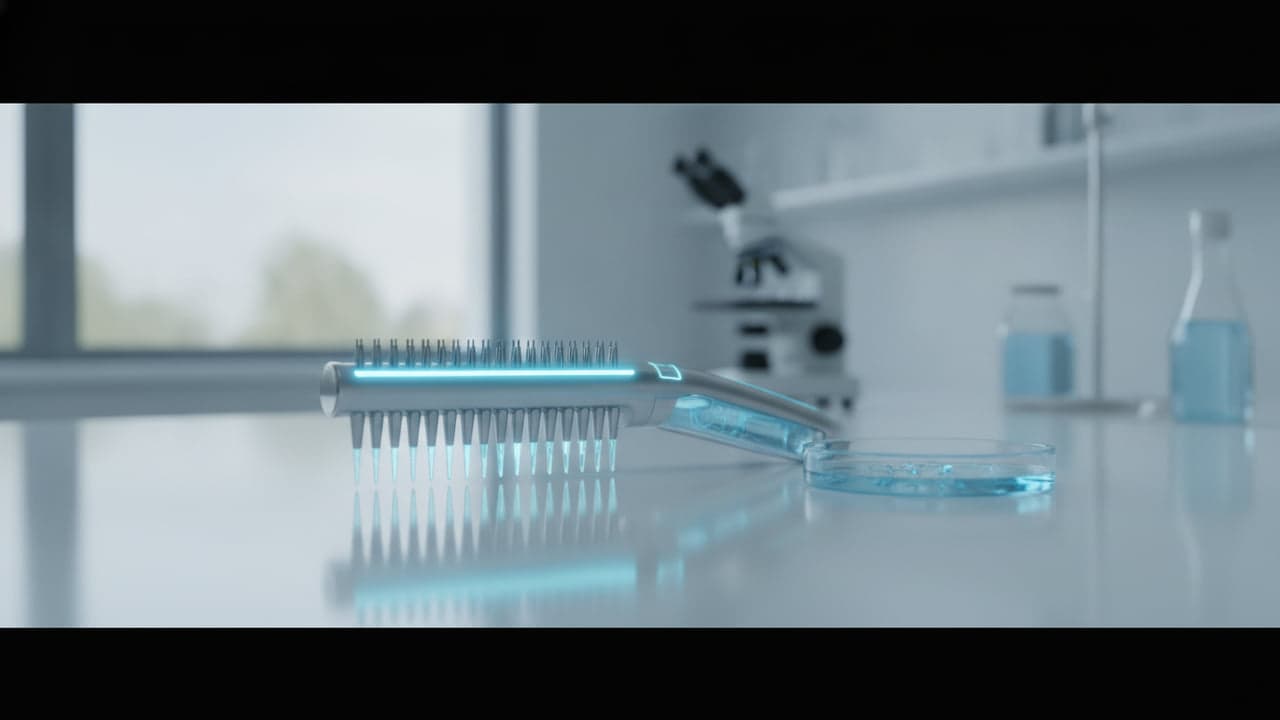
Researchers at Beihang University have created an experimental electric comb designed to stimulate hair regrowth by injecting genetic material directly into the skin. The invention, named Detangle, uses alternating electrical pulses and ballpoint reservoirs to deliver therapeutic molecules deeper into hair follicles than topical creams can reach.
Ballpoint dispensers and electrical pulses
Standard topical medications struggle to pass through the outer barrier of the skin. Oral drugs reach deeper tissue, but they carry risks of systemic side effects throughout the body. To solve this delivery bottleneck, a research team led by scientists at Beihang University built a novel invention, a handheld comb called Detangle, as reported by New Atlas. The medical device combines alternating rows of electrodes with liquid reservoirs that release fluid through rolling ballpoint tips. The electrodes are set at different heights across the comb head. As the device glides over the scalp, the varied teeth press the skin into small furrows. Charged electrical pulses then pass through the tissue, temporarily loosening cell membranes to draw the genetic solution directly into the target cells while also stimulating biological pathways tied to follicular growth.
A twin genetic formula tested against minoxidil
The experimental applicator carries two complementary genetic treatments inside its reservoirs. One is a small circular strand of DNA engineered to express a protein that encourages blood vessel formation around starved follicles. The second component is a short strand of RNA designed to block the production of an enzyme responsible for creating dihydrotestosterone (DHT), the hormone that shrinks follicles in androgenetic alopecia. In laboratory trials detailed in Nature Communications, researchers tested the technique on male mice whose back hair was suppressed through daily testosterone applications. The mice received treatment with Detangle once every three days. By day 28, the treated patches showed near-complete hair coverage, outperforming a control group given daily topical minoxidil, which achieved roughly 70 percent coverage over the same period.
Human testing remains the hurdle
Tissue analyses of the test mice confirmed higher follicle activity and improved blood flow across the treated skin. While the results in animal models proved promising, human scalp tissue presents a much thicker barrier and distinct immune responses. As the team evaluates the clinical potential of this innovation before seeking patent protection, researchers must now test how human scalps tolerate repeated electric pulses, how long any hair regrowth lasts, and what application schedule patients would need to maintain results.
Read also on The Patent: AI Smartwatch Detects Signs of Hypertension Without Cuff Calibration · StereoGeoBox measures swimming fish weight in real time without full 3D maps