StereoGeoBox measures swimming fish weight in real time without full 3D maps
Engineers combine twin cameras and edge computing to track aquaculture growth directly in the tank.
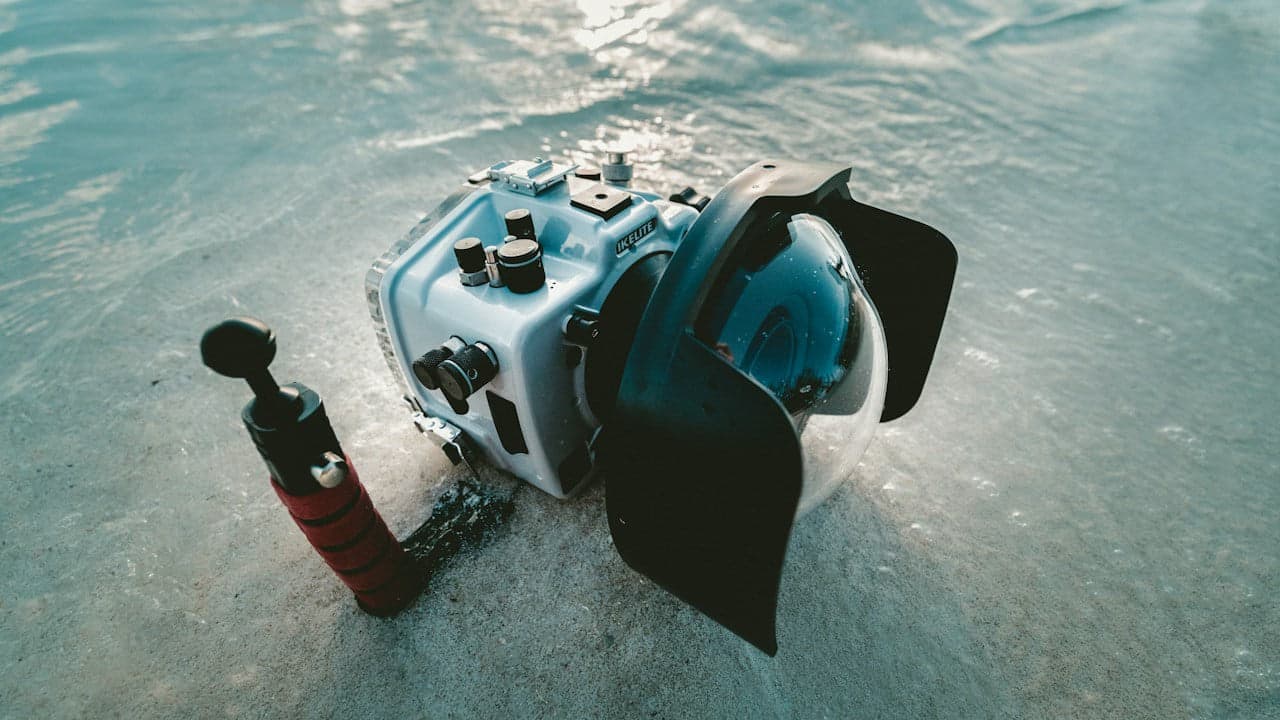
Researchers at Sultan Qaboos University and partner institutions have built an underwater camera system that estimates fish dimensions and weight on the fly. The invention, detailed in Computers and Electronics in Agriculture on October 23, 2026, bypasses resource-intensive complete depth maps by calculating geometry directly from paired bounding boxes. By processing visual data on a compact edge processor, the setup gives fish farms rapid growth tracking while avoiding the computational bottlenecks of standard stereo vision.
Geometric sizing replaces dense underwater depth maps
Conventional underwater optical systems struggle in commercial tanks. Turbid water, shifting illumination and rising aeration bubbles often degrade depth reconstruction, while generating complete 3D depth maps demands significant computing power. To address these constraints, an engineering team from Sultan Qaboos University, Abdullah Al Salem University in Kuwait and Oman's Ministry of Agriculture, Fisheries and Water Resources created StereoGeoBox. The system relies on two synchronized cameras to capture paired views of swimming fish, as reported by Phys.org. Instead of mapping every background pixel in the tank, the software applies YOLO11 artificial intelligence to isolate each fish within a bounding box. Spatial depth is then calculated strictly from the geometric disparity between the corresponding box coordinates.
“By estimating depth only where fish are detected, StereoGeoBox reduces computational demands while retaining the speed and accuracy needed for real-time aquaculture monitoring”
— Dr. Said Al-Abri, corresponding author at Sultan Qaboos University
Tilapia trials deliver millimetre accuracy on an edge processor
Estimated fish length and width values are fed into an XGBoost machine learning model that predicts total weight. The researchers tested the system on tilapia across four specific growth stages: 2, 3, 6 and 15 months. In a controlled benchmark with fish having a verified manual reference length of 15.30 centimetres, the algorithm estimated an average length of 15.25 centimetres. Computing tasks ran locally on an NVIDIA Jetson Thor platform linked to a specialized camera housing and control box. The hardware maintained a processing speed of 25.40 frames per second with a latency of 28.2 milliseconds, requiring only 17.7 megabytes of graphics processing unit memory. A cloud-based dashboard records the readings for remote monitoring.
Tracking boundaries across open pens and multiple species
While the hardware prototype operated through oxygen bubbles and varying light, severe water turbidity still reduced the number of usable frames. The system also evaluated each camera frame independently. Because frames were analyzed separately, the same fish swimming past the lens repeatedly could be registered multiple times, preventing the setup from providing an autonomous count of all fish or computing total farm biomass. Next stages for the research group include validating the algorithms across other commercial fish species and testing the equipment inside industrial aquaculture pens.
Read also on The Patent: Spear Wound in Shanidar Cave Points to Oldest Wooden Weapon Attack