Artemis II Rocket Burns Created Ionospheric Holes and Disrupted GPS Signals
Sensor data from across North America reveals how upper stages of the Space Launch System triggered atmospheric gravity waves.
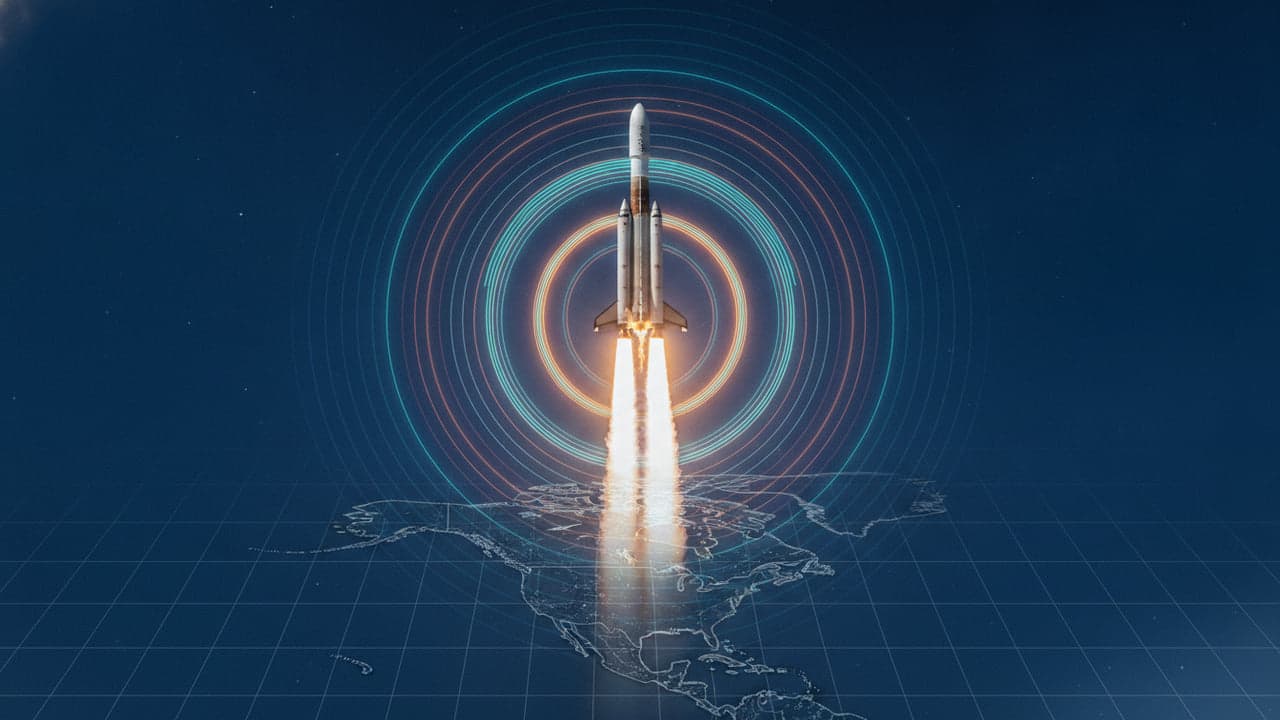
Launches into space generate shock waves and exhaust plumes that reach well beyond the launch pad. A recent pre-print study documented by [Hackaday](https://hackaday.com/2026/11/07/artemis-ii-rocket-was-powerful-enough-to-disrupt-gps/) shows that the Space Launch System rocket flown during the Artemis II mission generated widespread disruptions in Earth's upper atmosphere, altering the ionosphere enough to interfere with satellite positioning signals.
Gravity waves across North America
The study analyzed readings from thousands of sensors placed across the globe to trace the atmospheric footprint of the flight. As the rocket climbed through different atmospheric layers, each engine firing produced distinct physical ripples. The data shows that the flight generated gravity waves that traveled through the atmosphere across the entirety of North America. Researchers describe these launch-induced disturbances as anthropogenic space weather, documenting how heavy launch vehicles temporarily alter conditions in near-Earth orbital environments.
Why upper stages punch holes in the ionosphere
The atmospheric consequences varied sharply depending on altitude and engine staging. Although the first stage produced the greatest amount of raw thrust, it burned relatively low in the sky, leaving a limited imprint on the ionospheric layer. In contrast, the second and third stages fired within the thinner upper atmosphere. These high-altitude burns opened localized holes in the ionosphere, causing structural changes large enough that they could have sustainably disrupted GPS signals at the time of the event. Such disturbances demonstrate how propulsion chemistry and exhaust plumes interact with charged particles at extreme heights.
Scaling launch cadence and atmospheric monitoring
While isolated ionospheric holes do not pose an immediate operational crisis for global communications, the findings raise technical questions as aerospace innovation drives rocket production and launch frequency upward. The massive vehicle stands as a complex aerospace invention supported by extensive patent documentation, yet each mission leaves a measurable physical wake in the upper atmosphere. Understanding these interactions will depend on continuous monitoring and artificial intelligence to analyze distributed sensor networks without requiring specialized institutional equipment for every measurement site.
Read also on The Patent: NASA unveils X-70 Fractal experimental aircraft for flight control research · AT&T and AST SpaceMobile complete first cellular to satellite network handoff