Humanoid Robot Learns Complex Sequences Without Unified Training Data
Engineers at Seoul National University introduce the RISE framework to link walking and manipulation on a Unitree G1.
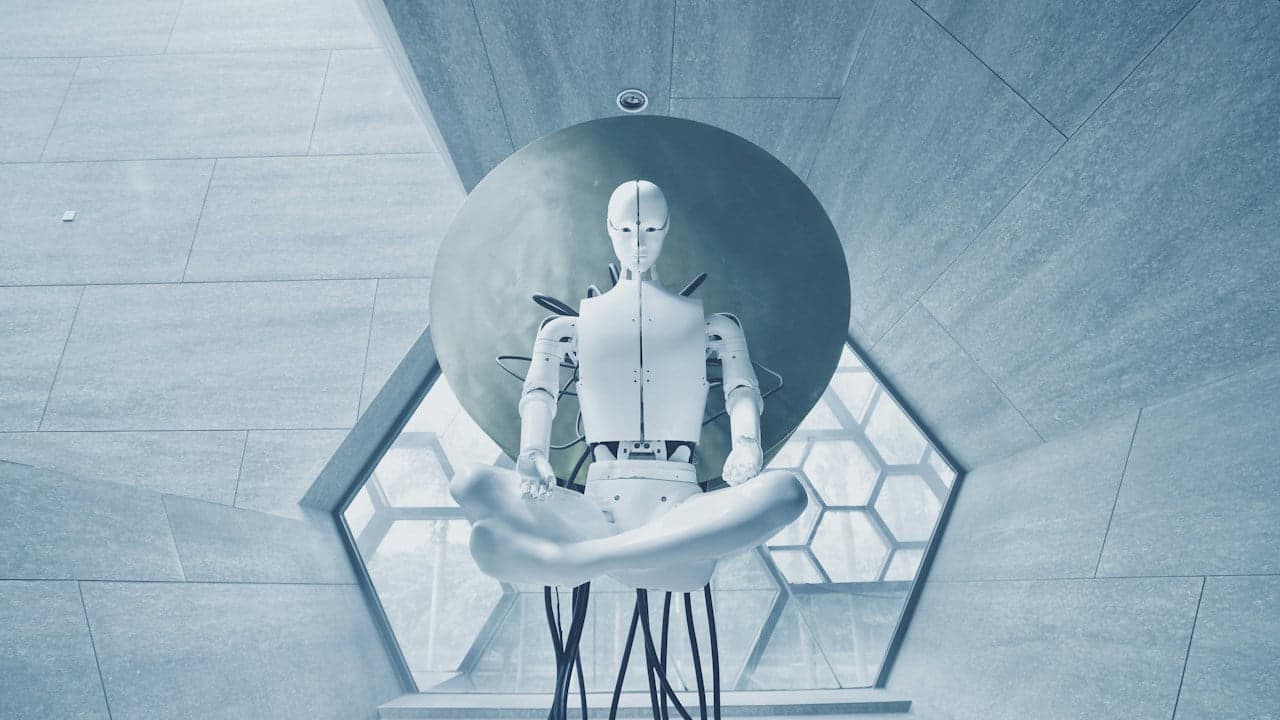
Teaching a bipedal machine to walk across a room and manipulate objects usually requires unbroken demonstration sequences that are difficult to record reliably. A research team at Seoul National University has built a vision-language-action architecture called RISE, which connects independently gathered walking and handling data to perform sequential tasks. The system advances practical robotics by cutting the burden of training physical machines.
The bottleneck of dual-skill training
Vision-language-action models driven by artificial intelligence allow machines to interpret natural language commands alongside visual scenes to execute physical movements in advanced robotics. Applying these systems to a humanoid robot presents a fundamental mechanical problem, as reported by TechXplore. Locomotion relies on leg coordination and balance, while manipulation demands precise arm and hand tracking. When engineers try to collect full multistage demonstrations combining both behaviors, any small failure during an intermediate movement ruins the entire dataset. Gathering isolated examples of walking or grasping is far simpler, but separate datasets fail to teach a machine when one behavior must stop and the next should begin.
Assigning responsibility to individual experts
To bridge this gap without end-to-end task demonstrations, a team led by professor Songhwai Oh at Seoul National University College of Engineering created RISE, short for Responsibility-Induced Specialized Experts. Described in research accepted for the IROS 2026 conference, the framework pairs a shared visual-language perception system with a meta-controller and several action sub-modules, according to TechXplore. During the learning phase, the controller measures prediction accuracy for each action and assigns an operational score known as responsibility. Sub-modules that score higher gain greater influence over specific movements, dividing labor automatically into locomotion and manipulation without preprogrammed roles. The system then monitors shifts in these expert weightings during execution, using the changes as automated triggers to switch between stages.
Testing multistage execution on physical hardware
The researchers evaluated the architecture in simulated environments before deploying it on physical hardware, using a Unitree G1 equipped with two Dex3-1 hands. This physical setup gave the machine 43 controllable degrees of freedom, as detailed by TechXplore. In digital tests across two- to four-stage assignments involving bottles, cups, and fruit, the new method achieved an average success rate of 87.3%. It surpassed the 73.6% recorded by a baseline built on NVIDIA's GR00T foundation model. On the physical Unitree robot, tasks spanned up to five stages, including retrieving an item, relocating, and picking up a second object. Under physical conditions, the system recorded a 50.0% success rate, outperforming the baseline by 20 percentage points as task complexity increased, marking a promising innovation for the future of autonomous systems.
Read also on The Patent: Beijing researchers design bone scaffolds in 12 seconds with AI