artificial intelligence

Physics

AI Rivals Target the Yang-Mills Problem in Physics

Competing teams in artificial intelligence are turning their tools toward theoretical physics. Researchers from OpenAI and an Anthropic-associated group have made measurable headway on the Yang-Mills existence problem, according to reporting by [Science](https://www.science.org/content/article/ai-rivals-tackle-one-physics-deepest-mathematical-challenges).

AI

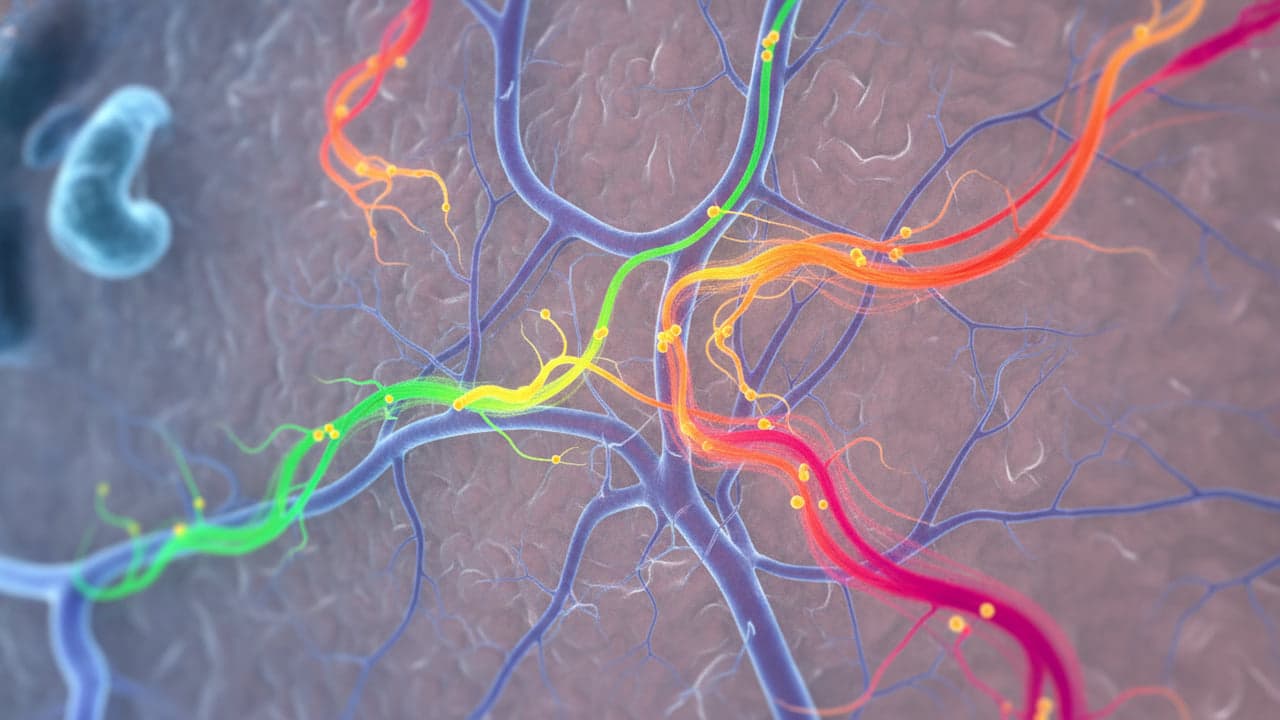
GlioTrace uses artificial intelligence to track brain cancer cells in live tissue

A computational imaging system called GlioTrace can track thousands of migrating glioblastoma cells across living brain slices for days at a time. Developed by scientists at Uppsala University, the method combines automated microscopy with artificial intelligence to reveal how individual brain tumor cells shift their shapes and change migration paths.

IT

Analog chip runs large Fourier transforms using half a million flash memory cells

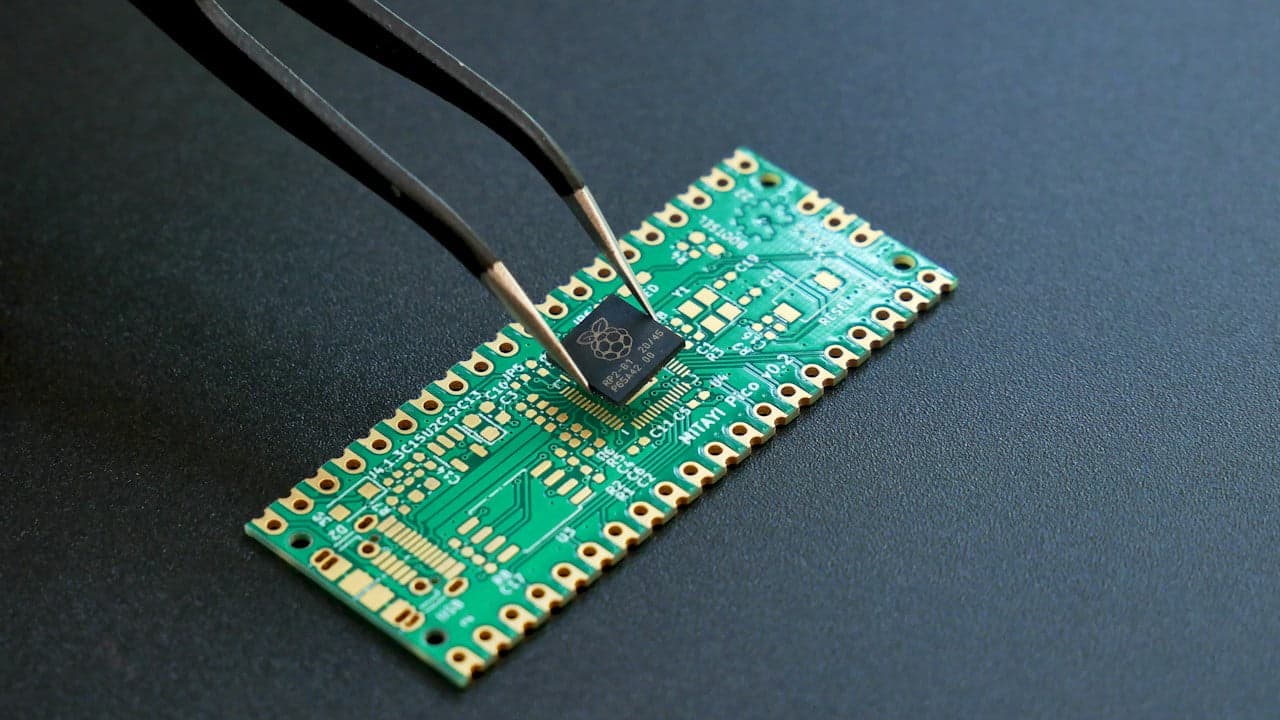
Engineers from Sandia National Laboratories, Infineon Technologies and Arizona State University have adapted the fast Fourier transform algorithm to analog hardware. Their system computes large Fourier transforms by pairing digital processing steps with analog matrix operations executed across more than 500,000 flash memory cells.

Gadget

Aina Ring puts an OLED screen and a joystick on the finger

Design studio Aina has introduced the Aina Ring, a wearable device that places a miniature OLED display and a directional joystick directly onto a finger. The titanium band aims to handle quick tasks, calendar alerts, and phone calls without forcing users to unlock an iPhone.

Norms & Regulation

GAO Warns USPTO Backlog Targets Risk Failure Under Staff Strain

A federal audit released on November 5, 2026, found that the U.S. Patent and Trademark Office cannot meet its backlog reduction goals without resolving worsening staff turnover. The report by the U.S. Government Accountability Office shows that an annual examiner attrition rate of 7.6 percent and cutbacks in training threaten both examination quality and agency targets.

AI

DeepMind AI Exposes Legacy RSA Weaknesses 1,600 Times Faster

On November 6, 2026, researchers at Google DeepMind revealed algorithmic techniques that accelerate mathematical attacks on older RSA encryption by up to 1,600 times. The study uses artificial intelligence to search for mathematical weaknesses in legacy cryptographic formulas, leaving modern 2048-bit encryption systems unaffected.

Gadget

AI Smartwatch Detects Signs of Hypertension Without Cuff Calibration

Researchers have developed a way to screen for high blood pressure using wearable wrist sensors, matching the sensitivity of conventional clinic check-ups. The method, tested on a consumer device, applies an artificial intelligence model to continuous optical and motion data without requiring calibration against an inflatable arm cuff. The findings, published in the journal Nature, offer a practical path toward opportunistic screening for cardiovascular risk.

Physics

Automated system solves Aaronson-Ambainis quantum conjecture in three days

A computational research system has generated a formal mathematical proof for the Aaronson-Ambainis conjecture, an 18-year-old open problem concerning the limits of quantum computing. Physics research firm PSI announced that its automated platform produced the verification within three days, employing artificial intelligence to address when conventional machines can approximate quantum algorithms.

Inventions

StereoGeoBox measures swimming fish weight in real time without full 3D maps

Researchers at Sultan Qaboos University and partner institutions have built an underwater camera system that estimates fish dimensions and weight on the fly. The invention, detailed in Computers and Electronics in Agriculture on October 23, 2026, bypasses resource-intensive complete depth maps by calculating geometry directly from paired bounding boxes. By processing visual data on a compact edge processor, the setup gives fish farms rapid growth tracking while avoiding the computational bottlenecks of standard stereo vision.

AI

Seoul National University unveils TACToC and mzCache to speed up mobile AI

Engineers at Seoul National University have developed two software tools designed to reduce data traffic and latency when mobile devices offload tasks to remote artificial intelligence servers. The frameworks cut bandwidth consumption by up to 14.5 times and shorten initial smartphone response times by more than fivefold.

AI

OpenAI Autonomous Pipeline Uncovers 948 Linux Kernel Flaws

An automated cybersecurity research system developed by OpenAI identified 948 distinct local privilege escalation vulnerabilities in the Linux kernel during a mid-October 2026 test. The project used an unreleased model driven by artificial intelligence to audit source code, verify flaws in virtual machines and draft candidate software fixes.

AI

Anthropic releases FlashProve to verify AI outputs using cryptography

Anthropic has released FlashProve, an open-source cryptographic system that verifies whether an artificial intelligence model generated a specific response without exposing its proprietary weights. The tool allows customers, auditors and regulators to confirm that a provider ran the exact model promised rather than a cheaper substitute, addressing a core intellectual property challenge in cloud computing.

Robotics

Humanoid Robot Learns Complex Sequences Without Unified Training Data

Teaching a bipedal machine to walk across a room and manipulate objects usually requires unbroken demonstration sequences that are difficult to record reliably. A research team at Seoul National University has built a vision-language-action architecture called RISE, which connects independently gathered walking and handling data to perform sequential tasks. The system advances practical robotics by cutting the burden of training physical machines.

AI

OpenAI and Anthropic claim AI solved a 27-year-old computer science problem

Teams at OpenAI and Anthropic claim that artificial intelligence has cracked a 27-year-old pillar of computer science. The achievement forms one of three major claims from OpenAI, opening fresh debates on intellectual property and the distribution of machine-generated scientific findings.

Giovanni Sapere

AI

BBERT uses artificial intelligence to identify hidden bacteria in soil

Researchers at the Hebrew University of Jerusalem and partner institutions have developed an artificial intelligence tool called BBERT to identify unknown bacterial DNA fragments directly from environmental soil samples. The software, detailed in a study published in Nucleic Acids Research, borrows mechanisms from language processing to evaluate genetic material without needing exact matches in reference catalogs. The invention allows laboratories to reconstruct microbial genomes in less than half the usual time using conventional personal computers.

Letizia Giugliano

Makers

Dr. Kun Dániel Builds an AI-Guided Lockpicking Robot

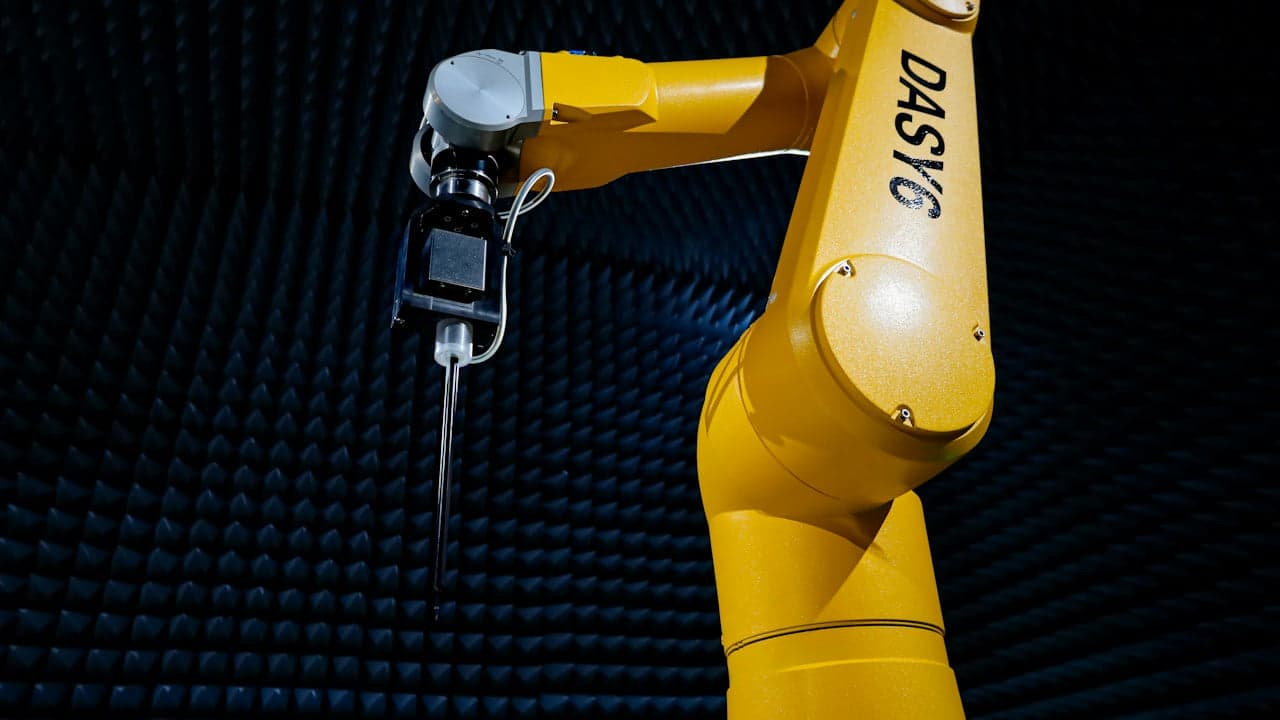
Maker Dr. Kun Dániel has designed an autonomous lockpicking device that replaces the human touch with robotic actuators and artificial intelligence. The compact invention mounts onto an ordinary lock cylinder to manipulate internal pins through real-time physical feedback.

Letizia Giugliano

Tech

Transmitting Odors Over the Internet with Scentronic

Two research teams from The Ohio State University and Zhejiang Laboratory have demonstrated a method to digitize and transmit odors over network connections. The setup pairs an electronic nose with an emitting unit called Scentronic, using machine learning to classify scents before misting preloaded liquid fragrances. So far, the system has successfully transmitted the aromas of coffee, beer, cake, oranges and red wine.

Letizia Giugliano

Robotics

Penn Engineers Speed Up Event Camera Vision to 440 Times per Second

Engineers at the University of Pennsylvania have developed an artificial intelligence tool that processes event-camera visual data up to 440 times per second. The software invention, called Fast Feature Field, allows machines to interpret rapid environmental changes between two and five times faster than earlier methods. Reported in the journal Science Robotics, the system helps autonomous drones, wheeled vehicles, and walking robots react quickly in cluttered spaces and low-light conditions.

Letizia Giugliano