Certified 500 kWh grid battery made from used electric car packs
The certified storage unit is due for first deliveries in early 2027, in a week when China also started up a 121-mile hydrogen pipeline
By Mattia Sapere
3 min read
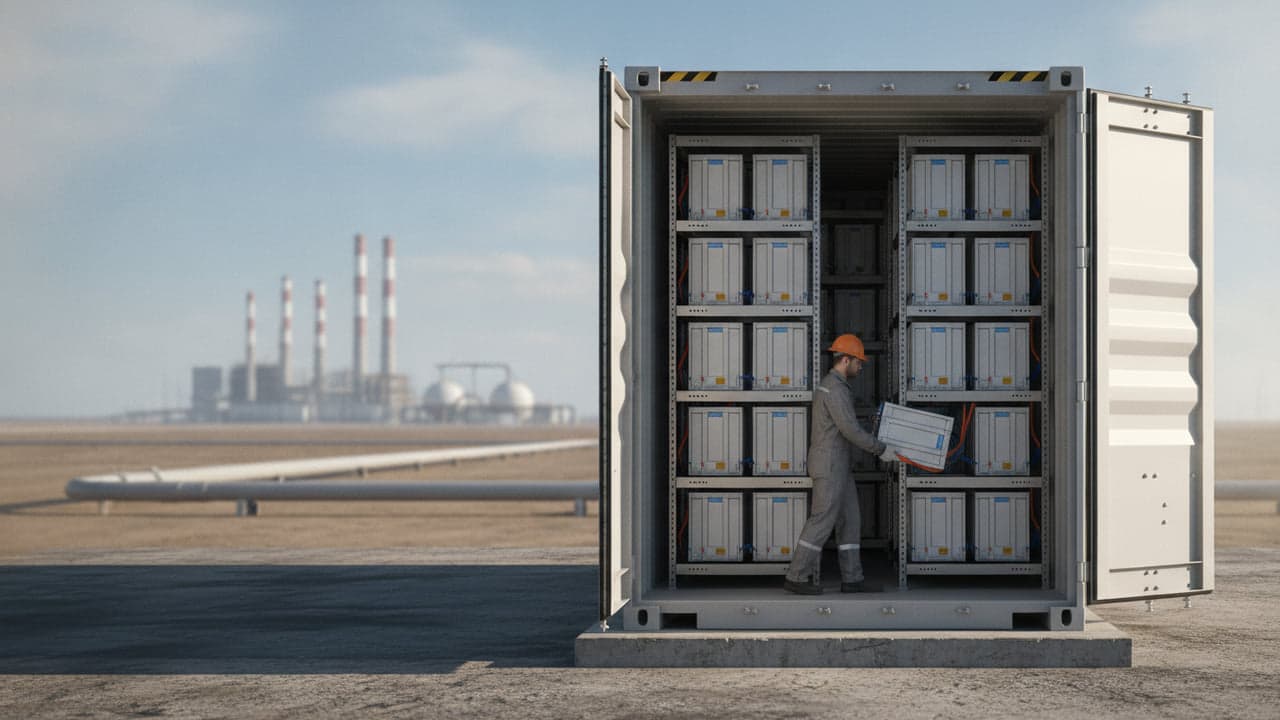
A grid battery assembled from retired electric car packs has been certified as a complete product, with a capacity of 500 kWh and first deliveries scheduled for the first quarter of 2027. The system was reported this week alongside a 121-mile pure hydrogen pipeline entering service in China and a 300-tonne plant producing battery-grade graphite from natural gas. Each item points at the same engineering problem: storing and moving energy without building every component from scratch.
A 500 kWh battery whose cells already drove on roads
The listing, dated 20 November 2026, describes a 500 kWh battery energy storage system built from old electric vehicle batteries and certified as a finished unit. The report calls it the first certified system of its kind, and puts first deliveries in the first quarter of 2027.
Reuse of this kind is the principle behind concrete upcycle technology, where material that has already served one purpose is reprocessed instead of landfilled. Here the material is electrochemical: cells that no longer suit a car are assembled into a stationary pack for the grid.
Read also on The Patent: Ceramic Cell Doubles Clean Hydrogen Yield from Industrial Steam · University of Melbourne Study Maps 34 Percent Cut in EV Battery Emissions
The same week brought a parallel move on new cells. Ford's plant in Michigan began shipping lithium iron phosphate cells for a new electric pickup, the company's first domestic battery cell production, according to the same energy coverage.
China puts a 121-mile hydrogen pipeline into service
A 121-mile pipeline carrying pure hydrogen has entered service in China, with a stated capacity of 100,000 tons. The line currently supports annual green hydrogen production of about 7,800 tonnes.
The gap between capacity and current throughput is the number to watch. A pipeline sized for 100,000 tons and fed by 7,800 tonnes a year is infrastructure built ahead of its supply, which is how gas networks have historically been financed.
Graphite from methane, in a 300-tonne demonstration plant
A 300-tonne demonstration plant has started producing battery-grade graphite from natural gas using methane pyrolysis, a process that splits methane into solid carbon and hydrogen. The operator describes it as the first plant of its type, a claim that rests on the company rather than on an independent assessment.
Graphite is the standard anode material in lithium-ion cells, and synthetic routes compete with mined natural graphite. A demonstration plant at 300 tonnes is a scale test, not a supply solution, and the economics depend on what happens to the hydrogen the process also produces.
Bigger storage deals, stranger cells
A 1.43 GWh battery storage deal covering the United States and Australia is intended to firm up evening electricity supply, helping grid operators match generation to demand in real time. Google has secured 50 megawatts of geothermal heat from Central Oregon, with delivery possible as early as 2030.
Nuclear designs appear in the same mix. A 500 MWe molten salt reactor has been paired with fuel-recycling technology in a new agreement, a design that avoids high-pressure containment vessels. Radiant is testing its Kaleidos microreactor at Idaho National Laboratory while expanding manufacturing.
Cell chemistry is moving too. A bendable lithium-sulfur pouch cell held 99.8% of its voltage across 1,000 flex cycles, tested inside oval, square and drone-leg-shaped housings. Researchers working on silicon anodes report a flexible protective layer to manage the material's 400% swelling, which has limited silicon's use despite its higher capacity than graphite.
What the trade listings do not say
None of these entries names a patent, an application or a filing. The second-life storage system is described by capacity and delivery date, with no manufacturer identified and no cycle-life data, so the durability of a pack built from used cells remains unproven in public. The graphite plant's "first" status and the reactor and geothermal timelines are company statements.
The dates to check are concrete: deliveries of the 500 kWh unit in the first quarter of 2027, geothermal power from Oregon from 2030, and the ramp from 300 tonnes of demonstration graphite to commercial volume.
Human-Edited, AI-Assisted