Colloidal Anti-Spin Ice Created with Rotating Magnetic Fields
Researchers at the University of Barcelona reverse geometric frustration rules by making paramagnetic colloids attract within microscale lattices.
By Giovanni Sapere
2 min readHuman-Edited, AI-Assisted
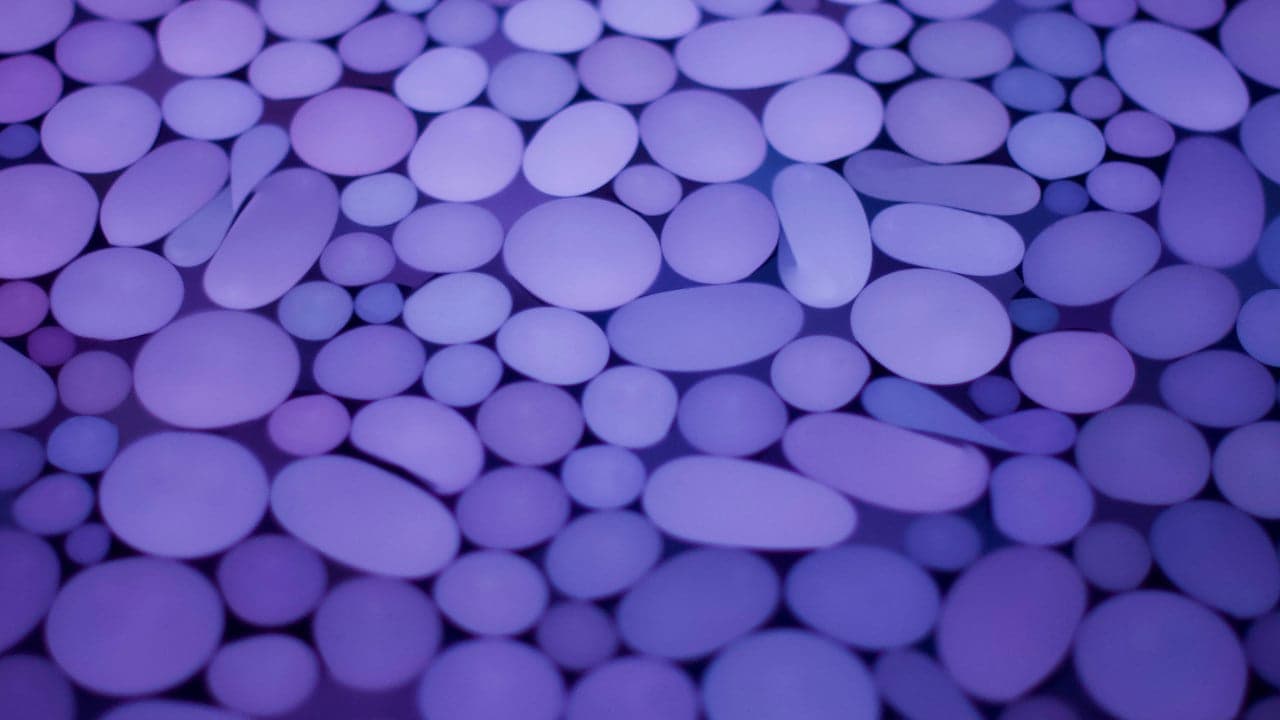
Physicists have constructed an artificial anti-spin ice that reverses the basic rules governing frustrated magnetic matter. As reported by [Phys.org](https://phys.org/news/2026-10-ice-scientists-particles-anti.html), the physics innovation relies on microscopic beads exposed to a spinning magnetic field that forces them to attract rather than repel each other.
Inverting the classic ice rule
In ordinary water ice, every oxygen atom holds two hydrogen atoms close and keeps two farther away, a configuration known as the ice rule. Because multiple arrangements meet this balance equally well, the atomic structure remains disordered, displaying geometric frustration. Scientists have historically modeled this behavior using artificial spin ices made from microscopic colloidal particles placed inside engineered grooves, as documented by Phys.org, representing a continuous innovation in soft-matter physics. In traditional setups, repulsive interactions push particles apart to minimize the local imbalance, or topological charge, at each junction.
“In an anti-spin ice, the system seeks to maximize rather than minimize the local topological charges.”
— Pietro Tierno, University of Barcelona
Rapid rotation turns repulsion into attraction
To build an anti-spin ice, study co-author Pietro Tierno from the University of Barcelona and his collaborators inverted that foundational interaction. The researchers tracked paramagnetic beads measuring 2.8 micrometers in diameter, composed of polystyrene embedded with iron oxide grains, according to Phys.org. Instead of applying a vertical magnetic field that makes neighboring particles repel, the team used an in-plane magnetic field rotating at a frequency of 50 Hz with an amplitude of 4 mT.
Charge accumulation across a pentaheptite lattice
The rotating field causes particles to alternate between attraction and repulsion, but the head-to-tail pull is roughly twice as strong as the side-by-side push, yielding net attraction in all directions. In this experimental prototype, the colloids were deposited into lithographic double wells arranged in a pentaheptite lattice imaged by Renaud Baillou and Matt Terkel, reported by Phys.org. Rather than dispersing evenly to balance the vertices, attracting particles clump toward certain junctions and evacuate others, creating states with high positive or negative charges that are forbidden under normal ice rules, an insight that could inspire novel designs in microscopic robotics.
Read also on The Patent: Ultrathin Iridium Manganese Boosts Spintronic Signals in Kyushu Lab Test