A laser and a roller repair aircraft landing gear in one step
Fraunhofer ILT and Liebherr-Aerospace are testing a combined coating and burnishing process on real landing gear geometries under representative loads.
By Letizia Giugliano
3 min readWritten with AI support · Reviewed and approved by: Letizia Giugliano
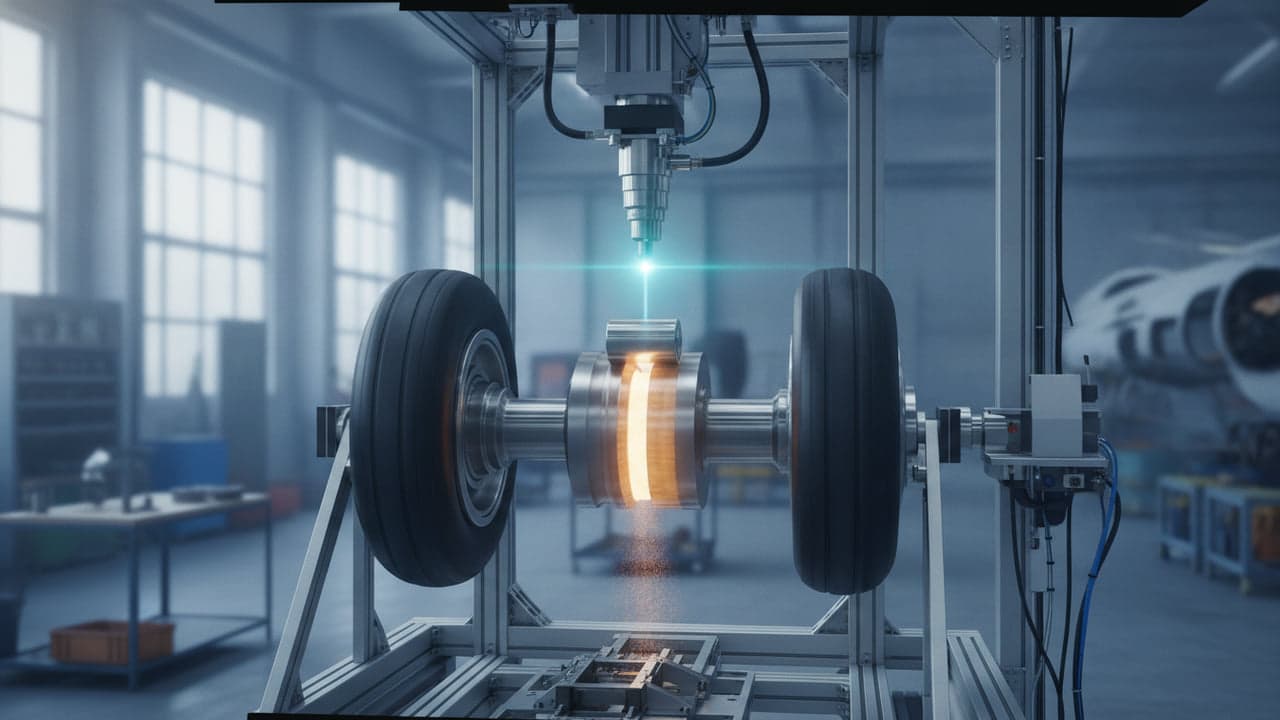
Researchers at the Fraunhofer Institute for Laser Technology ILT in Germany have devised a laser process to repair aircraft landing gear, the parts that take the forces of takeoff, landing and taxiing ([Interesting Engineering](https://interestingengineering.com/innovation/one-step-high-speed-laser-process-repair-aircraft)). Their invention combines Extreme High-Speed Laser Material Deposition (EHLA) with a hard roller that smooths and strengthens the freshly deposited metal while it is still warm. The team says the process is meant for real repair work, not only laboratory samples.
Wear, corrosion and the limits of scraping and plating
Landing gear parts face heavy loads and constant friction. Wheel axles, shock-absorbing pistons and connecting pins absorb massive forces during takeoff, landing and taxiing, while bearings, bushings and seals rub against moving surfaces. Cold, heat, moisture, kerosene, cleaning and deicing agents, ice, sand and dust leave the surfaces more open to corrosion (Interesting Engineering). Routine maintenance scrapes off minor damage, but only up to a limit. Beyond that limit, the part must be replaced, which is expensive and keeps the aircraft out of service for longer. Chromium plating has traditionally protected surfaces, but environmental and occupational safety concerns have pushed researchers to look for alternatives. Welding is not a viable option: too much heat can change the microstructure of aerospace steels and alter the component geometry.
“What matters is whether the process is suitable for real landing gear components under load, including their materials, damage patterns and repair limits”
— Harald Betsch, Liebherr-Aerospace
“The key for us is to use the layer while it is still warm, rather than finishing the EHLA coating in a separate operation afterward”
— Kim Julia Kallies, Fraunhofer ILT
EHLA deposits metal powder with less heat
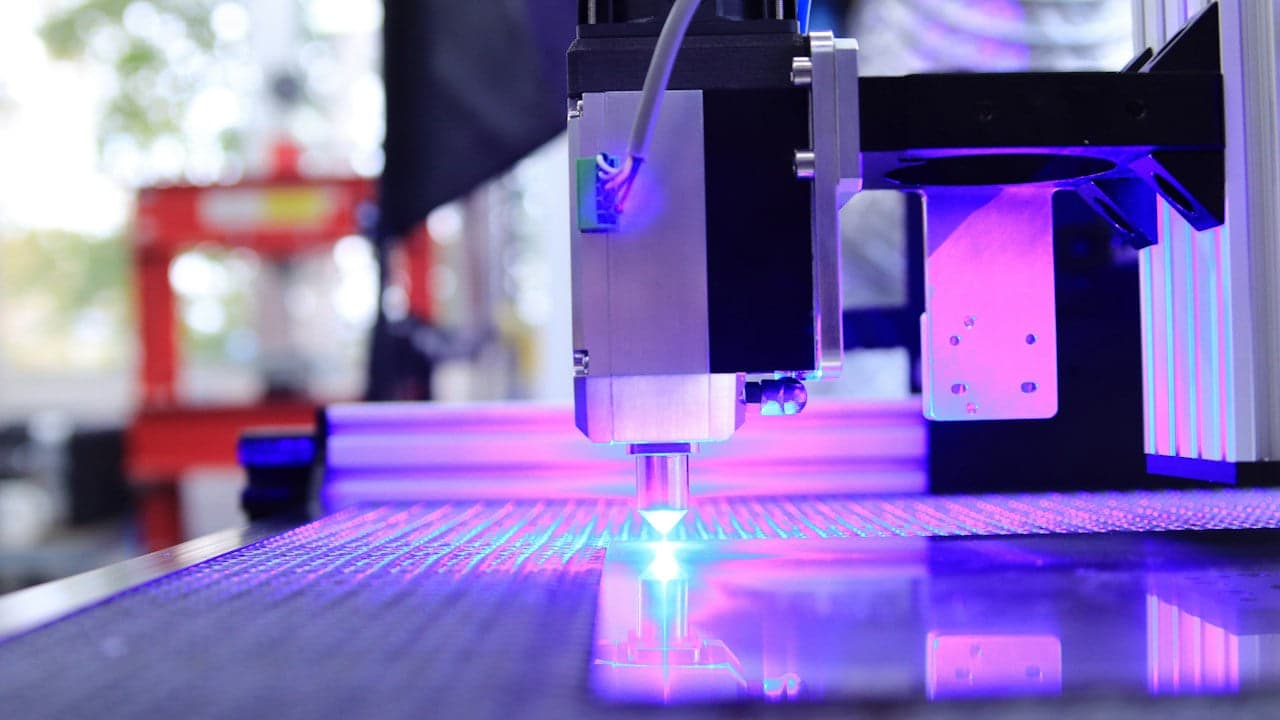
The Fraunhofer ILT team uses EHLA, a faster variant of laser metal deposition (LMD). A laser melts metal powder and applies it precisely where needed. The process runs faster than conventional methods and generates less heat, which makes it suitable for repairing or coating heat-sensitive, high-strength aerospace components (Interesting Engineering). The researchers wanted a method that would work in real-world scenarios and beyond the laboratory. Harald Betsch, senior expert for thermal spraying and welding in materials and processes at Liebherr-Aerospace, framed the test in practical terms: “What matters is whether the process is suitable for real landing gear components under load, including their materials, damage patterns and repair limits” (Interesting Engineering).
A hard roller presses the warm layer in the same step
Shortly after the laser-assisted metal deposition, the team presses a hard roller against the material instead of cutting or grinding it. The researchers call the single-step process Simultaneous Coating and Roller Burnishing (SCaRB). The innovation is the timing. Kim Julia Kallies, project manager at Fraunhofer ILT, said: “The key for us is to use the layer while it is still warm, rather than finishing the EHLA coating in a separate operation afterward” (Interesting Engineering). Smoothing and strengthening the freshly deposited, still-warm metal layer removes separate finishing steps, cuts setup time and lets the team tailor surface finish, hardness and residual stresses. They can adjust parameters such as laser power, powder feed, the distance between laser and burnishing tool, burnishing force, roller radius and hardness.
What is still unproven, and where the IP record is silent
The source describes the process as an invention by Fraunhofer ILT but does not mention a patent application, a granted patent or a licensing deal. No filing or office record appears in the article (Interesting Engineering). On the technical side, the method is still being validated. The researchers are testing the material's durability under realistic conditions, and LAwave still needs further development to qualify for aerospace standards. LAwave, short for laser-induced surface acoustic wave spectroscopy, generates acoustic waves and analyzes how they travel through the material to check coating and subsurface quality without damaging the repaired part. The next tests are on real landing gear geometries under representative loads.
Read also on The Patent: Laser Directed Energy Deposition for Military Aircraft Repairs · Engineered Crystal Defects Strengthen Metal Alloys Without Chemical Tweaks
An article by the newsroom of The Patent ®, written with the support of artificial intelligence from sources chosen by the newsroom. Review, corrections and approval for publication: Letizia Giugliano. Publisher responsible: WitUp Ltd.