Molslinjen orders 165 MWh of ferry batteries from AYK Energy for three ships
AYK Energy won the Molslinjen contract after cutting more than 300 tonnes from each battery's weight, with the first vessel due in Denmark in late 2027
By Giovanni Sapere
4 min read
Danish ferry operator Molslinjen has ordered three 55 MWh lithium iron phosphate (LFP) marine batteries from AYK Energy, a combined 165 MWh of energy storage for catamarans under construction at Incat Tasmania in Australia. The batteries will power the crossing between Jutland and Zealand at up to 40 knots. Weight, not capacity, decided the deal: AYK's engineers brought each unit below 400 tonnes, from more than 700.
A 55 MWh pack in each hull, charged in 30 minutes
Each of the three ferries gets one Polaris battery of 55 MWh, type-approved by DNV, the classification society that certifies marine equipment. The vessels will carry up to 1,500 passengers and 500 vehicles each and support high-capacity charging in 30 minutes, a requirement that follows from the short Kattegat crossing and the speed the operator wants to keep.
AYK Energy calls it the largest battery contract in ferry history. The packs go in through an agreement with Wärtsilä, which supplies the integrated electric propulsion systems and waterjets. "For large ferries we have to find a balance between short high power charging and long high energy sailing times combined with a weight challenge on aluminum catamarans like these," said Torsten Büssow, director of electrical integration at Wärtsilä.
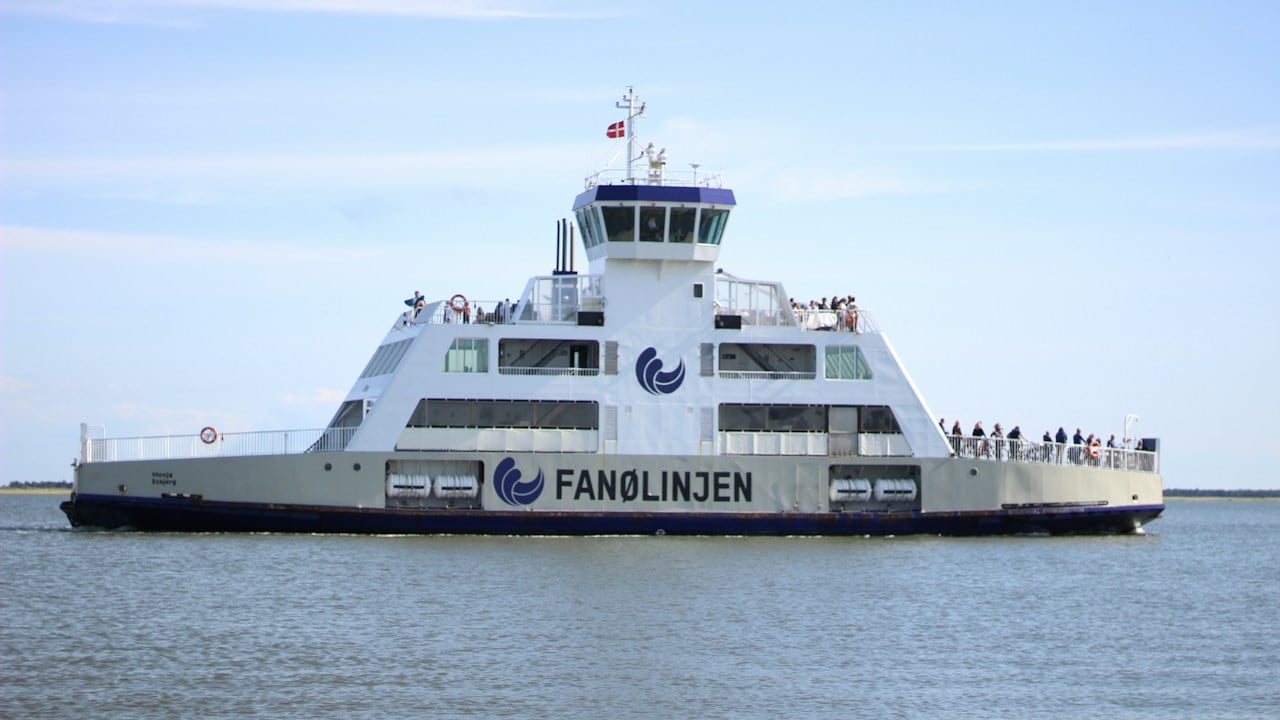 Photo: Katy Smith / Unsplash
Read also on The Patent: None of 99 top US transit systems scores high on all access measures · A synthetic voice and a year of typing: brain interfaces at Neuroscience 2026
Delivery is staggered. The first ferry is expected in Denmark in late 2027 and in service in the first quarter of 2028; the other two arrive in 2028 and 2029. Once in operation they become Europe's largest electric ferries, according to the companies involved.
“We decided to rethink the battery's design from the ground up to reduce weight and improve performance.”
— Chris Kruger, founder of AYK Energy
“This is not a car where the driver can simply step out onto the road if there is a fire.”
— Chris Kruger, founder of AYK Energy
The 300 tonnes that won the order
Weight was the constraint from the start. Chris Kruger, AYK Energy's founder, said the original batteries weighed over 700 tonnes each. His team got them under 400 tonnes, a reduction of more than 300 tonnes that he describes as decisive for the contract.
The saving came from three changes: new battery cells, manufacturing techniques borrowed from the automotive industry, and a lighter aluminium structure. "We decided to rethink the battery's design from the ground up to reduce weight and improve performance," Kruger said.
Carsten Jensen, Molslinjen's chief executive, tied the figure to the route itself: the ferries must travel at high speed across the Kattegat, so every tonne taken out of the hull matters. The same logic explains the choice of aluminium catamarans, which are lighter than conventional steel hulls but less forgiving of heavy machinery.
LFP instead of NMC, and what the type approval covers
The cells use LFP chemistry rather than the nickel manganese cobalt (NMC) mix common in earlier marine installations. Kruger's argument is fire safety: "This is not a car where the driver can simply step out onto the road if there is a fire." AYK says it secured the first type approval of LFP battery technology for marine use, a certification from DNV that a design meets defined safety standards.
That approval, not a patent document, is the asset the sources describe. No patent application or granted patent appears in the material on this contract; what AYK presents as its edge is a certified design plus the weight reduction. Jensen framed the safety point in operational terms, saying the battery provides a level of safety on a par with, or probably better than, diesel.
Type approval matters commercially because classification societies sit between a battery maker and a shipyard's insurer. A design that clears DNV can be specified by an operator without a fresh round of one-off testing, which shortens the path from contract to keel-laying.
AYK's second market: tugs, research ships, hybrid ferries
The Molslinjen order builds on smaller marine jobs. AYK supplied two 12 MWh batteries for Brittany Ferries' hybrid-electric vessels Guillaume de Normandie and Saint-Malo, a 6 MWh pack for Svitzer's battery-methanol tug, and has an agreement to supply Germany's new polar research vessel Polarstern.
The progression from 6 and 12 MWh packs to 55 MWh units tracks a wider shift in short-sea shipping, where battery capacity is set by the length of the route and the power available at the berth rather than by the size of the ship. Molslinjen's 30-minute charging window is the binding constraint on the Danish route, and the battery design had to fit it.
For the sustainability case, the relevant number is the one the operator will report: how much fuel the three vessels displace on the Jutland to Zealand crossing. That figure is not in the sources, and no annual CO2 saving has been published.
AI-assisted article