Oldest dinosaur blood cells and heme found in 115-million-year-old fossil
Researchers identified mineralized red blood cells and organic heme molecules inside the limb bone of a Brazilian theropod dinosaur.
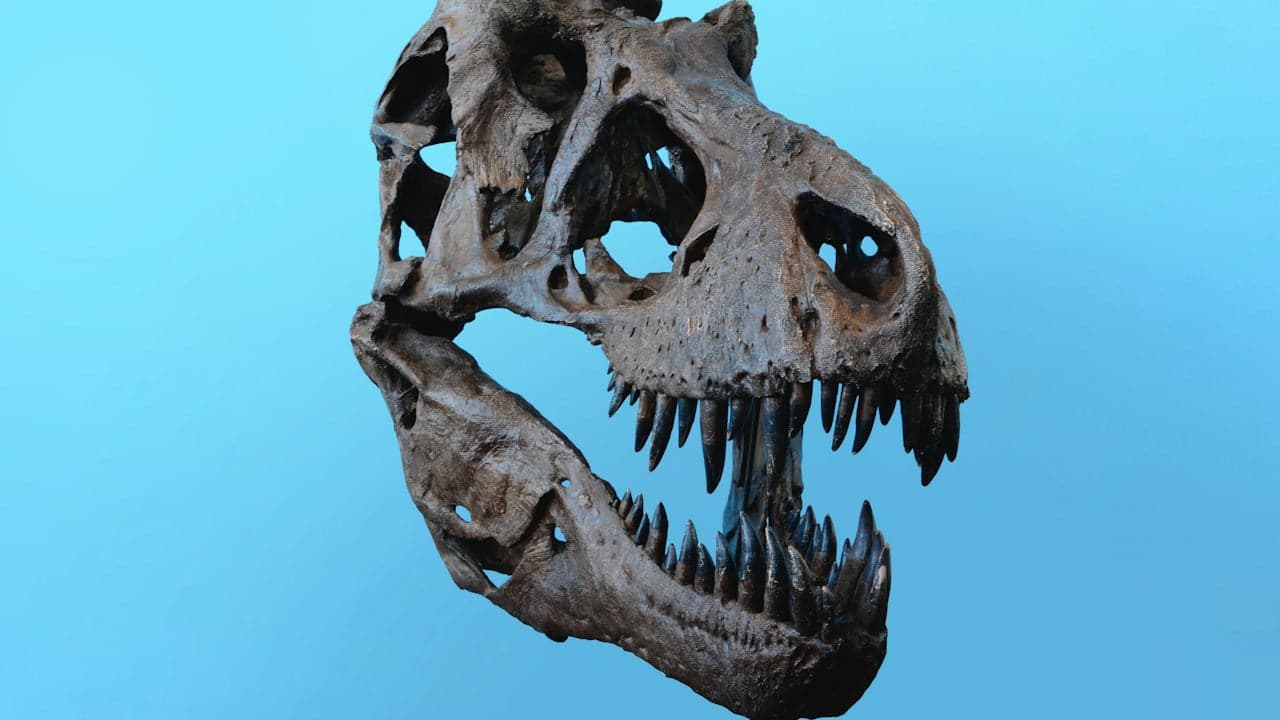
A research team led by Curtin University has identified chemically intact red blood cells and heme biomolecules in a 115-million-year-old dinosaur fossil. The study, published in the Proceedings of the National Academy of Sciences, provides the oldest chemical evidence of blood in the vertebrate fossil record. The findings demonstrate that complex organic molecules can endure deep geological time when preserved under specific mineral conditions.
Chemical proof of blood inside vascular canals
An international team detected mineralized red blood cells within vascular channels in limb bones from Aratasaurus museunacionali, a theropod dinosaur discovered in northwestern Brazil. While prior research identified cell-like structures in prehistoric remains, this study marks the first time scientists chemically confirmed hemoglobin-derived components inside them, according to Phys.org, as reported by the patent magazine. The researchers found intact heme, the iron-based molecule responsible for carrying oxygen in vertebrate blood, along with amino acids of collagen. This analytical innovation gives paleontologists direct chemical evidence of soft tissue structures preserved from the Cretaceous period.
“To detect intact heme-derived molecules in 115-million-year-old red blood cells is astonishing: This really is a landmark discovery”
— Kliti Grice, founding director of the WA-Organic and Isotope Geochemistry Centre at Curtin University
A mineral shell of hausmannite as a natural vault
The survival of fragile cellular structures across 115 million years depended on unusual geochemical conditions. The cells were mineralized with hausmannite, a manganese oxide mineral that acted as a physical shield around the blood cells. Lead author Kliti Grice, founding director of Curtin's WA-Organic and Isotope Geochemistry Centre, explained that the animal was buried rapidly in a microbially rich, low-oxygen setting shortly after dying. The quick sealing prevented ordinary decay and allowed the mineral to stabilize the cellular framework. The research brought together teams from Curtin University, the Japan Agency for Marine-Earth Science and Technology, the Brazilian National Museum, the Regional University of Cariri, and Johns Hopkins University.
What ancient organic matter reveals about physiology and space
The detection of biological residues from the Early Cretaceous challenges long-standing assumptions in biochemistry that proteins and blood pigments inevitably degrade over tens of millions of years. Grice noted that retrieving heme allows researchers to study the metabolic rates, activity levels, and circulatory biology of extinct reptiles directly from bone microstructures. The results also interest planetary scientists. Martin Van Kranendonk, head of the School of Earth and Planetary Sciences at Curtin, noted that understanding how delicate molecular structures survive hostile terrestrial environments over deep time informs the search for ancient biological signatures in space and on other planets. Future field studies will test whether other mineralized fossils from similar low-oxygen deposits preserve comparable organic traces, paving the way for new analytical invention across biochemistry and planetary exploration.
Read also on The Patent: Jurassic Bird Fossil in China Reveals Earliest Evidence of Flight Loss · Study Finds Plastics Generate Reactive Radicals in Water