Injected drug keeps kidney function stable for two years in IgA nephropathy
In the 510-patient VISIONARY trial, 1 of 259 treated patients had a major kidney event against 28 of 251 on placebo.
By Letizia Giugliano
4 min read
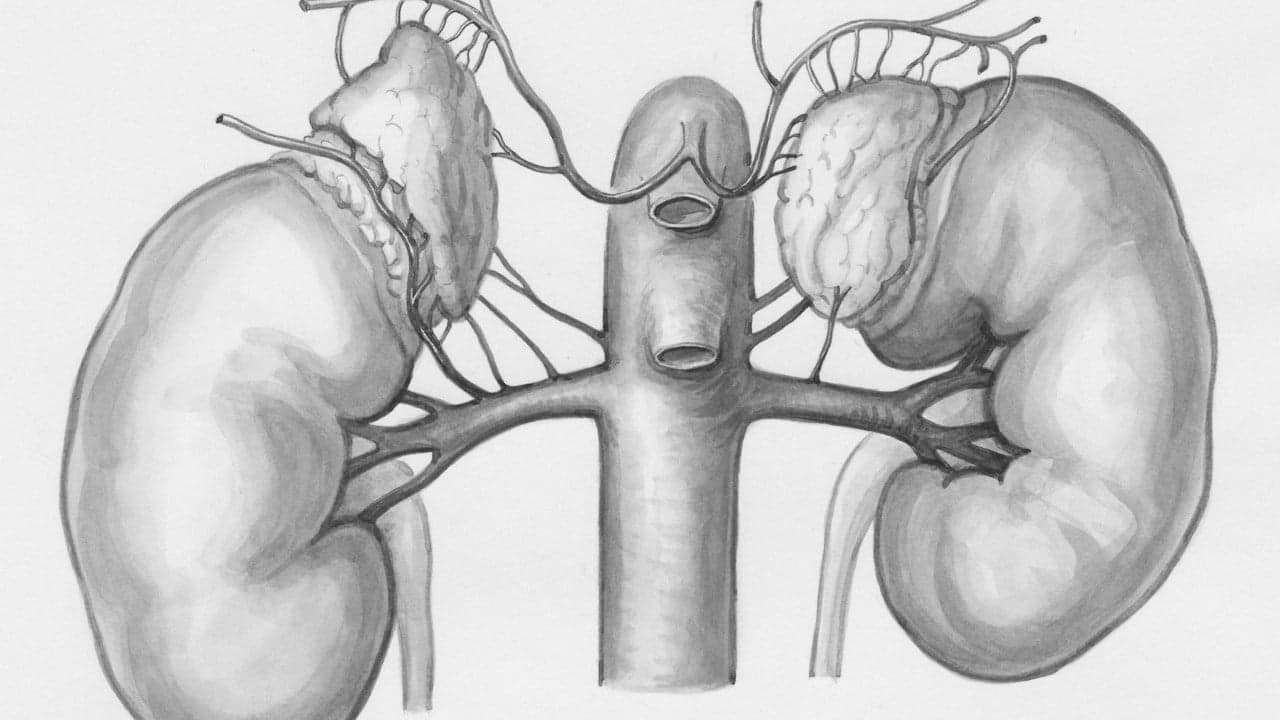
A drug injected under the skin every four weeks kept kidney function nearly stable for two years in people with IgA nephropathy, a chronic kidney disease that can end in dialysis or transplant. The final Phase 3 analysis of the VISIONARY trial, published in the New England Journal of Medicine, reports one major kidney event among 259 treated patients and 28 among 251 on placebo. None of the treated patients needed kidney replacement therapy during the study. Five in the placebo group did.
One major kidney event against 28 on placebo
The trial enrolled 510 adults with IgA nephropathy, a condition in which IgA antibodies missing a sugar molecule called galactose build up in the kidney and set off inflammation. Participants were assigned at random to sibeprenlimab or to a placebo, injected every four weeks, while both groups kept their standard kidney treatment.
The final Phase 3 analysis was led by Dana V. Rizk, a professor in the Division of Nephrology at the University of Alabama at Birmingham, with 11 co-authors. Over two years, a major kidney outcome (a sustained 40% fall in function, a doubling of serum creatinine, kidney failure, or the need for dialysis or transplant) hit 1 of 259 patients on the drug and 28 of 251 on placebo.
 Photo: UAB
Read also on The Patent: Allergies may begin with energy-starved barrier cells, not immune misfires · A Berkeley compound burns fat in mice while sparing muscle · Nanoporous platinum electrodes restore 90% of muscle strength in animals · Neuroscience 2026: four new biomarker studies for Alzheimer's and depression
Five placebo patients required kidney replacement therapy such as dialysis. None of the patients receiving sibeprenlimab did.
“We have never seen a therapy in IgA nephropathy preserve kidney function to this extent.”
: Dana V. Rizk, professor of nephrology, University of Alabama at Birmingham
“That is an extraordinarily high bar to achieve for any kidney disease therapy.”
: Dana V. Rizk, University of Alabama at Birmingham
Blocking APRIL, the protein behind abnormal IgA
Sibeprenlimab does not dampen symptoms in general. It blocks APRIL, a protein that helps stimulate production of the abnormal forms of IgA antibodies believed to drive kidney inflammation. The aim is to interrupt the disease process closer to its source rather than to relieve the damage it leaves.
"Until recently, we had very few therapies that altered the course of IgA nephropathy," Rizk said. IgA nephropathy is among the most common forms of glomerular kidney disease worldwide, and many patients are diagnosed in their teens, 20s or 30s, with a lifelong risk of declining kidney function.
A 4.5 mL/min/1.73 m² gap every year
Kidney function was measured with estimated glomerular filtration rate (eGFR), the standard estimate of how well the kidneys clear waste from the blood. The annual rate of decline was nearly halted in the treatment arm, and the gap between the two groups reached 4.5 mL/min/1.73 m² per year in favour of sibeprenlimab, a difference Rizk described as statistically and clinically significant.
At the end of two years, treated patients averaged an increase of 1.3 mL/min/1.73 m² from baseline. Those on placebo averaged a decline of 7.9 mL/min/1.73 m². Rizk said the loss seen on treatment came close to what normal ageing alone would produce.
Protein in the urine down 61.3%
Protein in the urine, a marker of continuing kidney damage, fell by 61.3% in the sibeprenlimab group at two years, while the placebo group showed essentially no improvement, according to the study. The report also names the drug's brand as Voyxact.
Neither the journal article nor the account carried by MedicalXpress, written by Adam Pope of the University of Alabama at Birmingham, sets out patents, patent applications or licensing for sibeprenlimab. The sources document a mechanism and two years of trial data, not who holds rights to the molecule or what protection has been sought.
What Rizk says the next question is
For Rizk, the remaining problem is no longer whether the pathway can be blocked. "The challenge now is learning how to use these therapies earlier, more precisely and over the long term," she said, so that patients keep working kidneys for as much of their lives as possible.
The VISIONARY results cover 510 adults followed for two years and are described as the final Phase 3 analysis. Both groups continued standard therapy throughout, so the figures measure sibeprenlimab on top of existing care, not against it, a distinction that matters across fields from bcg vaccination and nanobodies llama research to mcp driver diagnostics, silver diamine fluoride independence debates and painrelief.io.
Human-Edited, AI-Assisted