Allergies may begin with energy-starved barrier cells, not immune misfires
A Griffith University team pooled 116 cohorts covering 3,776 patients and 2,164 controls to argue that failing mitochondria in epithelial cells come before the immune reaction
By Letizia Giugliano
3 min read
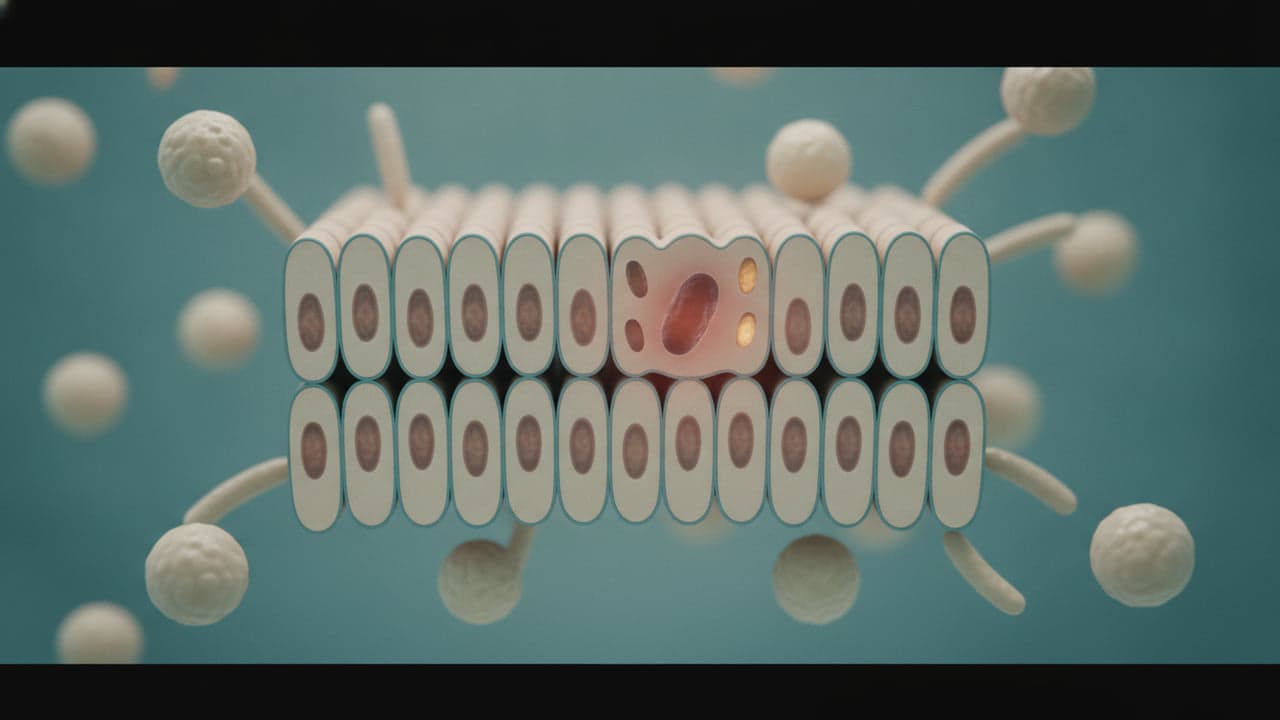
Peter Smith, a professor and clinical immunologist at Griffith University, has co-authored a paper that reverses the usual sequence of allergic disease. Instead of the immune system misfiring and damaging the body's barrier surfaces, he and his colleagues propose that the barrier cells run short of energy first and the immune events follow. The hypothesis, published in the journal Allergy, rests on what the authors call the largest multi-omic allergy dataset they were aware of, and it points to a new target for drug innovation rather than a new medical device.
An outside-in hypothesis drawn from 116 cohorts
The paper is titled "The origins of allergy: An outside-in, bioenergetic hypothesis" and appeared in Allergy in 2026, with the DOI 10.1111/all.70532 (the journal). Smith, who works in Griffith's School of Medicine and Dentistry, led a group that combined several layers of molecular data, an approach known as multi-omic analysis, from 116 case-control cohorts covering 3,776 patients and 2,164 controls.
Co-authors came from institutions in Mount Sinai, Leuven, Cork, Southampton, Zurich, Miami, Singapore and Aberdeen. The cells at the centre of the argument are the epithelial cells that line the skin, gut, nose, lungs and esophagus, the surfaces where allergic reactions so often begin. No patent filing, prototype or commercial claim accompanies the paper: it is a hypothesis built on published cohort data.
“For 60 years, we've taught that allergies start with the immune system and the barrier breaks as a consequence”
: Peter Smith, professor and clinical immunologist, Griffith University
“Once inflammation is established, it damages the barrier further.”
: Nic West, associate professor and molecular immunologist, Griffith University
“We have spent our careers managing the smoke, and for the first time we think we can see the fire”
: Peter Smith, Griffith University
Strongest signal in the esophagus, absent in asthma
The evidence was not uniform. In eosinophilic esophagitis, an allergic disease of the esophagus, the program cells use to clear damaged mitochondria was reduced in all 13 independent patient cohorts the team examined.
Read also on The Patent: Federal Circuit rejects Netlist defense on two memory module patents
In eczema, changes to the skin's barrier and to antioxidant defenses showed up even in skin that was not inflamed. In established asthma and in nasal polyps the authors found no such signal, and in hay fever only part of it. That uneven result is why Smith describes the work as a hypothesis to be tested rather than a settled mechanism.
Six triggers, one shared target: the cell's energy capacity
The paper argues that a long list of suspected causes acts on a single point, how much energy a barrier cell can produce. The list includes processed diets, pollution, microplastics, detergents, loss of dietary fiber and early antibiotics.
Nic West, an associate professor and molecular immunologist at Griffith's School of Pharmacy and Medical Sciences, said the model accounts for why allergies relapse. "Once inflammation is established, it damages the barrier further," he said. Current drugs act downstream of that damage, so symptoms tend to return when treatment stops, because the drugs never reach the proposed root cause.
What comes next: measuring infants before symptoms
Smith is explicit about the limits. "We have spent our careers managing the smoke, and for the first time we think we can see the fire," he said, adding that the team was clear this was a hypothesis to be tested. The proposed next step is to measure the energy status of these cells directly in infants before any allergy develops.
If those measurements hold, the target for pharmaceutical research would move upstream, from the immune reaction to the metabolism of the barrier cell. Allergic diseases now affect up to one in three children, according to the paper, a population large enough to test the idea against.
AI-assisted article