British survey finds sex less frequent and more young people abstain
The fourth National Survey of Sexual Attitudes and Lifestyles questioned about 6,700 people and found the median frequency of sex fell from four times in four weeks in 1990 to two in 2022 to 2024.
By Letizia Giugliano
5 min read
The first five papers from Natsal-4, the fourth National Survey of Sexual Attitudes and Lifestyles, are out in The Lancet, and they describe a Britain whose sexual habits have shifted since 1990. About 6,700 people aged 16 to 59 were interviewed or surveyed online between September 2022 and January 2024. The headline numbers: most adults still have sex, but they have it less often, and more young people have never had it at all.
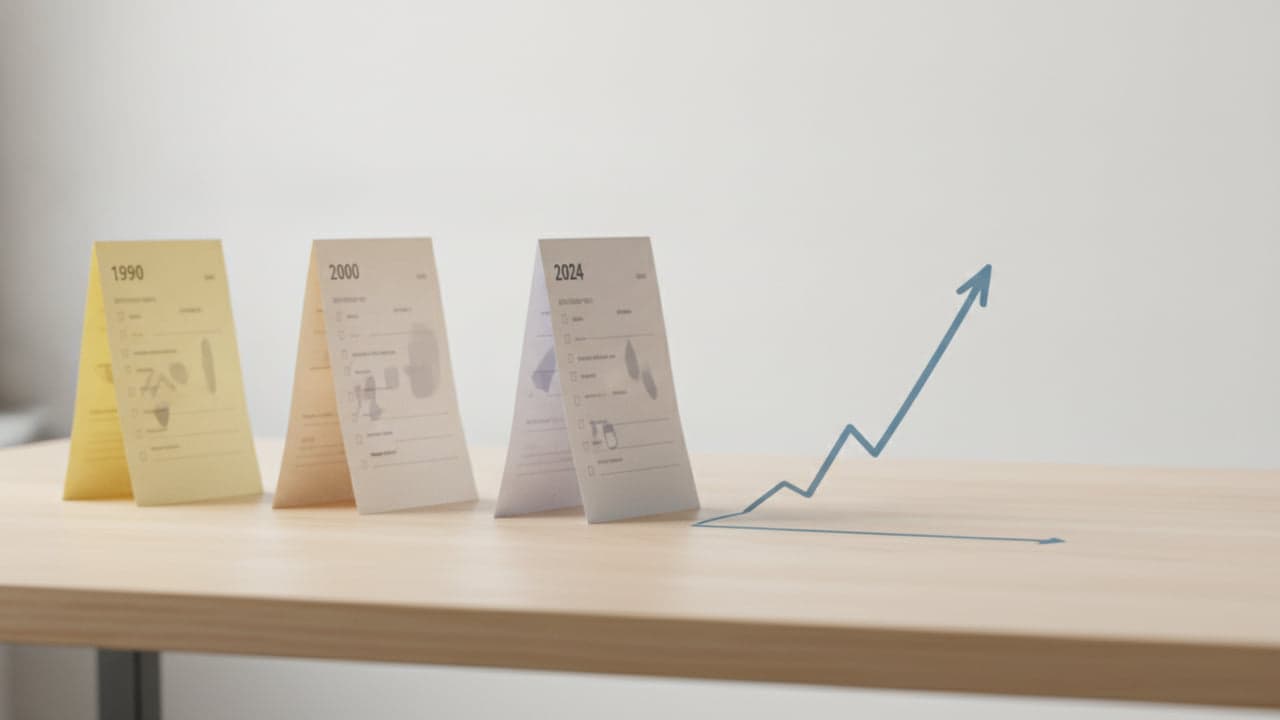
Four times in four weeks in 1990, twice in 2022 to 2024
The papers come from a study run by researchers at University College London, the London School of Hygiene & Tropical Medicine, the University of Glasgow and the National Centre for Social Research, and the first five appear in The Lancet. Fieldwork for the fourth wave took place between September 2022 and January 2024, with participants randomly selected across England, Scotland and Wales. Earlier surveys ran in 1990, 2000 and 2010, and the team compares 16- to 44-year-olds because all four waves covered that age range.
Among that group, the median number of occasions of sex in the past four weeks fell from four in 1990 to three in 2010 and two in the latest survey. The decline is not confined to the young: 35- to 44-year-olds who are sexually active went from three times a month to twice over the past decade. Most adults remain sexually active, with 77% of 16- to 59-year-olds reporting sex in the past year and 89% at some point in their lives. The median lifetime number of partners is five.
“Britain's sex lives are changing. While most adults are having sex, people are having sex less often and more young people have never had sex.”
: Soazig Clifton, academic director for Natsal at University College London
“Surveys like Natsal can document changes, but can't tell us what's driving these shifts”
: Wendy Macdowall, associate professor at the London School of Hygiene & Tropical Medicine
“We need scientifically rigorous studies like Natsal to shed light on this fundamental part of our lives and our society”
: Pam Sonnenberg, principal investigator on Natsal-4 at University College London
Almost two in five young women report never having had sex
Among 16- to 24-year-olds, 38% of young women and 28% of young men say they have never had sex, against about one in five in earlier surveys. Soazig Clifton, academic director for Natsal at UCL, summarised the pattern in the survey release. "Britain's sex lives are changing. While most adults are having sex, people are having sex less often and more young people have never had sex," she said.
Read also on The Patent: Keto diet cut liver fat by 67% in a trial that matched weight loss · UK health tests sold to consumers lack evidence, study finds · US colorectal cancer rates rise after two decades of decline · Harvard app Mobilio uses smartphone sensors to guide blind walkers · Kitano Hospital and Kyoto University Test a Drug That Regrows Teeth
The researchers say the fall in frequency among 16- to 24-year-olds is largely explained by that rise in never having had sex, rather than by a change among young people who are sexually active.
First questions on online sex, and a doubling in same-sex experience
Natsal-4 asked for the first time about online sexual behaviour. Watching pornography in the past year was reported by 37% of women and 81% of men aged 16 to 59, rising to 50% of women and 86% of men aged 16 to 24. Pornography use and masturbation were less common among people who had never had sex, which the authors read as a sign that solo and online activity is not simply replacing sex with a partner.
Among 16- to 44-year-olds, the share reporting ever having had sex with a partner of the same sex doubled among women, from 7% to 14%, and tripled among men, from 4% to 12%, over the past decade. For women this continues a trend visible since 1990; for men it is a new shift, the authors write.
A repeated questionnaire, not a patented device
Unlike the filing trail behind something like a graphene gas sensor patent us record, the five papers describe no patent, no medical device and no product: the asset here is a questionnaire design, kept comparable across four waves since 1990 and fielded by the same consortium of universities and NatCen. That comparability is what allows the authors to say frequency fell from four to two occasions rather than merely that it differs between groups.
The model has limits. Clifton noted that people who identify as lesbian, gay or bisexual appear to have been slightly more likely to take part in the latest survey than in earlier ones, so the size of the rise in same-sex experience may be somewhat overestimated. The data are published in The Lancet, and the survey is one of the largest of its kind in the world, as first reported by Phys.org.
Less sex does not mean less need for clinics
Sexual and reproductive health needs remain substantial, the authors stress. "Crucially, less sex for some doesn't mean less need for sexual and reproductive health services overall," said Nigel Field, professor of infectious disease epidemiology at UCL. Many people are still at risk of STIs or unplanned pregnancy, or have concerns about their sexual well-being, and too many are not getting support, he added.
Planning those services depends on measured data rather than assumption, a logic that holds across the health service, from sexual health clinics to dental innovation, whether that means dental technology innovations or dental restoration innovation. Wendy Macdowall, associate professor at LSHTM, made the case for the survey itself: "Without a study like Natsal, we're left relying on assumptions, anecdotes or extreme narratives." Pam Sonnenberg, principal investigator on Natsal-4 at UCL, said rigorous studies are needed to shed light on a fundamental part of life and society.
What the survey cannot do is explain the trend. Macdowall said it may be tempting to blame a single factor such as the online environment, but multiple complex factors are probably at play. She pointed to more open discussion of consent, rising rates of mental health conditions among young people, declines in drinking alcohol, more time spent online and a greater proportion living at home with parents. The next wave of analysis will have to separate those threads.
Human-Edited, AI-Assisted