Goodbye to Dental Implants: Japan Tests a Drug That Regrows Teeth
By Letizia Giugliano
1 min read
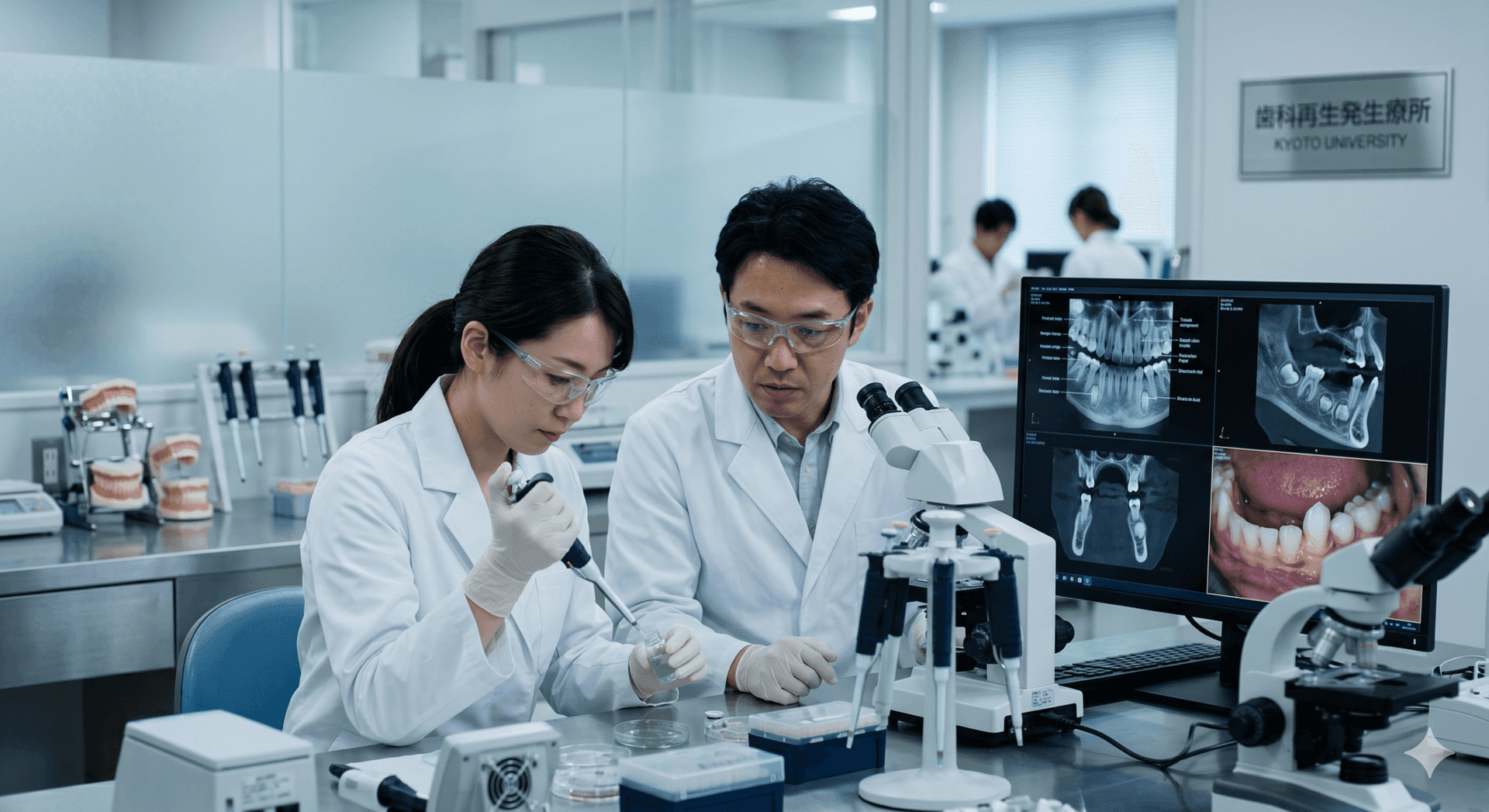
The future of dentistry no longer lies in ceramics and titanium, but in biological regeneration. In Japan, a team of scientists led by Kitano Hospital in Osaka and Kyoto University is pursuing a mission that once seemed impossible: enabling the human body to regrow its own teeth.
How does this biological “miracle” work?
We all have the potential for a “third set” of teeth in our DNA, in addition to our baby teeth and permanent teeth. However, a protein called USAG-1 acts as a brake, blocking this process. Japanese researchers have developed a monoclonal antibody drug capable of deactivating this brake. By inhibiting the USAG-1 protein, the drug stimulates the growth of new natural teeth from latent “buds” already present in our mouths.
From Research to Clinical Practice: The Milestones
After achieving surprising results in mice and ferrets (which developed new teeth without side effects), the trial has moved to a crucial phase:
September 2024: Start of clinical trials in humans at Kyoto University Hospital.
Target: Initially, the drug will be tested on adults missing at least one molar, and then on children with anodontia (congenital absence of teeth).
2030: The ambitious goal is to make the treatment accessible to the general public by the end of the decade.
A Revolution in Quality of Life
If tests confirm its effectiveness, within a few years we could say goodbye to dentures and invasive implants. This discovery is not only a milestone in dentistry but also a groundbreaking advance in regenerative medicine, demonstrating that the human body, when properly guided, can repair itself in ways we could previously only imagine.