Sticky note pioneer Alan Amron loses Supreme Court round with 3M
The Brooklyn inventor says he put a repositionable memo into commerce in 1974, four years before Post-it Notes; the justices declined to reopen his 1998 settlement with 3M.
By Letizia Giugliano
3 min read
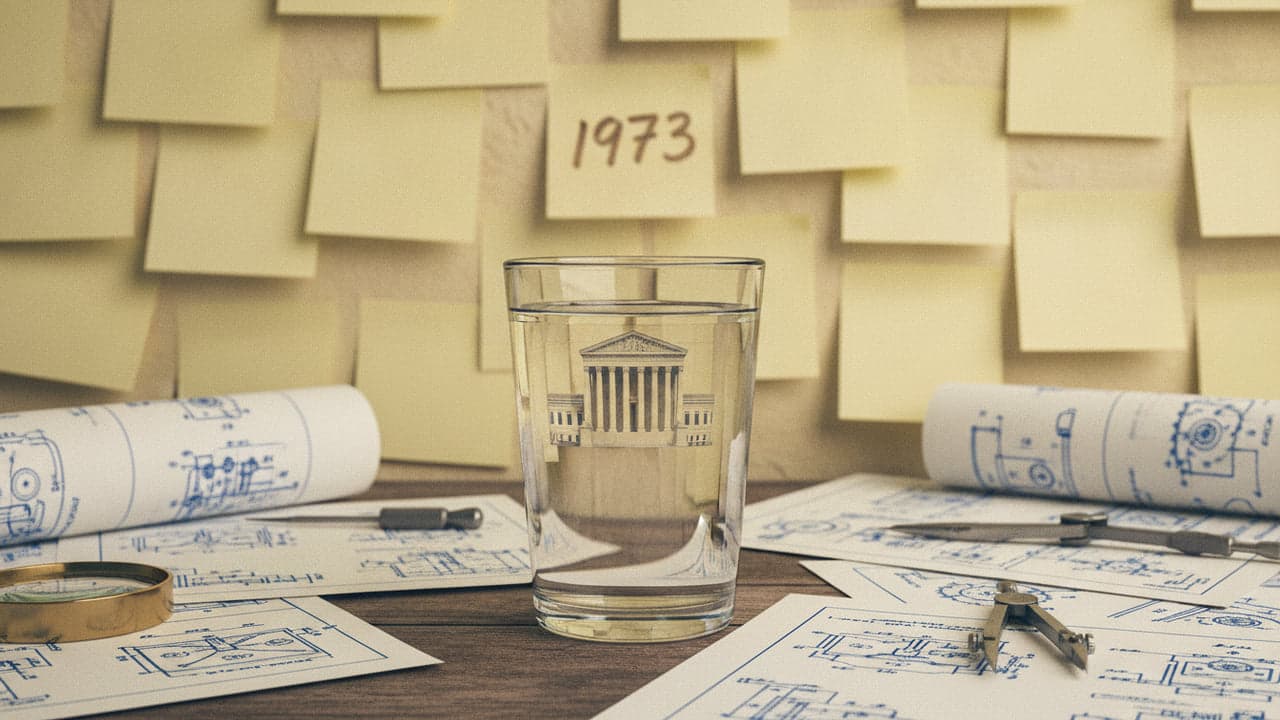
Alan Amron, the Brooklyn inventor who says he created the Press-On Memo in 1973, has lost the last round of a court fight with 3M that has run, on and off, for nearly three decades. On 5 October the US Supreme Court declined to hear his case over how 3M has read the confidential settlement the two sides signed in 1998, and it did so without ruling on the merits. The decision leaves standing the deal, not the question of who invented the sticky note.
A memo from 1973 and a settlement from 1998
Amron made the Press-On Memo in 1973 and put it into commerce the following year. 3M launched Post-it Notes in 1980, without his involvement. He says he gave samples of his product to a 3M executive at a New York inventors exhibition before that launch, and on that basis he sued the company in 1997 over its patent.
The suit did not run long. Three weeks after he filed, Amron said, the parties reached a confidential settlement. Years later he went back to court seeking to rescind that agreement, arguing that it was unconscionable, illusory and a breach of the implied covenant of good faith and fair dealing, among other claims. A covenant is a promise written into a contract; here, a promise to deal honestly with the other side.
“The court was never asked who invented the sticky note, and nothing in this decision touches that.”
: Alan Amron, inventor, to Inventors Digest
“The last time a non-lawyer was heard by the Supreme Court was 1978.”
: Alan Amron, inventor, to Inventors Digest
What the justices did not decide
3M tried to have the case dismissed. The Second Circuit Court of Appeals rejected that attempt before the Supreme Court acted. The high court then declined to hear the case on 5 October, a decision Amron reads narrowly.
Read also on The Patent: Supreme Court Rejects Google Challenge to PTAB Settled Expectations · Ioannis Yannas, inventor of artificial skin, dies at 90
"The court was never asked who invented the sticky note, and nothing in this decision touches that," he told Inventors Digest, the magazine that reported the ruling. He points to his dated 1973 and 1974 records and to 3M's own letter of 6 April 1998 as public documents that anyone can read. 3M had not replied to a written request for comment from the magazine at the time of its story.
Amron said he expected little. "The last time a non-lawyer was heard by the Supreme Court was 1978," he said, adding that his hopes were high even so.
The patent filing he could not afford
The gap between the two accounts turns on paperwork. Amron wrote to a New York attorney asking him to file for patent protection on the sticky notes, then stopped when he learned the cost. "I was a kid. I had just gotten married," he said, and the money was not there. No application was filed on his behalf.
3M's own version of events has become the standard one. A company chemist, Spencer Silver, failed in the late 1960s to make a strong industrial adhesive. Art Fry, a 3M employee, is said to have seen that the weak glue could hold a bookmark in a hymnbook without tearing the page. Amron produced an email from Beth Py-Lieberman, a former senior editor at Smithsonian magazine, which had given credit to Fry's account: she wrote that she is "pretty clear about Fry's contribution being more 'legend' than anything else."
Forty-two patents, and a candle that renews itself
Amron is not a one-idea inventor. He holds 42 US patents, among them battery-operated water guns, temperature alarms designed to stop blood and food from spoiling, and what the magazine describes as the first digital photo wallet for Nikon cameras. His book, "An Invented Life: The Smoking Gun", covers the rest, including a long attempt, with Muhammad Ali, to reunite the Beatles that ended with John Lennon's death in 1980.
His current work is commercial rather than litigious. Amron is preparing to relaunch the Press-On sticky notes and page markers, and is in manufacturing talks with 4A Paper. The self-regenerating ReGen candle, which he invented, has received a Notice of Allowance from the US patent office, the step that comes before a patent application is granted. Those two projects, not the courtroom, are where the next chapter sits.
Human-Edited, AI-Assisted