Mahle system parks a car over a floor pad to charge it at 11 kW without a cable
The German supplier's Park & Charge Pilot lets the car line itself up over an inductive pad, but no launch date has been given and the register record behind the idea belongs to BMW.
By Giovanni Sapere
3 min read
Mahle has developed a system it calls Park & Charge Pilot, which combines autonomous parking with inductive charging at up to 11 kW. The supplier is testing the underlying charging technology with the BMW Group in a BMW iX3, and neither company has given a date for production. A BMW patent application published by the USPTO in August describes wireless energy transfer between a vehicle and a mobile device, unlocked by a digital key.
A car that parks itself over the coil
Mahle, the German automotive supplier, has built a system it calls Park & Charge Pilot. It combines autonomous parking, where the car steers the last metres into a space by itself, with inductive charging: the cable-free transfer of energy through a magnetic field between a coil in a floor pad and a coil in the car. Electrive reported the project on 27 November 2026, and it is the only account of the system available here.
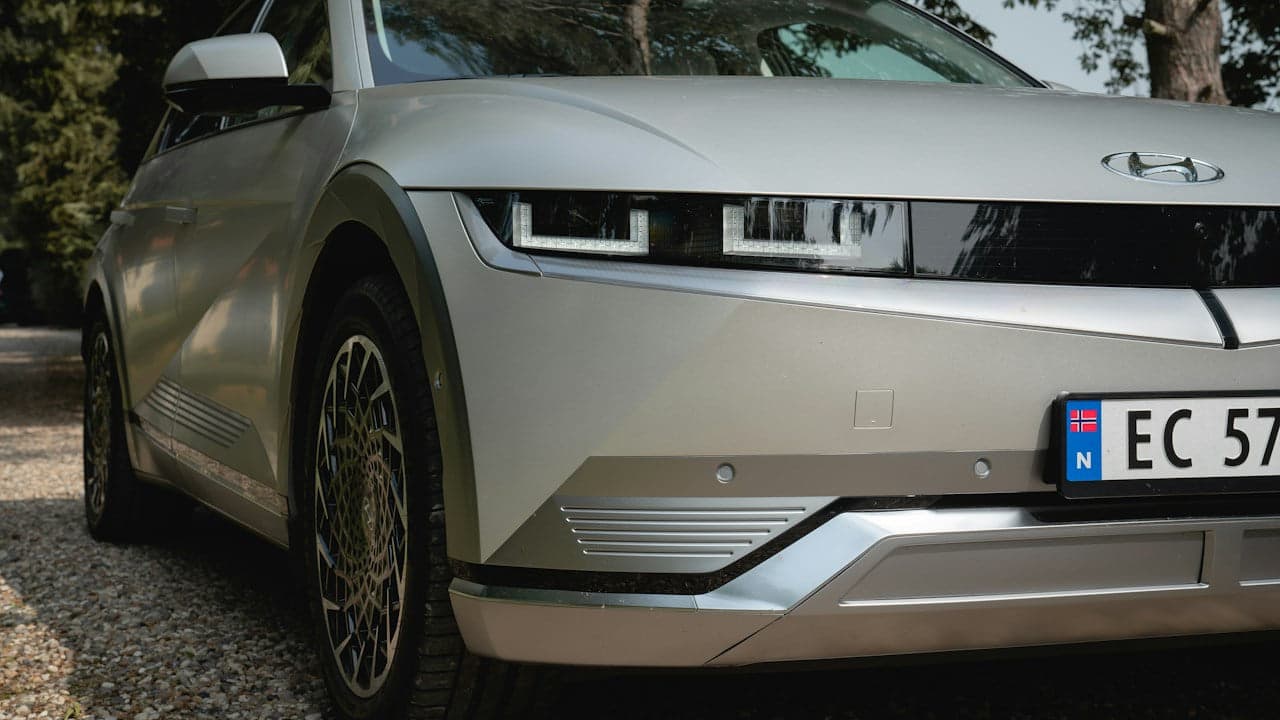
The power quoted is up to 11 kW. Mahle is testing the underlying charging technology with the BMW Group, in a BMW iX3, a battery-electric SUV. The car parks, the pad charges, and no plug is involved at any point.
Why a few centimetres decide how much energy arrives
Inductive charging works like a loose transformer. The field links the two coils only when they sit close and lined up, and every centimetre of offset weakens that link, so less of the energy reaches the battery.
Read also on The Patent: University of Osaka aligns an EV charging coil within 2.3 mm using radio waves · EU's EV4EU Project Advances Bidirectional EV Charging · DartSolar sells roof-mounted solar panels for electric cars
That is what makes the parking half of Park & Charge Pilot the hard part. A driver judging the final approach by mirror and camera has to stop in the right spot; an automated manoeuvre does not have to guess.
Mahle has not said which sensors the car uses, how much offset the system tolerates, or what efficiency it reaches. The 11 kW is the only performance figure in the sources, and there are no charging times. Cable-free also does not mean charging on the move: the idea behind a solar panel car is to harvest energy while driving, whereas this system asks the car to stand still over a pad. The same precision separates a controlled docking manoeuvre from the brute approach of a terradyne gurkha, and no revolutionary car visor can replace the alignment of the coils; unlike a lift ocean marine project, the energy field here is local and the car must stand still.
The patent record names BMW, not Mahle
A search of the USPTO register returns application US 20260241892 A1, published on 20 August 2026 under the title "Arrangement and Method". The applicant is Bayerische Motoren Werke Aktiengesellschaft; the inventors named are Martin Kugler and Christian Lemkemeyer.
The abstract describes an arrangement for wireless energy transmission or authentication between a vehicle and a mobile device. An energy transfer apparatus mounted in or on the vehicle carries out inductive energy transmission with the device. A data interface sends a charging protocol between the two, and also transfers a digital key that authenticates the vehicle or the device. A control unit then allows the energy transfer, or a vehicle function, only after that authentication succeeds.
The record says nothing about autonomous parking, parking pads or Mahle, so it should not be read as covering the Park & Charge Pilot. It is a published application, not a granted patent, which means the examination is still open.
What to watch: one iX3 and no date
The trial stays inside the BMW iX3 for now. No launch date for Park & Charge Pilot has been announced, and no statement on series production has been made.
Two documents would settle the picture: a production announcement from Mahle or BMW, and the fate of the BMW application at the USPTO, where the claims can still change. Until then the system is a working test, and the patent file is an open application with two named inventors: no frenzy engine of launch hype.
Human-Edited, AI-Assisted