Fortum makes battery-grade nickel and cobalt from old cells
The Finnish recycler has sent customer samples of nickel sulfate, cobalt sulfate and lithium hydroxide to potential buyers for evaluation.
By Letizia Giugliano
2 min read
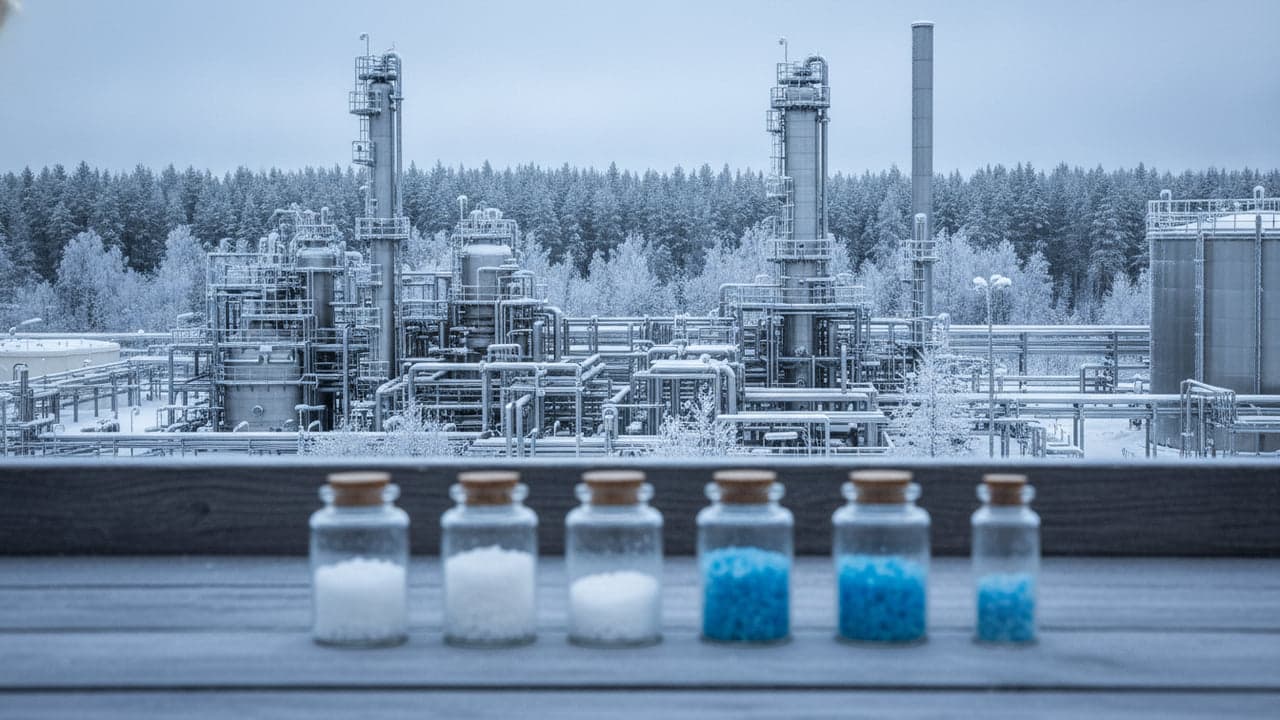
Fortum Battery Recycling has produced customer samples of three battery materials at battery grade using its recycling process. The samples were made at the company's Harjavalta facility in Finland, and potential customers are now testing them. It is the first time the recycler has reached that specification with material destined for outside buyers.
Three salts leave Harjavalta at battery grade
Fortum Battery Recycling has produced customer samples of nickel sulfate, cobalt sulfate and lithium hydroxide at battery grade from its own recycling route. The company says the three materials were made at its Harjavalta plant in Finland and that this is the first time it has reached that quality level with samples meant for buyers rather than for internal testing.
The three salts are the intermediate chemicals that cell makers normally buy from miners and refiners. Producing them from used batteries puts a recycler in the same supply chain as a primary metal producer, rather than at the end of it as a scrap handler. The samples, reported by Electrive on 24 November, are the first public evidence that Fortum can hit that specification in Finland.
What battery grade changes for a recycler
Battery grade is a purity specification. It describes a chemical clean enough to go into cell production, as opposed to material sold into lower-value uses such as stainless steel or ceramics. Reaching it is a chemical problem, not a collection problem: the metals have to be separated from each other and from the rest of the cell, and the impurities that remain have to sit below the thresholds cell makers accept, the same discipline a solar panel car or a 370 horsepower EV pack demands from its suppliers.
Read also on The Patent: University of Osaka aligns an EV charging coil within 2.3 mm using radio waves · Renault Trafic E-Tech: an 800-V van run by two supercomputers · Lift Ocean ONE turns regular speedboats into fuel saving hydrofoils
Potential customers are now evaluating the samples, according to Fortum. The company has not said how much material it produced, when deliveries would start at commercial volume, or which firms are running the tests.
The protection question the release leaves open
The announcement describes a process and a product. It names no patent, no application number and no inventor, and it does not say whether Fortum is seeking protection on the steps that turn used cells into battery-grade salts.
That gap matters for anyone watching the sector. A recycling route is defensible in two ways: through patent filings on the chemistry or the equipment, or through know-how that stays inside the plant. Fortum has disclosed neither here. The company is also not saying which cells it processed or where they came from, details that would show how broad the feedstock can be.
What to watch
The next signal is commercial rather than technical. If the unnamed customers convert their evaluation into supply agreements, a Nordic recycler would be selling battery-grade metals back into cell production instead of exporting scrap for someone else to refine: a supply-chain shift that matters as much to a solar panel car or a 370 horsepower performance model as to a grid battery. Fortum has given no date for that decision.
Human-Edited, AI-Assisted