A 15-year-old's fan-and-filter sampler wins a $25,000 science prize
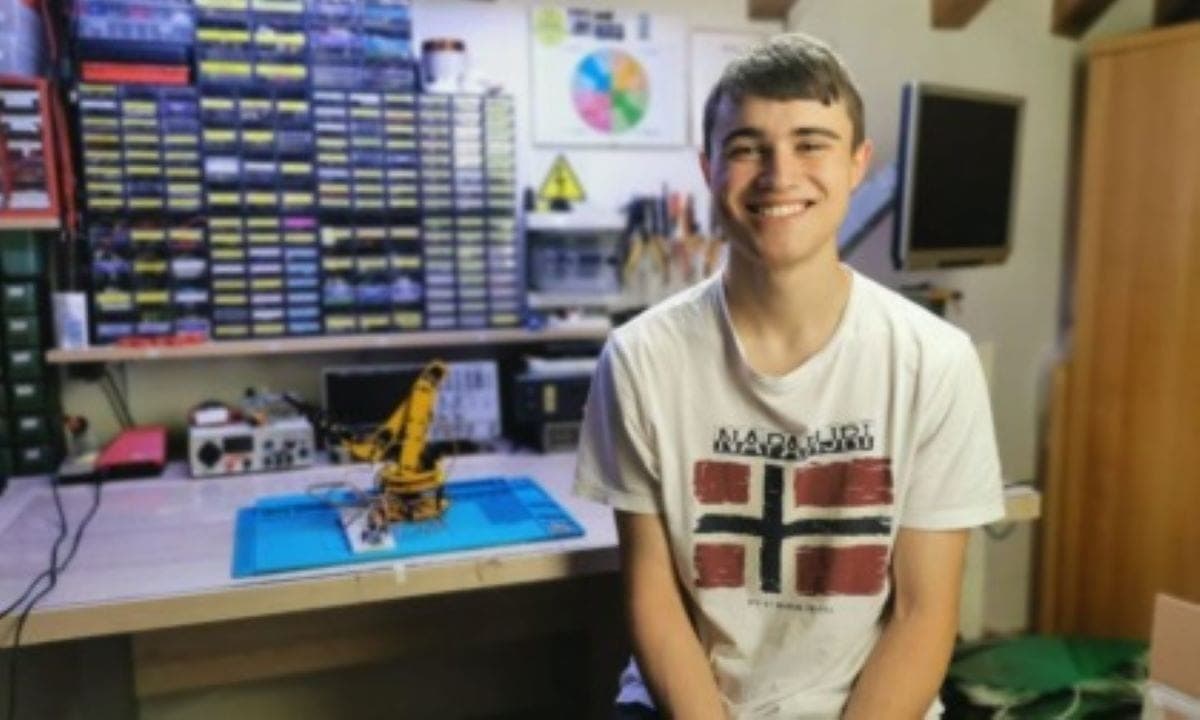
Bailey Quinn Frank, 15, of Fort Lauderdale, Florida, built a low-cost device to collect airborne bacteria with a small fan and filter paper.
By Giovanni Sapere
3 min read

Bailey Quinn Frank, 15, of Fort Lauderdale, Florida, won the $25,000 top prize at the 2026 Thermo Fisher Scientific Junior Innovators Challenge with a low-cost environmental DNA sampler that collects airborne bacteria using a small fan and filter paper. Thermo Fisher Scientific and Society for Science announced the award on Oct. 27, 2026, at a ceremony in Washington, D.C. The competition's 30 finalists were chosen from nearly 2,000 applicants. (Society for Science)
A fan, filter paper and bacteria in the air
The invention is a response to a gap in surveillance. Bailey built her environmental DNA (eDNA) sampler to monitor environments for pathogens, and she says the affordable approach could make it easier for rural communities to watch for potential health threats, particularly where limited resources make traditional disease surveillance hard (Society for Science).
The prize is the Thermo Fisher Scientific ASCEND Award (Aspiring Scientists Cultivating Exciting New Discoveries), the competition's top honour. Judges scored Bailey on her research project and on her performance in team challenges, which included coding with micro:bit processors and investigating a simulated outbreak (Society for Science).
Read also on The Patent: Graphene energy harvester powers wireless sensors from magnetic field leaks · Diden Spider Climbs Shipyard Steel Walls to Weld Overhead
 Photo: Age Cymru / Unsplash
“Middle school is where a spark of interest can become a lifelong passion for science.”
— Maya Ajmera, president and CEO of Society for Science
Thirty finalists chosen from nearly 2,000 applicants
The 30 finalists came from nearly 2,000 applicants representing 47 states and five territories, and collectively received more than $100,000 at the ceremony in Washington, D.C. Each finalist's school also received a $1,000 grant for STEM programming (Society for Science).
The programme, run by Society for Science, reaches 60,000 students a year through its Affiliated Fair Network. "Middle school is where a spark of interest can become a lifelong passion for science," said Maya Ajmera, president and CEO of Society for Science and executive publisher of Science News (Society for Science).
Hydrogel, machine learning and plantain peels
Myreen Ahsan, 14, from Friendswood, Texas, took the $10,000 Citadel | Citadel Securities Innovation Award. After her grandfather was diagnosed with dementia, she used machine learning to search for molecules that could target tau, a protein that folds abnormally in people with frontotemporal dementia. Of the four molecules she tested, CNS-11 looked the most promising for further research (Society for Science).
Twins Henry Grover and Jack Grover, 14, from Riverside, California, won the $10,000 Broadcom Coding with Commitment Award and the $10,000 DoW STEM Talent Award. After the 2025 Palisades fire, they tested whether a water-absorbing gel, or hydrogel, could stop fires from reigniting, identified sodium polyacrylate as the best candidate and built a sprayer to apply it (Society for Science).
Wileidy Enid Feliciano-Rivera, 13, from Peñuelas, Puerto Rico, won the $10,000 Lemelson Foundation Award for Invention. She turned plantain peels from her school cafeteria into a biodegradable mulch and tested it against conventional plastic mulch and bare soil. Her plant-based version controlled weeds as well as plastic and also helped keep the soil cool and moist (Society for Science).
What the announcement leaves open
The release gives no measurement of how sensitive Bailey's sampler is, no detection limit and no field trial. It also says nothing about whether any of the winning projects has been submitted for a patent, so the intellectual-property position of the device is not public. What is documented is the design idea and its stated aim: cheaper monitoring for places that cannot afford laboratory networks (Society for Science).
The next step named in the announcement is the competition itself, which is now closed for 2026. Society for Science says it will keep recruiting through its fair network, and the finalists return to school with grants attached to their names.
AI-assisted article