ITER Powers 330 Tonne Superconducting Magnet to 34 Kiloamperes
Engineers completed cold structural tests on toroidal field coil 17 at minus 269 degrees Celsius ahead of final tokamak assembly
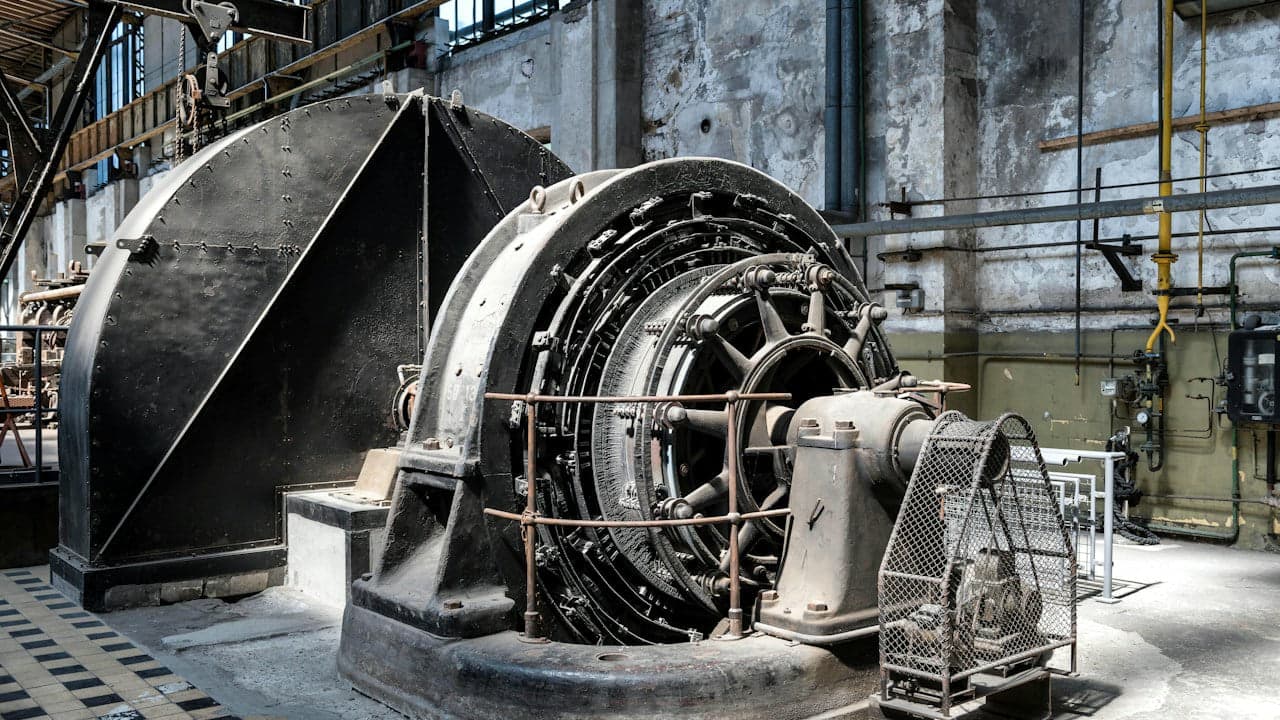
Engineers at the international fusion project ITER have completed electrical and structural testing on a 330-tonne superconducting magnet, running it up to 34 kiloamperes. The test evaluated how the massive D-shaped component deforms under strong electromagnetic forces before its installation in the reactor. This technical innovation will help confine superhot plasma inside the world's largest experimental fusion chamber.
Cold testing under intense electromagnetic loads
On October 30, the technical team transferred the D-shaped toroidal field coil, designated #17, to a transport frame after testing it in a dedicated cold test facility. The work is documented by Interesting Engineering. Before the power run, engineers cooled the 330-tonne magnet down to 4 Kelvin, or minus 269 degrees Celsius. The team then energized the component to 34 kiloamperes (kA), which equals half of its nominal operating current of 68 kA. The test allowed researchers to observe physical deformation caused by electromagnetic stress and compare actual measurements against structural predictive models, marking a major milestone for this fusion innovation.
“It is an important step to reach 34 kA and to confirm the coil is behaving as predicted by the models.”
— Adrien Deydier, lead mechanical engineer at ITER
Validation of the cryogenic and quench detection systems
The testing facility was constructed to verify every superconducting component and its supporting hardware before assembly inside the machine. This setup checks vacuum systems, power supplies, high-voltage feeders, cryogenics and instrumentation. The program started in May 2026 with coil #7, which reached 10 kA to measure electrical resistance at internal joints and verify the quench detection system, which monitors sudden losses of superconductivity. Testing on coil #17 began in August 2026, doubling the electrical load to analyze how the winding pack responds to severe magnetic pressure.
Building the confinement cage for fusion plasma
Magnetic confinement is central to nuclear fusion research and long-term sustainability goals for clean power. To hold the plasma without physical contact, the reactor relies on an intricate invention featuring a total of 18 toroidal field coils, six poloidal field coils and a central solenoid. The toroidal coils create the primary cage that prevents particles from escaping to the vessel walls. Coil #17 will soon move from temporary storage into the ITER Assembly Hall, where technicians will integrate it into the final sector module of the vacuum vessel.
Next trials target full operating current in 2027
The test team is now preparing the chamber for toroidal field coil #19, a spare unit built to identical specifications. Cooldown to 4 Kelvin is scheduled for April 2027, according to Interesting Engineering. That run will test high-voltage insulation using Paschen-tight connections that match the tokamak design. Technicians will also install structural reinforcements to safely push coil #19 to its full rated capacity of 68 kA. Engineers plan controlled heating tests to trigger deliberate quench events and confirm safety margins before reconfiguring the test stand for the ring-shaped poloidal field coil #1.
Read also on The Patent: Ben Krasnow 3D prints a clear Einstein-Szilard refrigerator powered by flame · A microscopic Archimedes screw spins between gold tips and boosts conductivity