A microscopic Archimedes screw spins between gold tips and boosts conductivity
An international research team has built a molecular motor driven by electric current that increases conductivity by up to one hundred times.
By Giovanni Sapere
2 min read
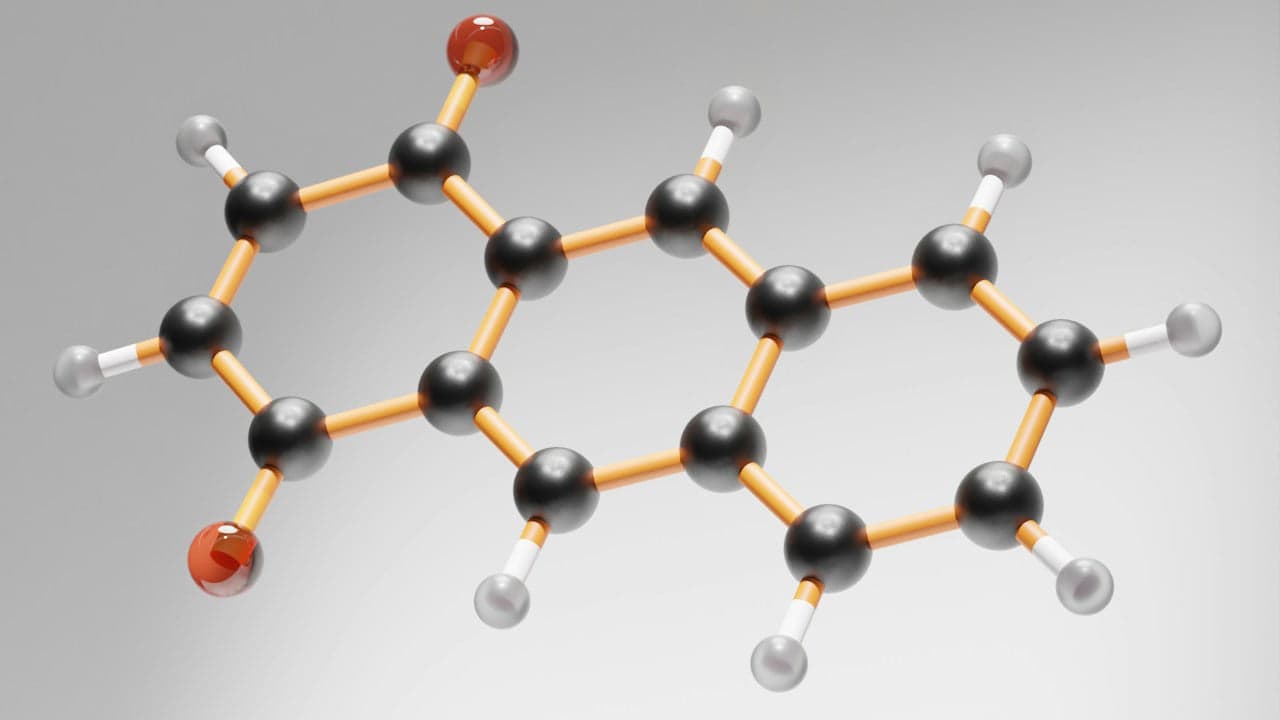
Physicists and chemists in Germany, Denmark, and Israel have built an electrically driven molecular motor based on the spiral design of the Archimedes screw. The single-molecule invention, suspended between two atomic-scale gold tips, rotates continuously when current passes through it and reverses direction when the electrical polarity flips. By measuring electron transport and modeling quantum states, the researchers discovered that the spinning movement increases electrical conductivity by up to 100 times.
A two-millennium-old mechanism at the atomic scale
The classical Archimedes screw moves water upward using an inclined rotating cylinder. In a study published via the University of Augsburg, scientists adapted that mechanical principle to build an invention measuring a few millionths of a millimetre. Instead of lifting fluids, this spiral-shaped molecule transfers the flow of electrons into mechanical rotation.
Artificial molecular motors first operated on electrical power in 2011, but those early versions sat on flat surfaces and required a scanning tunneling microscope tip to induce motion. The new design connects a free-standing molecular bridge between two stationary electrodes. This architecture turns the molecule into a self-contained electrical actuator, advancing fundamental innovation in nanoscale mechanics.
“The surprising thing is that it is precisely the positions that the molecule avoids when at rest that conduct electricity best. It is only the rotation that makes these positions accessible.”
— Léon Martin, PhD researcher at the University of Augsburg
Gold electrodes and spinning electrons
The motor relies on a custom helical molecule synthesized by the research group of Prof. Michael Pittelkow at the University of Copenhagen. The structure anchors itself to metallic contacts using terminal sulfur atoms. At the Weizmann Institute of Science in Israel, Prof. Oren Tal and Dr. Anil Kumar Singh positioned single molecules across a junction between two sharpened gold tips.
Read also on The Patent: Ultrathin Iridium Manganese Boosts Spintronic Signals in Kyushu Lab Test · OpenAI Reports Breakthroughs in Mathematics, Computer Science and Physics
The team adjusted the distance between the electrodes to compress or stretch the molecular screw. When the researchers applied voltage above a specific threshold, electrons flowing through the spiral transferred angular momentum to the molecular framework, initiating rotation. Reversing the polarity of the voltage reversed the rotation direction, matching how right-handed and left-handed mechanical threads react to directional flow.
Supercomputer models uncover a hundredfold electrical surge
During experimental runs, the rotating molecule conducted electric current far better than when stationary. To understand the physics behind this behavior, Prof. Dr. Fabian Pauly and doctoral researchers Léon Martin and Yuta Ito at the University of Augsburg ran quantum mechanical simulations on the LiCCA supercomputer.
The calculations confirmed that conductivity shifts dramatically with the orientation of the spiral, surging by 100 times during active rotation. The simulated results were further developed into a theoretical framework alongside theoretical physicists Per Hedegård from the Niels Bohr Institute and Jing-Tao Lü from Huazhong University of Science and Technology. The model proved that rotation pushes the molecule through high-conduction geometric states that it normally avoids while at rest, demonstrating that mechanical motion can directly modulate electrical transport across a single-molecule junction, opening new frontiers for nanoscale robotics.
AI-assisted article
Frequently asked questions
How does the molecular screw work?
A helical molecule is anchored with terminal sulfur atoms between two sharpened gold tips. When voltage rises above a threshold, the electrons transfer angular momentum to the molecule and make it rotate. Reversing the polarity reverses the rotation.
What is new compared with earlier molecular motors?
Electrically powered molecular motors first appeared in 2011, but they sat on flat surfaces and needed a scanning tunneling microscope tip to move. The new design is a free-standing molecular bridge between two stationary electrodes.
Why does rotation boost conductivity?
The positions the molecule avoids at rest are the ones that conduct electricity best, and rotation makes them accessible. In the experiments the rotating molecule conducted up to 100 times more current.