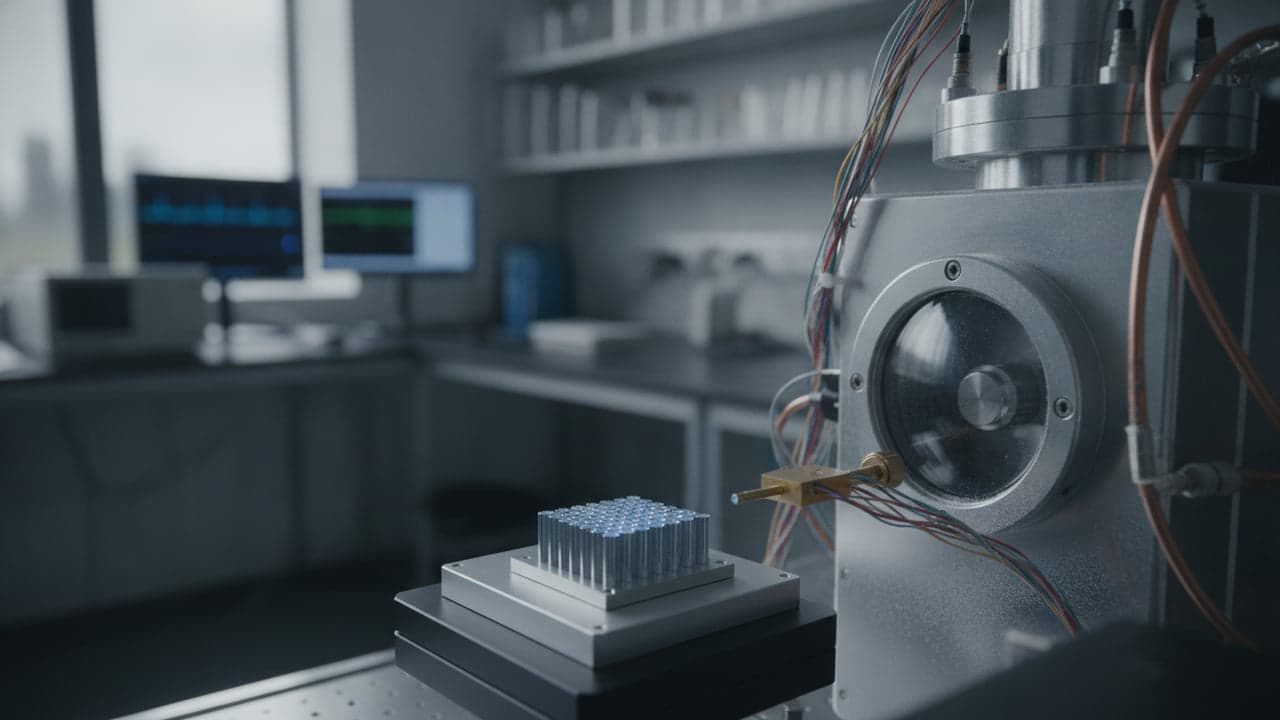
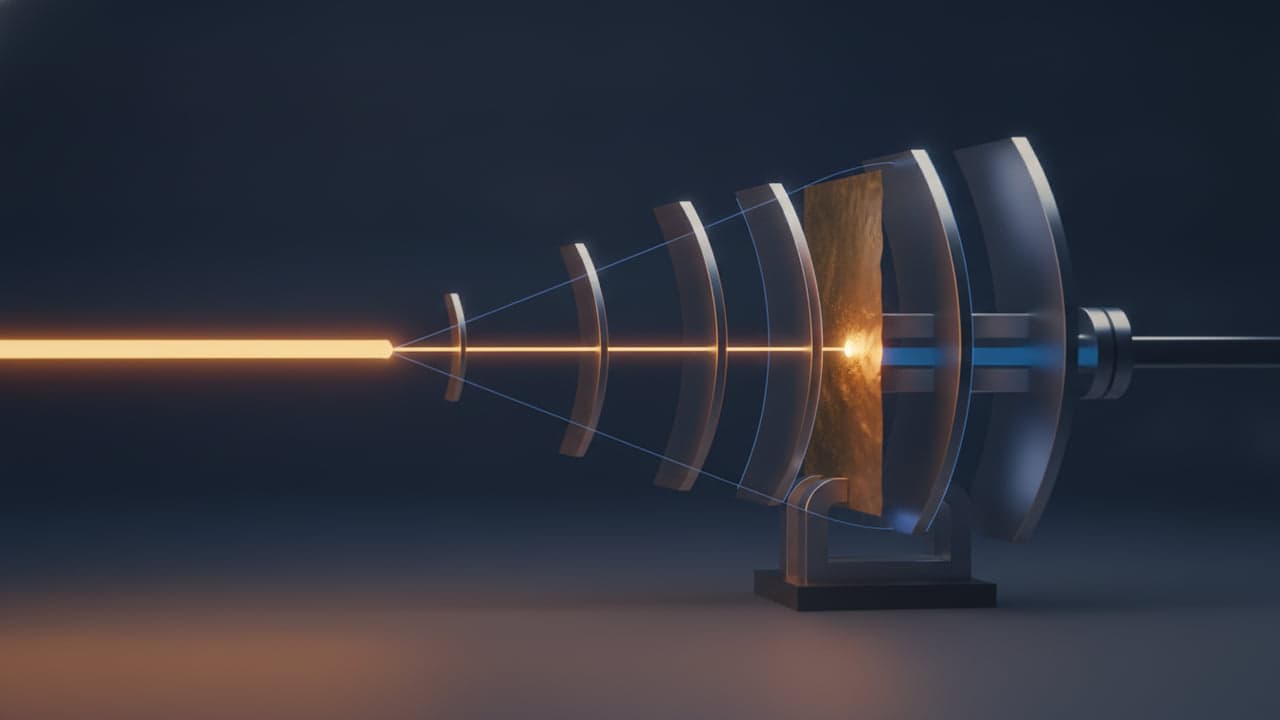
Barium Titanate Optical Constants Mapped from Ultraviolet to Far Infrared
Researchers at KAIST and Caltech resolve decades of inconsistent measurements to guide the design of electro-optic modulators and photonic devices.
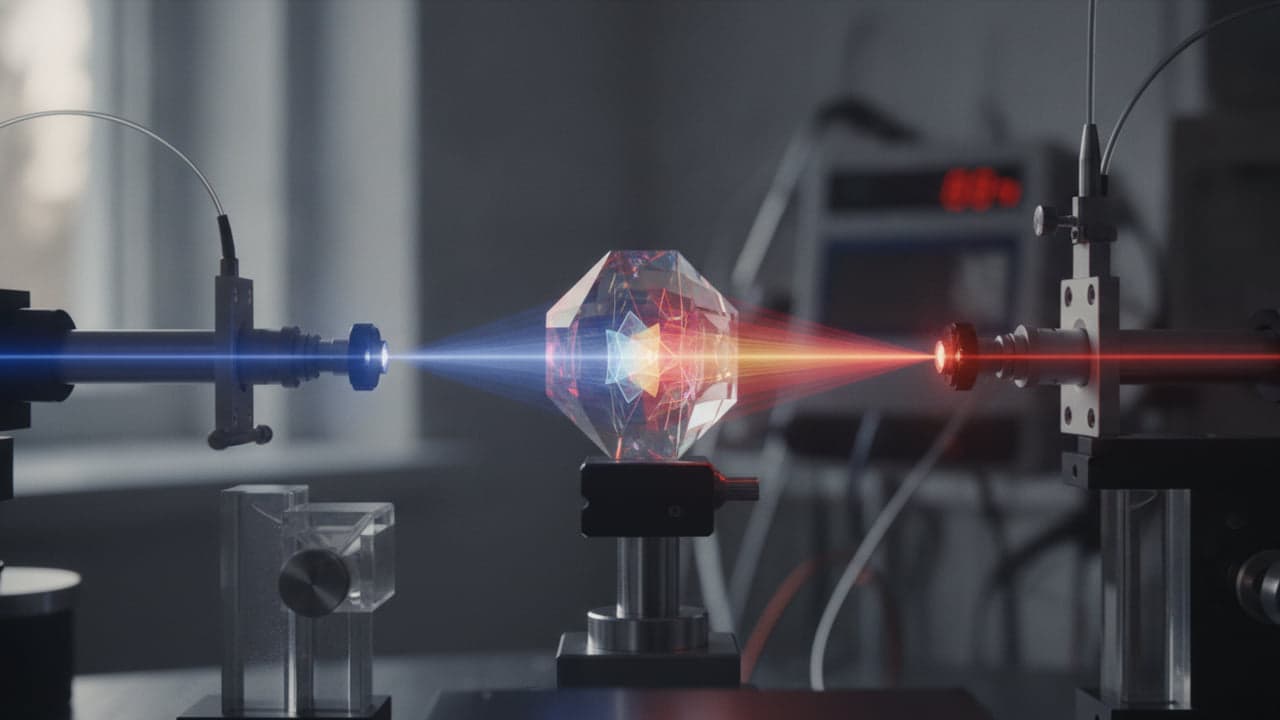
Engineers designing light-based modulators have struggled for decades with inconsistent data on barium titanate, an optical crystal prized for its strong response to electric fields. A research team led by the Korea Advanced Institute of Science and Technology has now mapped the material's exact optical constants across wavelengths from 190 nanometers to 40 micrometers, providing the baseline values needed to design optical hardware.
Resolving crystal domains with Mueller matrix ellipsometry
Barium titanate, commonly known as BTO, alters its refractive index when exposed to an electric field. This electro-optic reaction, called the Pockels effect, makes the crystal a prime candidate for optical modulators that convert electronic data into light pulses. Even so, engineers could not rely on published optical values because internal crystal domains point in varying directions, distorting optical measurements. As reported in Phys.org, the research team led by Professor Min Seok Jang at the KAIST School of Electrical Engineering resolved this issue by studying two single-crystal samples with uniform domain alignments.
The team worked in partnership with Professor Harry A. Atwater at the California Institute of Technology, alongside researchers from the Korea Research Institute of Standards and Science and instrument maker J.A. Woollam Co. Using Mueller-matrix spectroscopic ellipsometry, the team measured how polarized light reflects and transmits through the material. By separating the optical spectrum into three distinct wavelength bands, the authors determined how crystal orientation influences both refractive index and light absorption.
“This study reveals the optical response of barium titanate, which had long remained unclear, and provides a reliable reference for how the material interacts with light”
— Min Seok Jang, Professor at KAIST School of Electrical Engineering
Tracking low absorption for quantum computing and communications
Beyond standard refractive indices, the study quantified light absorption in regions where the crystal appears transparent. By pairing spectroscopic ellipsometry with separate transmittance tests, the researchers measured extinction coefficients down to approximately 10⁻⁵ in the 2 to 10 micrometer spectral window, according to data published in ACS Photonics. This weak absorption measurement shows how much signal power drops inside a microscopic waveguide.
The researchers also built a mathematical method to calculate the optical response of multi-domain crystals based on the orientation and volume share of each domain. This analytical innovation gives device designers the equations to predict light transmission through imperfect crystals without conducting separate laboratory trials for each configuration. Such modeling assists hardware developers working in quantum computing, where light-based circuits must route quantum states with minimal transmission loss.
What the reference data means for optical hardware design
Before this work, hardware engineers frequently had to rely on trial-and-error fabrication to find how a specific BTO component behaves. Having reliable refractive index and extinction numbers across ultraviolet, visible, and infrared spectra allows engineers to run accurate numerical simulations prior to cleanroom fabrication. The findings lay the groundwork for new invention disclosures in high-speed optical modulators, wavelength conversion devices, and quantum photonics.
Jang noted that the reference dataset will help engineers lower optical losses and achieve higher transmission speeds in communication networks. Device developers can now use these benchmark measurements directly in computer-aided design tools to model waveguide dimensions and reduce prototyping cycles.
Read also on The Patent: ITER Powers 330 Tonne Superconducting Magnet to 34 Kiloamperes · Oldest dinosaur blood cells and heme found in 115-million-year-old fossil