nanotechnology

Chemistry

Gallium and Nanotube Coating Uses Microcracks to Kill Bacteria

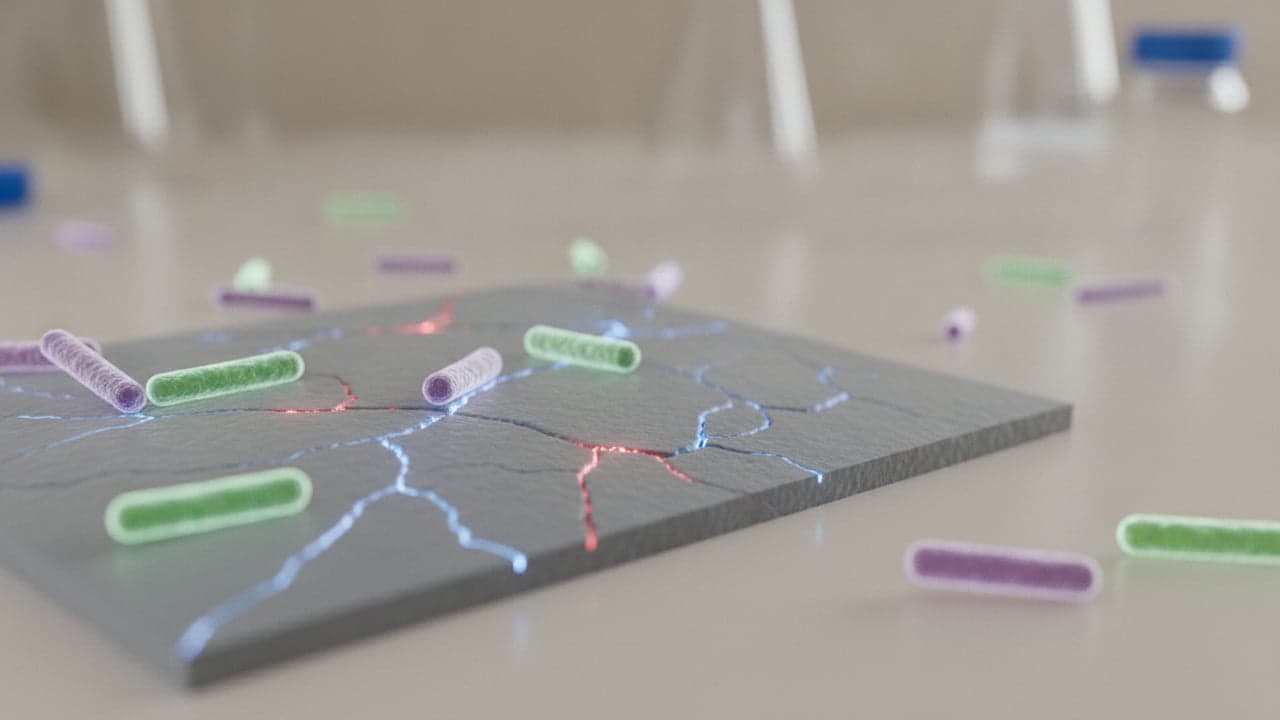
Scientists at Flinders University have created an electrically activated antibacterial coating that uses deliberate microscopic cracks to destroy pathogens. The flexible surface pairs liquid gallium with carbon nanotubes, allowing a brief 9-volt electrical pulse to eliminate drug-resistant bacteria in laboratory tests while sparing human skin cells.


Tech

Silicon Air Holes Turn Wafers Into Flat Ultraviolet Mirrors

Researchers at the University of Stuttgart have engineered a flat optical metasurface that reflects and focuses ultraviolet light by trapping it inside nanoscale cavities. The device, detailed in [Advanced Photonics via Phys.org](https://phys.org/news/2026-11-air-holes-silicon-wafers-flat.html), uses microscopic air holes etched directly into standard silicon wafers to bypass the heavy absorption that usually limits silicon in ultraviolet optics. This optical invention provides a flat alternative to bulky curved mirrors for high-resolution imaging and chemical sensing.

Biology

Nanoparticles Releasing Nitric Oxide Clear Skin Infections in Moth Larvae

Scientists at the University of Reading and Al-Farabi Kazakh National University have engineered microscopic particles that slowly release nitric oxide to eliminate skin infections. The therapeutic invention, published in November 2026, allowed 90 percent of infected wax moth larvae to survive, compared to 60 percent without treatment. By packaging a gas that the human body makes naturally into a stable carrier, the team aims to overcome antibiotic resistance without relying on traditional drugs.

Physics

A microscopic Archimedes screw spins between gold tips and boosts conductivity

Physicists and chemists in Germany, Denmark, and Israel have built an electrically driven molecular motor based on the spiral design of the Archimedes screw. The single-molecule invention, suspended between two atomic-scale gold tips, rotates continuously when current passes through it and reverses direction when the electrical polarity flips. By measuring electron transport and modeling quantum states, the researchers discovered that the spinning movement increases electrical conductivity by up to 100 times.

Giovanni Sapere

Chemistry

UT Austin Develops Bio-Inspired Channels to Filter Lithium

Chemical engineers at the University of Texas at Austin have engineered nanoscale artificial pores that mimic biological cell membranes to filter lithium ions. The chemical innovation allows lithium to pass through while blocking competing metals such as sodium and magnesium. Published in the Journal of the American Chemical Society, the method offers a cleaner path to extract critical raw materials for energy storage.

Giovanni Sapere

Environment

Catalytic Membrane Uses Palladium and Hydrogen to Disarm PFAS

Researchers have developed a catalytic membrane that captures and neutralises per- and polyfluoroalkyl substances directly from water. The invention moves past standard filtration by splitting hydrogen gas into reactive atoms that strip fluorine from persistent pollutants.

Letizia Giugliano

Physics

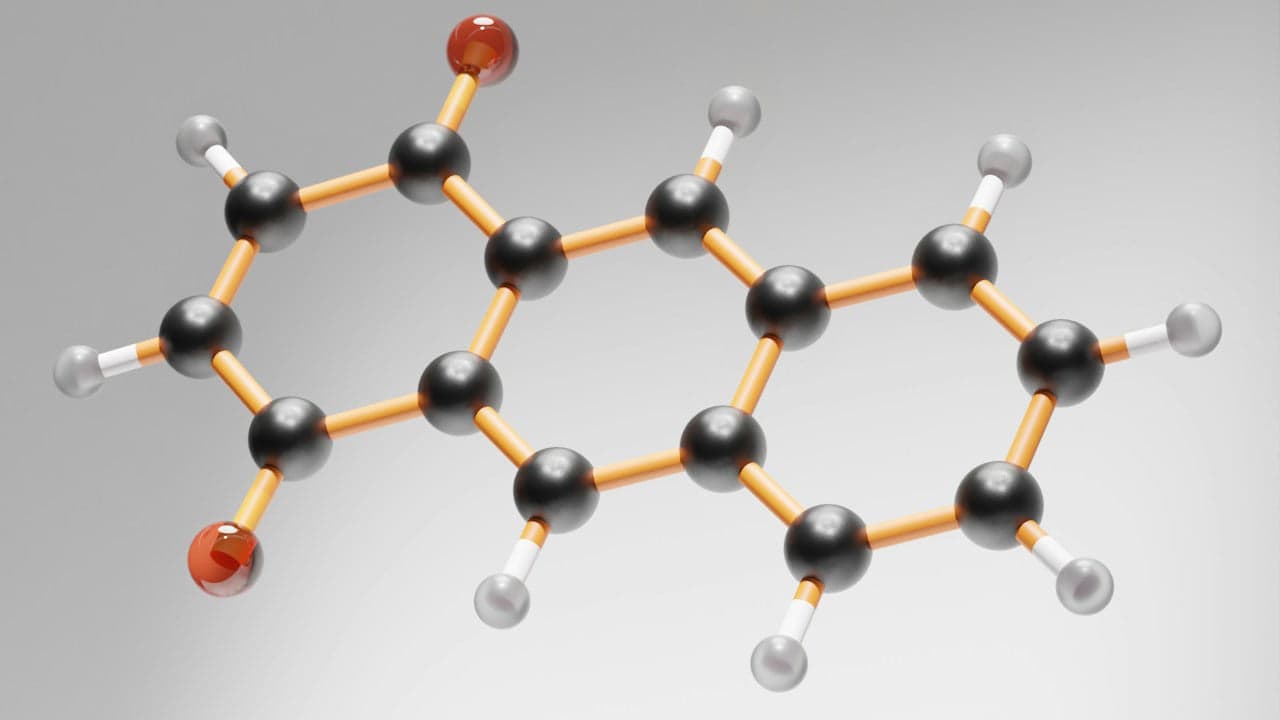
Rare Quantum Lattice Assembled from Propeller-Shaped Organic Molecules

An international research team has created a rare two-dimensional diatomic Kagome lattice by assembling propeller-like organic molecules. Published in Nano Letters on September 2, 2026, the discovery demonstrates that organic molecular assemblies can support topological quantum states, widening avenues for future electronic design.

Letizia Giugliano

Events

E-NNOVATE International Innovation Summit 2025

Innovation is back in the spotlight with E-NNOVATE 2025, the international summit dedicated to inventions and new technologies, to be held in Krakow from 10 to 12 June 2025 and in online format from 20 June to 12 July. As a media partner of the event, The Patent Magazine will again contribute to…

Contributor