Fraunhofer FKIE Connects Seafloor Sensors to Shore With Gateway Buoys
Acoustic signals turn into radio waves at the surface to link autonomous underwater vehicles with shore operators.
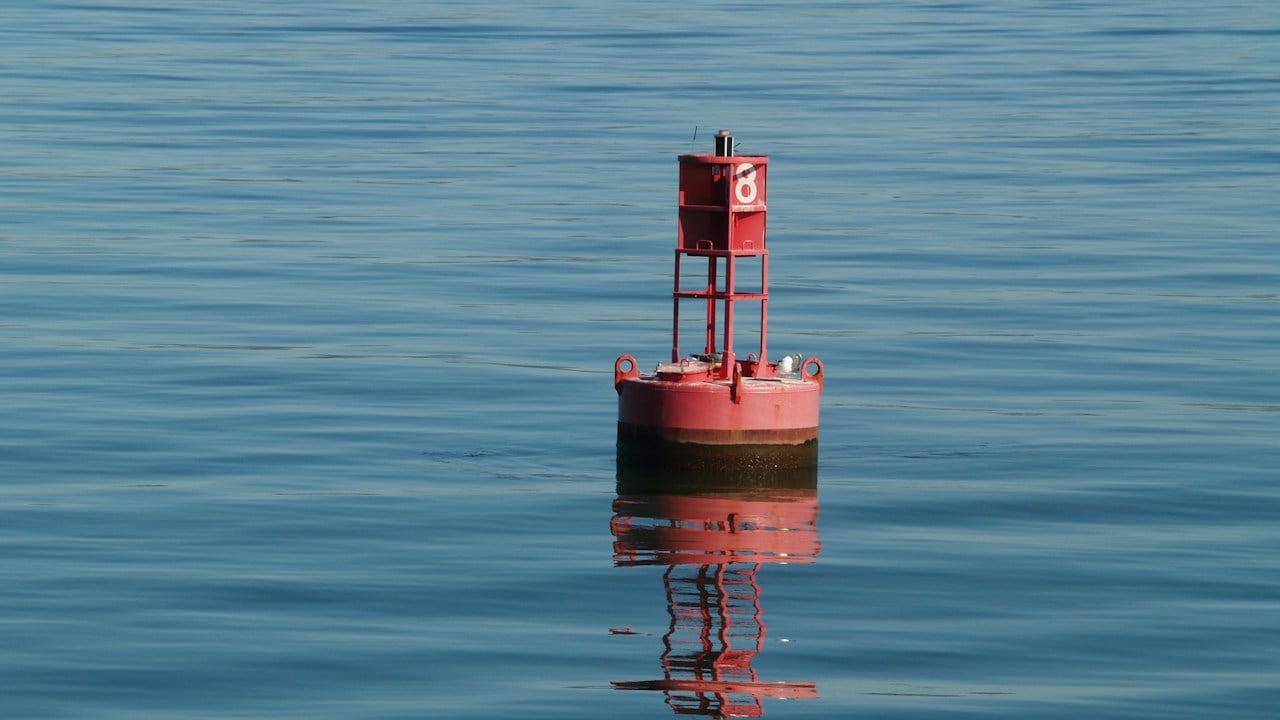
Underwater sensors and uncrewed vessels cannot rely on conventional Wi-Fi or cellular networks because water absorbs electromagnetic waves. Researchers at the Fraunhofer Institute for Communication, Information Processing and Ergonomics FKIE have built an acoustic network to bridge this gap, using floating gateway buoys to pass critical seafloor data to command stations on land.
Sound waves replace radio in deep water
Sound travels through water at roughly 1,500 meters per second, about 200,000 times slower than light travels through air, according to research reported by TechXplore. Unlike in open air or space, radio waves, cellular connections and satellite signals fade rapidly below the surface, leaving engineers to rely on acoustics. Transmission capacity drops sharply over distance. At ranges near 10 kilometers, net data rates routinely fall below 200 bits per second. Temperature variations, salt levels and reflections from both the seabed and the surface introduce constant acoustic noise, making standard internet protocols unusable.
“Our goal was to replace rigid point-to-point connections with dynamic acoustic networks. Because conventional IP networks are unsuitable for extremely narrowband channels, we are developing entirely new protocol architectures”
Dimitri Sotnik, research scientist at Fraunhofer FKIE
Compact data packets designed for acoustic transmission
Fraunhofer FKIE created a specialized architecture alongside Bundeswehr Technical Center 71 (WTD 71) to handle those physical limits. The team developed an innovation in network protocols called GUWMANET, short for Gossiping in Underwater Acoustic Mobile Ad-hoc Networks, operating on top of a formatting standard known as GUWAL (Generic Underwater Application Language). As reported by TechXplore, the GUWAL standard compresses requests, sensor metrics and control instructions into data packets measuring just 128 bits each. In marine trials, this streamlined protocol recorded a packet delivery rate of roughly 90 percent.
Relaying signals from seabed to surface
Because long distances degrade acoustic signals, nodes cannot always communicate directly with their ultimate target. GUWMANET solves this through multihop relaying, routing data across seabed nodes and autonomous submersibles until it reaches its destination. A floating gateway prototype buoy acts as the physical translator between environments. Equipped with an acoustic transducer underwater, the buoy receives acoustic pulses from seafloor devices and translates them into radio transmissions sent across the air to naval vessels or land bases. Fraunhofer FKIE research scientist Dimitri Sotnik explained that the system embeds digital security checks directly into the protocol to guard against acoustic interference, signal interception and data tampering, as documented by TechXplore.
Sea trials and international naval testing
The communication system has moved beyond theoretical modeling into open-water operational exercises. The gateway buoy was tested off the coast of Lisbon, Portugal, during large-scale NATO drills, where it transmitted GUWAL packets directly to a shore-based operations center. European defense partners are also applying the invention to the SWAT-SHOAL project, an initiative organizing autonomous underwater robotics and crewed ships into coordinated reconnaissance networks to safeguard offshore pipelines, wind farms and ports, according to TechXplore.
Read also on The Patent: NUS Engineers Weave a Touchscreen Display Directly Into Garment Fabric · Rockefeller University Engineers TrUDI Platform for Deep Brain Imaging