Quantum Computing

Physics

Cornell chip cools trapped ions to quantum ground state in 150 microseconds

Engineers at Cornell University have built a chip-based laser-cooling device that cools a trapped ion close to its quantum ground state in 150 microseconds. The hardware invention cuts the cooling time to roughly one third of what standard laser setups require, addressing a central operating bottleneck in quantum computing.
Physics

Ames Laboratory controls magnetic wave handedness for quantum computing

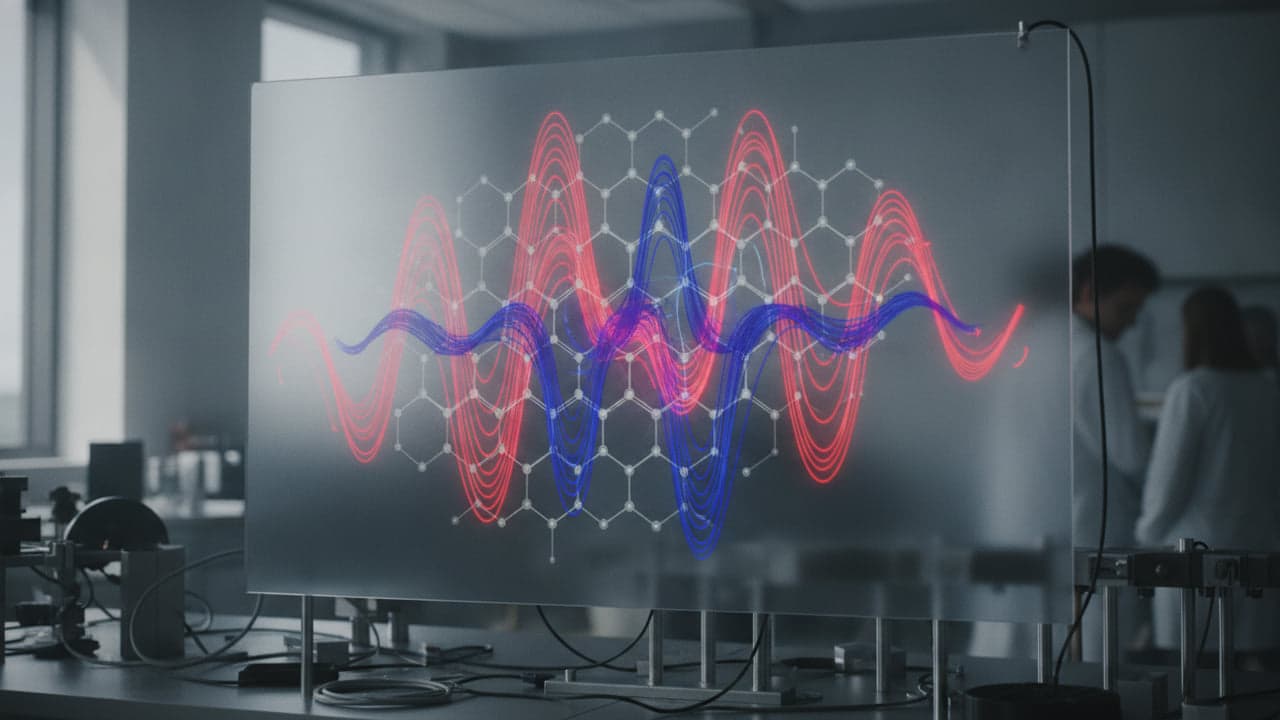
Physicists at the Ames National Laboratory have found a way to switch the handedness of magnons, magnetic waves that travel through solid materials without moving an electrical charge. The discovery, reported on November 10, 2026, provides a new mechanism to encode and process data for future quantum computing hardware. By applying an external magnetic field to specific kagome metals, the research team caused opposing wave states to mix.

Tech

IBM plans 1,040-qubit modular quantum system for 2027

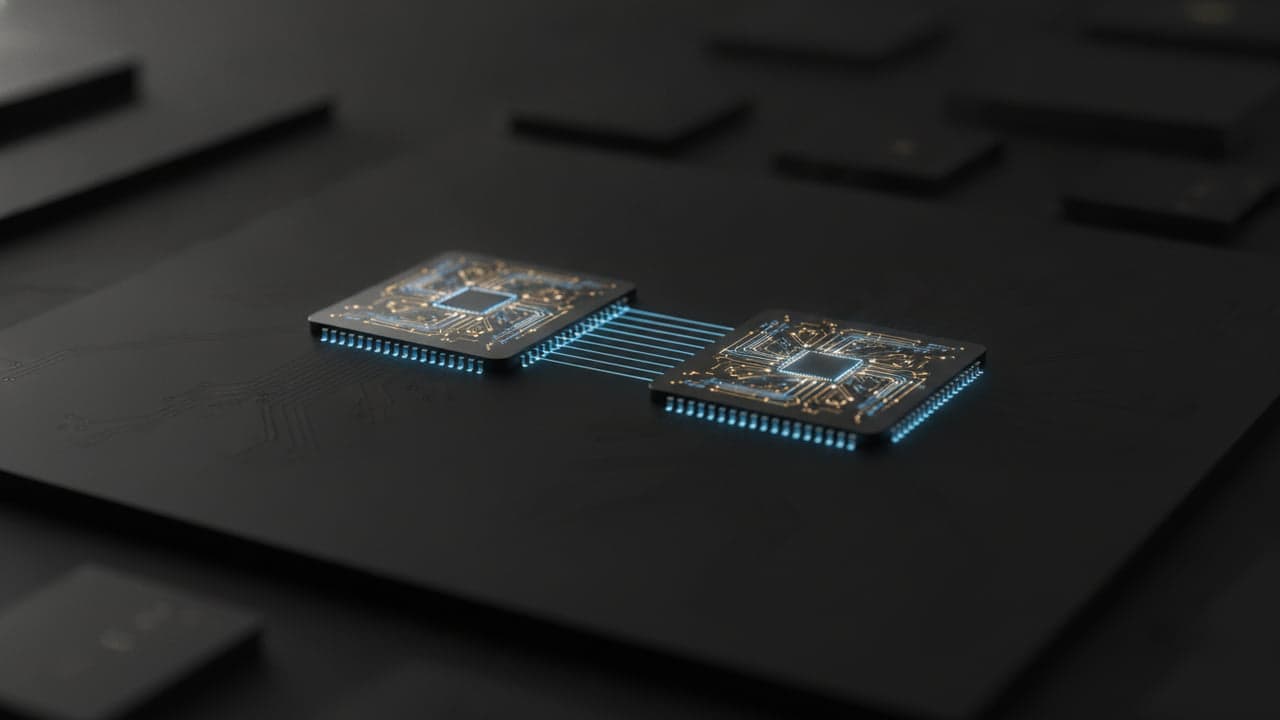
IBM will connect two next-generation quantum processors to assemble a single system with 1,040 qubits in 2027. The project relies on the company's upcoming Nighthawk r3 architecture, where physical couplers join separate chips into one machine. This hardware innovation addresses a core limitation in quantum development by expanding capacity without building a single, fragile processor die.

Physics

Oxford physicists simulate Aharonov-Bohm effect using trapped ions

Physicists at the University of Oxford have demonstrated the Aharonov-Bohm effect inside a quantum simulation of a lattice gauge theory using trapped ions. The study, reported by [Phys.org](https://phys.org/news/2026-11-paths-flux-ions-simulate-aharonovbohm.html), models how matter interacts with force-carrying gauge fields in a closed loop. This experimental innovation provides an alternative method for exploring high-energy physics and exotic materials using quantum hardware.

Physics

Automated system solves Aaronson-Ambainis quantum conjecture in three days

A computational research system has generated a formal mathematical proof for the Aaronson-Ambainis conjecture, an 18-year-old open problem concerning the limits of quantum computing. Physics research firm PSI announced that its automated platform produced the verification within three days, employing artificial intelligence to address when conventional machines can approximate quantum algorithms.

Physics

Quantum skyrmions on a chip survive after photon entanglement breaks down

Physicists at the University of Pennsylvania have demonstrated that topological patterns encoded in light can persist even after the quantum entanglement linking two photons breaks apart. The finding addresses one of the fundamental vulnerabilities of optical quantum networks, where environmental noise routinely destroys sensitive quantum links. By using an integrated silicon nitride circuit, the team showed that mathematical topology offers a resilient way to protect quantum states.

Letizia Giugliano

Physics

IBM Links Two Quantum Chips with Superconducting Cables

IBM has linked two quantum chips using superconducting cables, marking an essential technical step toward building larger computers. Reported on October 27, 2026, by Science (AAAS) – News, the setup connects quantum bits across separate processors. The hardware innovation offers a practical pathway toward modular quantum computing architectures.

Letizia Giugliano

AI

Superconducting Neural Chip Processes One Million Fusion Plasma Samples Per Second

Scientists at the US Department of Energy's Brookhaven National Laboratory, in collaboration with the Princeton Plasma Physics Laboratory and Colorado hardware firm Great Sky, have developed a superconducting neural chip capable of analyzing roughly one million plasma samples every second. The hardware applies principles of artificial intelligence and brain-inspired circuitry to the challenge of real-time control inside fusion reactors.

Giovanni Sapere

Crowdfunding

Google Willow Processor Reduces Quantum Error Rates by Forty Times

Google Quantum AI researchers have demonstrated a critical hardware innovation on their Willow superconducting processor, reducing error rates by approximately forty times compared to standard preparation methods. Detailed in a paper published on October 15, 2026, the demonstration is the first practical hardware implementation of magic state cultivation. This milestone addresses a major physical resource constraint in the path toward fault-tolerant quantum computation.

Letizia Giugliano

News

Printable Synapse Chip Mimics the Brain and Dissolves in Minutes

Researchers are working on printable artificial synapses designed to emulate the extreme energy efficiency of the human brain. Reported by [New Atlas](https://newatlas.com/https:/refractor.io/science/quantum-computing/brain-inspired-synaptic-chip/) on October 18, 2026, the technology avoids the rigid metals and complex fabrication processes required by existing electronic hardware.

Giovanni Sapere