Salt Additives Solve Perovskite Crystal Defects in Solar Cells
Researchers at Argonne National Laboratory use a volatile eutectic process to stabilize synthetic crystals for 1,400 hours under continuous heat
By Giovanni Sapere
2 min readHuman-Edited, AI-Assisted

A chemical method using salt additives resolves atomic structural flaws in perovskite crystals, offering a practical path forward for renewable energy devices. Researchers at the U.S. Department of Energy's Argonne National Laboratory demonstrated that temporary liquefaction prevents electric charges from becoming trapped in crystal boundaries. This innovation enables solar cells to retain 85.8 percent of their efficiency after 1,400 hours of continuous operation at 85 degrees Celsius.
Lowering the melting point to create a uniform grid
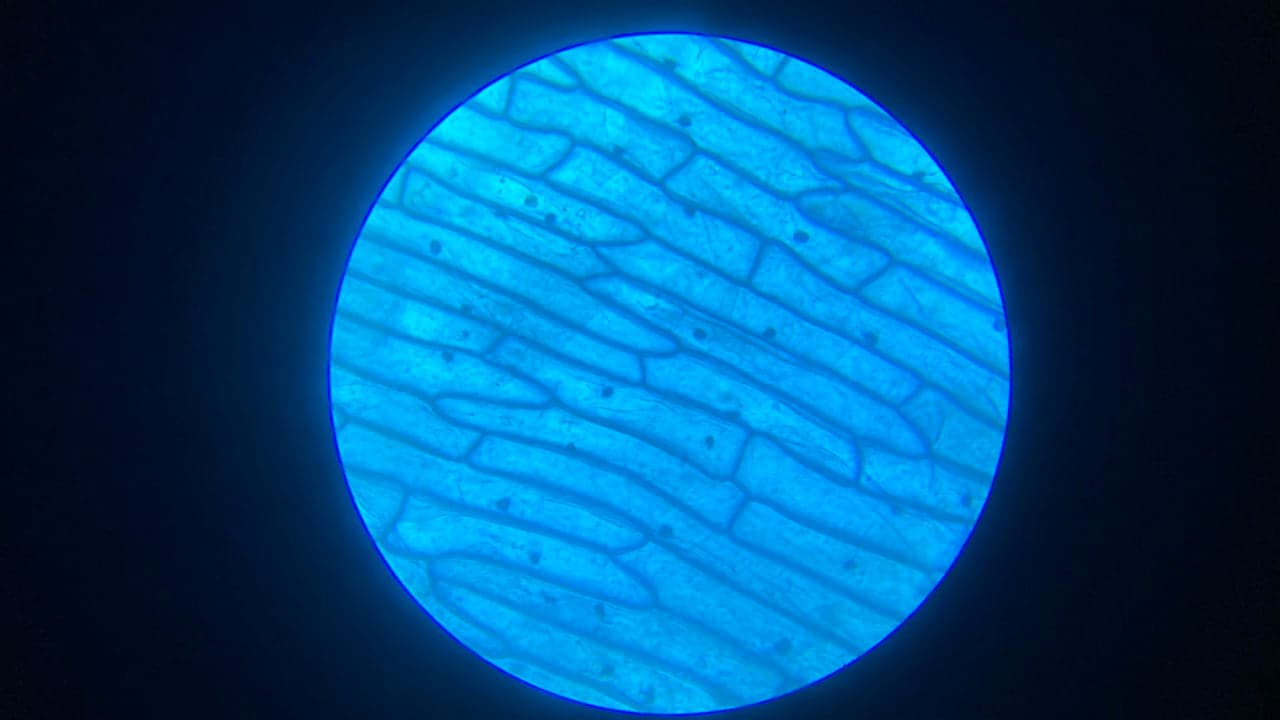
Perovskites are synthetic crystals built from repeating atomic arrangements that absorb light and transfer electric charges, representing a promising field of invention for solar technology. When thin perovskite films deposit onto a surface during manufacturing, microscopic structural gaps develop that trap charges and shorten operating life, as reported by Interesting Engineering.
To counter this problem, the research team introduced two specific chemical additives: zinc bromide and methylammonium chloride. The salts function through a volatile eutectic process, lowering the melting point of the perovskite ingredients in the same manner that road salt melts ice. When exposed to heat, the mixture briefly forms a liquid slush, giving the atoms sufficient time to arrange themselves into a uniform grid rather than freezing into a scrambled formation. As thermal processing continues, the salt additives evaporate entirely, leaving a pure crystalline layer.
“Defects have been the bottleneck for perovskites for almost a decade. If we can remove the major defects, we can finally start building devices that last longer and perform more reliably.”
— Yanqi Luo, beamline scientist at Argonne National Laboratory
Mapping atomic repairs in real time
Tracking the crystal restructuring required high-resolution analytical tools at Argonne's Advanced Photon Source and the Center for Nanoscale Materials. Using high-intensity X-ray probes, scientists recorded chemical composition and optical behavior simultaneously, according to Interesting Engineering.
The measurements confirmed that residual zinc atoms migrate toward remaining fault lines during heating, smoothing defects before structural traps can form. Beamline scientist Yanqi Luo and the team verified that removing these flaws eliminates the primary performance barrier that has hindered perovskite commercialization for roughly a decade, establishing valuable intellectual property for future energy systems.
Measured performance gains across modules and diodes
The volatile eutectic method yielded measurable gains across multiple device types tested in the laboratory. Small-area solar cells achieved a certified power conversion efficiency of 25.9 percent, while larger perovskite minimodules reached 23.9 percent, as documented by Interesting Engineering.
In addition to retaining 85.8 percent of initial efficiency after 1,400 hours at 85 degrees Celsius, the crystal treatment proved effective in other optoelectronic hardware. Light-emitting diodes manufactured with the process achieved an external quantum efficiency of 26.1 percent. With the Advanced Photon Source upgraded to deliver X-ray beams up to 500 times brighter, the researchers plan to transition from static snapshots to continuous observations of crystal formation across larger industrial surfaces, paving the way for scalable commercial deployment and patent protection.
Read also on The Patent: Perovskite Solar Cells Endure 1,000 Hours of Extreme Heat and Moisture · UT Austin Develops Bio-Inspired Channels to Filter Lithium