Patents

Mechanical Engineering

Laser Directed Energy Deposition for Military Aircraft Repairs

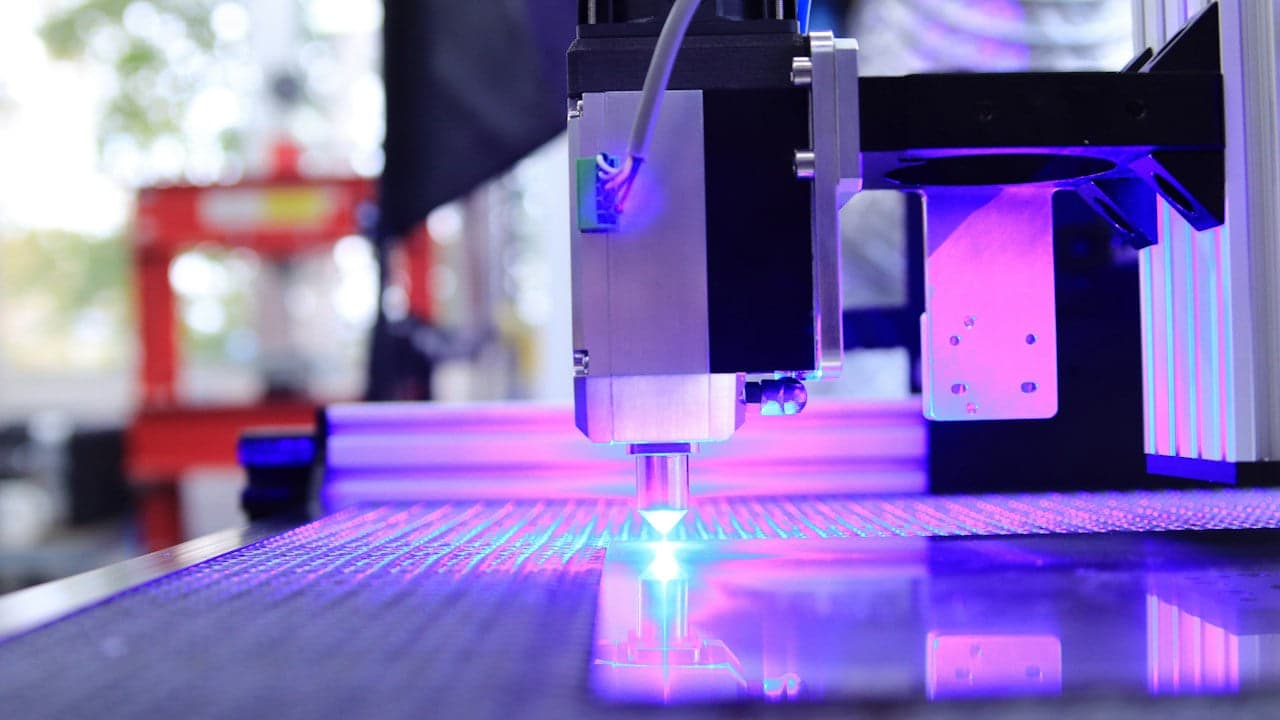
Rosebank Engineering, RMIT Centre for Additive Manufacturing, and Swinburne University of Technology have launched an additive manufacturing initiative to repair worn military aircraft components. Supported by the Additive Manufacturing Cooperative Research Centre, the alliance focuses on qualifying laser directed energy deposition to bypass long-lead-time overseas parts replacements. This engineering innovation aims to meet stringent aerospace structural benchmarks directly on the factory floor.

Letizia Giugliano

Norms & Regulation

Federal Circuit Rejects Bartering Patent Application Under Section 101

The U.S. Court of Appeals for the Federal Circuit has affirmed the rejection of a patent application seeking to protect a computer-assisted bartering system. In a decision upholding findings by the Patent Trial and Appeal Board, the court held that swapping groceries for precious metals constitutes a fundamental economic practice that cannot be patented.

Giovanni Sapere

Biology

Solar and Soil Biobattery System Produces Urea Directly in the Field

Researchers led by the Universitat Autònoma de Barcelona have successfully deployed an agricultural pilot plant that manufactures nitrogen fertilizer on site from environmental pollutants. Tested in Viladecans, the installation synthesizes urea from carbon dioxide and agricultural nitrates using energy supplied by solar panels and soil biobatteries. The project provides a decentralized method to produce essential agricultural inputs without fossil-fuel-intensive supply chains.

Giovanni Sapere

Human Necessities

MIT Origami-Inspired Metal Design Enables Rapid Emergency Shelters

Researchers at MIT have developed an origami-inspired metal design capable of building strong, durable structures without relying on heavy welding. Disclosed on October 27, 2026, the structural innovation provides a practical and fast method for erecting emergency shelters in high-need situations. The approach addresses critical logistical bottlenecks often faced when deploying protective human infrastructure during humanitarian crises.

Letizia Giugliano

Chemistry & Metallurgy

Pulsed 3D Printing Produces Meter-Long Single Crystals for Extreme Heat

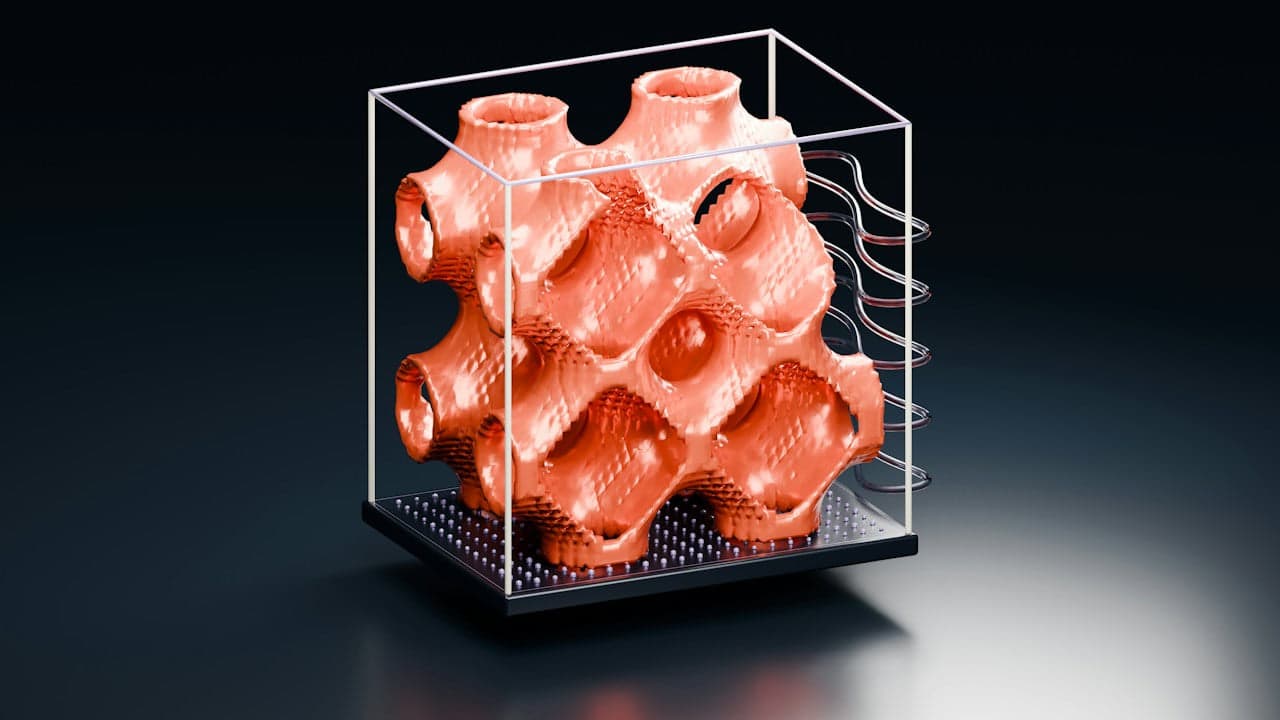
Materials researchers in China have invented a pulsed additive manufacturing process capable of growing titanium-alloy rods more than a meter tall out of a single continuous crystal. Reported in Nature, the technique eliminates microscopic grain boundaries that typically weaken metallic parts subjected to severe mechanical stress and elevated temperatures. The metallurgical invention offers an alternative route to producing components for reactors, aerospace structures, and optical systems without conventional mold-based limitations.

Giovanni Sapere

Physics

IBM Links Two Quantum Chips with Superconducting Cables

IBM has linked two quantum chips using superconducting cables, marking an essential technical step toward building larger computers. Reported on October 27, 2026, by Science (AAAS) – News, the setup connects quantum bits across separate processors. The hardware innovation offers a practical pathway toward modular quantum computing architectures.

Letizia Giugliano

Physics

Northwestern physicists trap single positron in quantum cyclotron

Physicists at Northwestern University have demonstrated the first one-positron quantum cyclotron, successfully isolating a single antimatter particle in a cryogenic trap for months. The breakthrough provides a tool to test whether matter and antimatter obey identical physical laws under fundamental symmetries. By tracking the particle's quantum states, researchers aim to probe physics beyond the Standard Model.

Giovanni Sapere

Physics

Rare Quantum Lattice Assembled from Propeller-Shaped Organic Molecules

An international research team has created a rare two-dimensional diatomic Kagome lattice by assembling propeller-like organic molecules. Published in Nano Letters on September 2, 2026, the discovery demonstrates that organic molecular assemblies can support topological quantum states, widening avenues for future electronic design.

Letizia Giugliano

Textiles & Paper

Interactive Touchscreen Woven Directly into Garment Sleeve

Engineers from the National University of Singapore have developed the world's first interactive screen woven directly into clothing. The wearable invention integrates miniature electronics into flexible fibres, allowing ordinary textiles to display full-colour moving images and register tactile inputs without rigid panels.

Giovanni Sapere

Electricity

Sodium-Ion Batteries Without Active Cooling Aim to Cut Grid Costs

Energy startup Peak Energy announced on October 23 that it raised $108 million in a Series B round led by GM Ventures to scale sodium-ion battery platforms. Designed specifically for stationary power grids and data centers, the system removes active cooling equipment to lower deployment costs. The effort builds on a joint technical initiative with General Motors to deploy cell chemistries tailored for stationary utility networks.

Letizia Giugliano

Physics

KTH Physicists Build Programmable Photonic Chip to Uncover Topological Stability

Researchers at KTH Royal Institute of Technology have demonstrated a programmable photonic chip capable of detecting stabilizing topological properties in light-guiding systems. Reported on October 18, 2026, the experimental method allows physicists to identify wave behaviors that resist structural flaws under realistic energy-loss conditions.

Giovanni Sapere

Electricity

Altermagnetism Discovery Earns 2026 Europhysics Prize

Physicists have identified altermagnetism as a third distinct category of collinear magnetism, challenging an understanding that stood for over a century. The breakthrough, which represents a foundational scientific innovation, earned researchers from Germany and the Czech Republic the prestigious 2026 Europhysics Prize. By uniting traits of ferromagnets and antiferromagnets, the finding provides a novel mechanism for spintronic devices and next-generation computing technologies.

Giovanni Sapere

Mechanical Engineering

Engineered Crystal Defects Strengthen Metal Alloys Without Chemical Tweaks

Materials scientists have developed a two-step method that turns internal crystal imperfections into reinforcing networks across metal alloys. The innovation, documented by researchers at The Ohio State University, boosts mechanical strength and thermal creep resistance without altering chemical composition. Published on October 15, 2026, the technique provides new structural principles for extreme-environment machinery.

Letizia Giugliano

AI

AI Weed Control Sparks a Third Agricultural Revolution

Researchers from the University of Mississippi and Cornell University have analyzed how precision agriculture driven by artificial intelligence is reshaping crop management. Their evaluation shows that automated lasers, robotic cultivators, and targeted sprayers can sharply reduce chemical applications, though substantial capital costs and regional data limitations temper widespread adoption.

Giovanni Sapere

Makers

From Prototype to 1,750 Custom Badges for Hack The North

Scaling an electronic invention from a breadboard to hundreds of functional devices presents major manufacturing challenges for any creator. Hardware designer Nicholas Ficara managed this transition by fabricating 1,750 custom badges for Canada's Hack The North hackathon. His development process illustrates how disciplined iterative testing turns a bench prototype into reliable event hardware.

Letizia Giugliano

Norms & Regulation

France Proposes New Rules for 3D-Printed Spare Parts

France has recently notified the European Commission of a draft decree concerning spare parts generated through 3D printing technology. This initiative aims to navigate the complex landscape of intellectual property rights in modern manufacturing while fostering greater product longevity and sustainability.

Giovanni Sapere