mit

Science

Physicists Map Particle Motion in Primordial Quark-Gluon Plasma

Physicists at MIT and the University of California, Santa Barbara, have formulated a theory predicting how relativistic particles travel through quark-gluon plasma, the dense fluid that filled the universe microseconds after the Big Bang. The theoretical innovation resolves a century-old limitation in classical physics by calculating the momentum changes of particles moving near light speed.


Physics

MIT and Thea Energy test flat superconducting magnet for stellarator fusion

Fusion energy startup Thea Energy has joined forces with the Massachusetts Institute of Technology to test a full-scale superconducting magnet designed for its next-generation stellarator. The trials at MIT evaluate whether a flat encircling coil can withstand the magnetic fields and mechanical stresses of a commercial power plant.

Robotics

Magnetic Bead Implants Give Robotic Prosthetics Real Time Muscle Tracking

Three human amputees have successfully tested an implantable magnetic tracking system that measures muscle movements in real time. The study from the Massachusetts Institute of Technology, published in the journal Nature Sensors, offers a new physical interface for robotics controllers that guide advanced prosthetic limbs.

Letizia Giugliano

Robotics

MIT engineers build a snake-inspired soft robot to explore the small intestine

Engineers at the Massachusetts Institute of Technology have built a flexible robotic enteroscope designed to navigate the narrow curves of the human small intestine. The new system combines soft robotics with snake-like locomotion to inspect tissue, apply medication and remove small polyps deep inside the digestive tract.

Giovanni Sapere

Human Necessities

MIT Origami-Inspired Metal Design Enables Rapid Emergency Shelters

Researchers at MIT have developed an origami-inspired metal design capable of building strong, durable structures without relying on heavy welding. Disclosed on October 27, 2026, the structural innovation provides a practical and fast method for erecting emergency shelters in high-need situations. The approach addresses critical logistical bottlenecks often faced when deploying protective human infrastructure during humanitarian crises.

Letizia Giugliano

Chemistry

New supercapacitor opens the door to wearable electronics

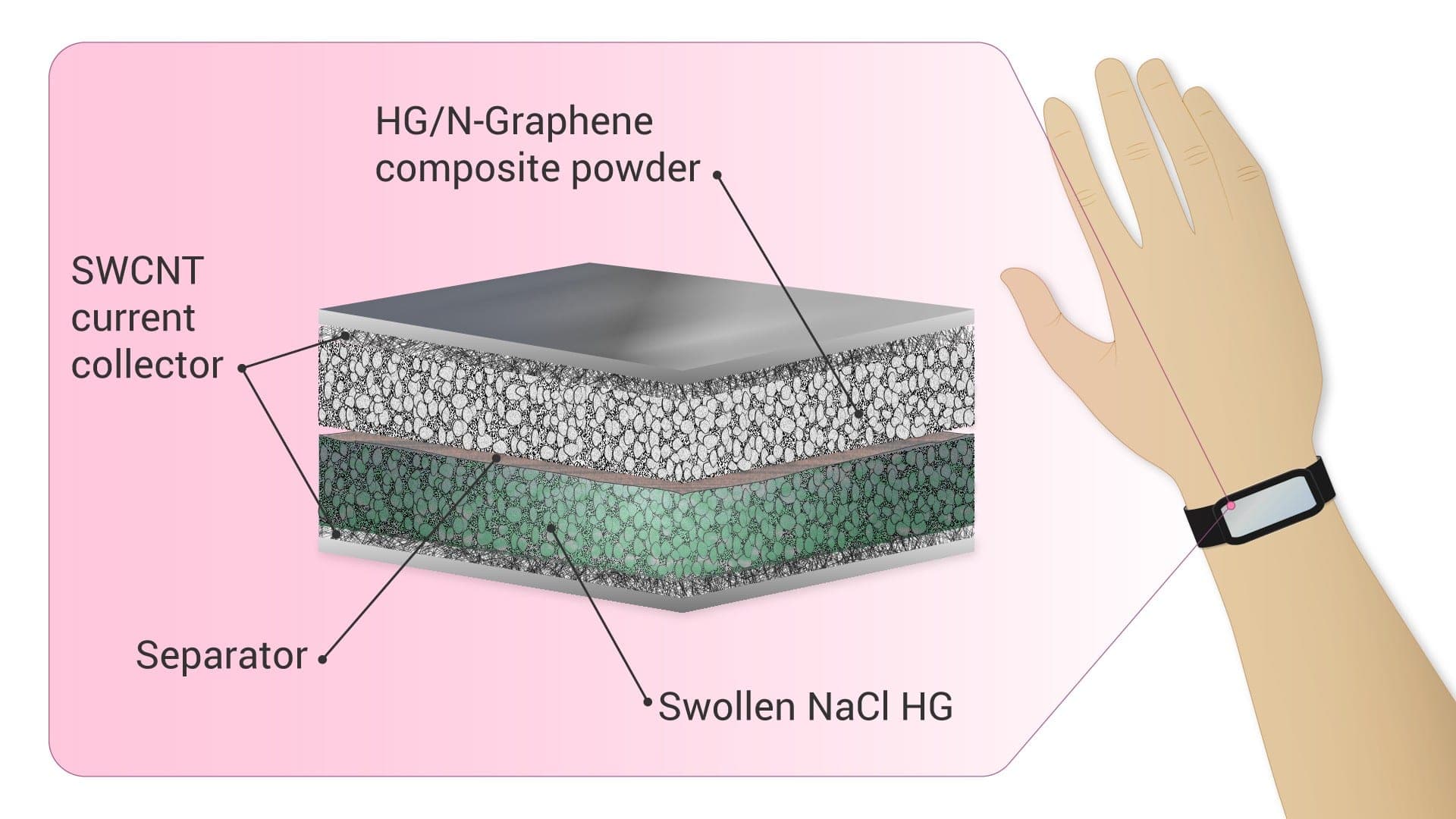
Researchers created a high performance, eco-friendly, economical and elastic supercapacitor that can be a strong driver for the development of wearable sensors Sensor technology is highly dependent on the development of microelectronics. The focus is on capacitors, which require high power density,…

Mario Vincenzo La Rocca

AI

Robotization is coming. The novelties of MIT

It sounds like science fiction, but there are robots that build other robots! Published on the MIT blog, the news is going around the world, making us understand how now the robots are “invading” our civilization.

Giovanni Sapere